Battlefield 6 has barely finished rolling out its California Resistance mid season update, yet the developers have already had to slam on the brakes and push an emergency hotfix. Less than twenty four hours after the patch landed, Support players flooded social feeds with clips and complaints that their defibrillators had suddenly become unreliable, awkward and in some cases completely broken. 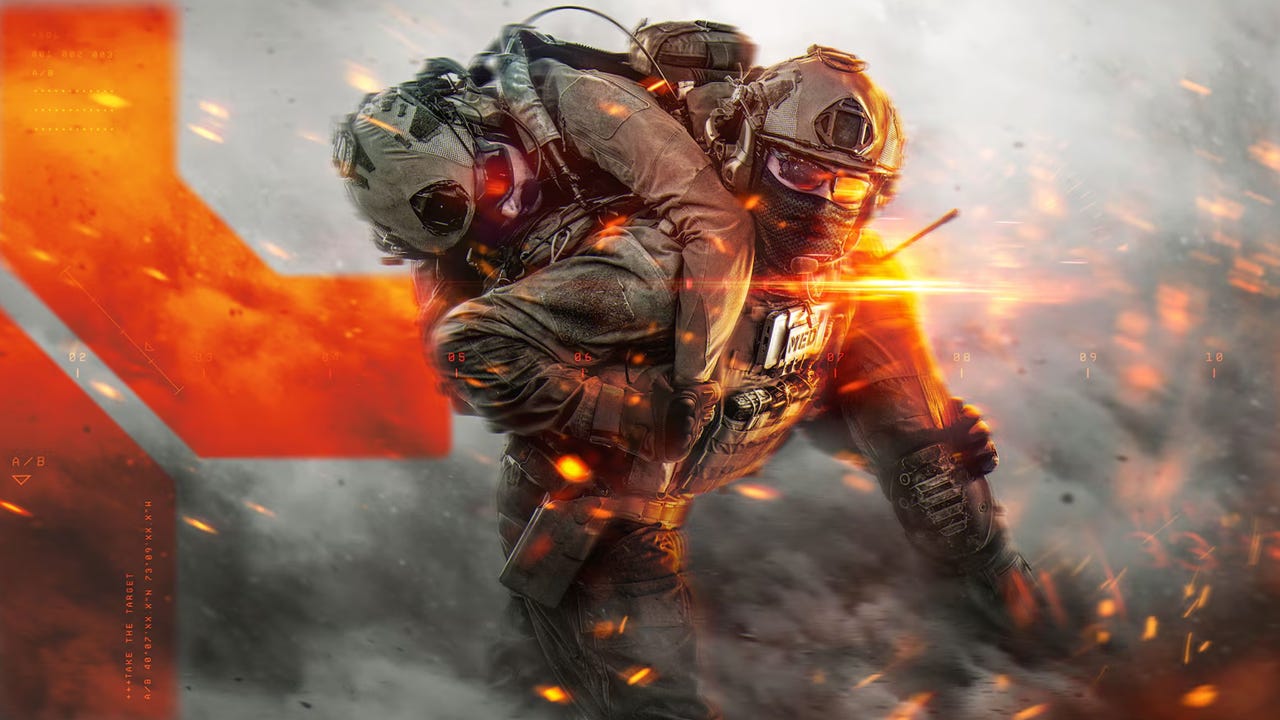
Now a small but important update is live on PC and consoles, restoring the gadget to its earlier, more generous behaviour and quietly reshaping a few other corners of the game at the same time.
The trouble started with update 1.1.2.0, which quietly altered how the defibrillator detects a valid revive on a downed teammate. Before California Resistance, the gadget encouraged heroic plays: you could sprint, slide, dive through incoming fire and still have a good chance of landing that last second save. After the patch, the revive cone shrank and the game demanded near perfect positioning. Players had to stop dead, line up their crosshair with surgical precision and hope the prompt appeared before the bleed out timer expired. For a series famous for chaotic firefights and messy revives in the middle of explosions, this slower timing felt completely out of place.
In practice, things were even worse than a simple nerf. Support mains quickly noticed bizarre inconsistencies. One body could be revived instantly, while the teammate lying almost on top of them stubbornly refused to register. Downed soldiers would ragdoll into rubble, staircases or bits of cover and end up in a state where the gadget simply would not fire. Players found themselves dragging corpses around under fire, hunting for a mysterious sweet spot where the animation would finally trigger. To many fans it looked less like a planned balance change and more like a bug, but the patch notes did not mention any defibrillator rework, which only added to the confusion.
All of this landed on top of a long running frustration around the medic style role in modern shooters. Plenty of Battlefield 6 veterans will tell you that Support is already one of the least played classes, and not because its gadgets are weak. The real issue, they argue, is the way multiplayer culture and reward structures obsess over kill death ratios. Scoreboards splash kills and deaths in huge fonts, YouTube thumbnails celebrate crazy elimination streaks, and the quiet work of reviving, resupplying and spotting barely gets a nod. In that climate, the player who risks their life to pick up a teammate is often punished with another death while the long range farmer on a rooftop climbs the leaderboards.
It is no surprise then that the defibrillator fiasco reignited a bigger conversation about incentives. A growing chunk of the community wants Battlefield 6 to lean harder into its identity as a team first, objective driven shooter. Their wishlist is straightforward but ambitious. Objective actions such as capturing and defending flags or arming and disarming M COMs should be the fastest and most reliable way to progress the battle pass and unlock cosmetics. Revives, heals, ammo drops and spotting chains could feed into multipliers that buff an entire squad when they play as a unit. Exclusive weapon charms and skins tied to objective milestones would turn sweaty lone wolves into reluctant team players, because that is where the rewards live.
Stat tracking is another sore point. Many fans argue that the traditional scoreboard needs a rethink, with columns for squad contribution, objective work and support actions displayed as prominently as kills and deaths. Imagine a post round screen where the spotlight is on the squad that chained the most flag captures, the Support player who landed the clutch revives, or the Recon who fed constant intel to their team. At the same time, there are calls for subtle penalties for squads that consistently ignore the mode rules, such as higher respawn costs or weaker passive bonuses. The goal is not to bully casual players, but to nudge everyone toward the objective focused play Battlefield was built around.
Against that backdrop, the new hotfix feels like both a practical solution and a small symbolic win. Battlefield Studios has essentially rolled back the defibrillator behaviour by widening the effective hit box and restoring a healthier revive range. Support players can once again sprint into danger, slide behind cover and jab the paddles without obsessing over tiny positional details. The developers have not gone into technical detail about what went wrong in the previous patch, but the speed of the response makes it clear that they agreed the new behaviour was out of step with the fantasy of being a front line medic. For anyone who spent the last day failing inexplicable revives, the difference is immediate and welcome.
The same mini update touches the new limited time Sabotage mode. Previously, the game would start kicking players for inactivity after only sixty seconds, a brutal window for anyone juggling real life interruptions, quick phone calls or a knock at the door. The AFK timer has now been extended to one hundred and eighty seconds, giving squads a more reasonable grace period before a teammate is flagged as absent. At the same time, bot backfilling has been temporarily disabled, so matches are decided by human teams instead of AI partners that can feel out of sync with high level play. The studio plans to bring bots back later, presumably with better tuning so they feel like an asset rather than a distraction.
Outside of gadgets and modes, the hotfix also continues the studios slow but steady effort to tame some of Battlefield 6s grindier progression challenges. A number of assignments launched with extreme ranges or oddly specific conditions that felt more like chores than fun goals. Recon players get some of the most noticeable relief. The Recon 2 challenge, which previously expected headshot hits beyond a punishing one hundred and fifty metres, now starts counting from a more achievable seventy five metres. Recon Expert 3 and the Deadeye 2 sniper task have similarly been eased down to headshot kills beyond one hundred and twenty five metres, still demanding but no longer locked behind rare, perfect sightlines and static matches.
Assault and support style challenges have also been retuned. Rapid Fire 2 now registers assault rifle kills from forty metres instead of fifty, relaxing the requirement just enough that standard mid range fights will reliably feed the counter. Rapid Fire 3 has been reworked more dramatically, shifting away from awkward hip fire damage under fifteen metres and toward damage dealt while aiming down sights, something players naturally do in almost every engagement. On the machine gun side, the Bullet Storm line has been simplified so that it tracks straightforward damage with light machine guns rather than juggling suppression effects or pure hip fire limitations. Meanwhile, assignments that demanded overly specific setups have been culled outright. Engineer 3 and its reliance on laser designated vehicle targets is gone, as is the Protection Expert tier that insisted you destroy a vehicle with the power tool, an amusing idea on paper but a frustrating nightmare in live matches.
Objective heavy playlists receive a few quality of life tweaks through the challenge system as well. Squad Death Match 5 has been clarified to focus more cleanly on full enemy squad wipes, tightening the wording so players better understand what the game is actually tracking. In Rush, the fourth stage now credits both destroying and disarming M COMs, reflecting the reality that teammates are constantly swapping between attacking and defending roles over the course of a session. Battle Royale 3, which previously focused only on the strike packages you personally called in, now takes into account the efforts of your teammates, a small but important recognition that this mode too is supposed to be about cooperative play. Combat Expert 2 has been softened so that it no longer demands ten takedowns in a single round, instead rewarding takedowns more broadly as you keep playing. Not every pain point has been addressed, however. Players are still grumbling about the assault assignment that requires a stack of kills on concussed enemies in a narrow window, a reminder that there is still more work to do on the progression front.
All of this is unfolding during Battlefield 6s crucial early months. The game launched on PC, PlayStation 5 and Xbox Series X and S on October ten and is currently midway through its first post launch season. Season one has already delivered two new maps, with Eastwood arriving as part of the California Resistance mid season update that also introduced the controversial defibrillator change. Another content drop, Winter Offensive, is scheduled for December nine and promises to add even more ways to play. Alongside these headline additions, BF Studios has been steadily patching rough edges, from a notorious sledgehammer drone exploit to overly loud or brightly coloured infantry skins, while also dabbling in premium cosmetic bundles that have sparked debate over pricing and value.
Viewed in isolation, this hotfix is just a handful of tweaks to a revive gadget, a limited time mode and a list of niche challenges. Taken together, though, it tells a story about where the developers want Battlefield 6 to go. By reversing an unpopular defibrillator change, softening some of the grindiest assignments and giving Sabotage a more forgiving AFK window, the studio is nudging the game back toward squad focused, objective driven chaos rather than solitary stat chasing. The next step is to push even harder on that philosophy, reshaping rewards, scoreboards and season long goals so that the player sprinting into enemy fire to save a teammate feels every bit as celebrated as the sniper at the top of the kill column. If future updates follow through on that vision, this small patch will be remembered as more than a simple bug fix. It will mark the moment Battlefield 6 started seriously realigning its systems around the team play that has always been at the heart of the series.
1 comment
Challenge tuning is nice but that assault one with the concussed enemy kills is still pure pain, feels like it belongs in some hardcore grind fest, not regular play