ASUS is quietly turning its ROG Ally line into one of the most talked-about handheld gaming PCs on the market, and the latest Xbox-branded ROG Ally is the clearest sign yet that the company thinks this category is no longer an experiment but a real business pillar. 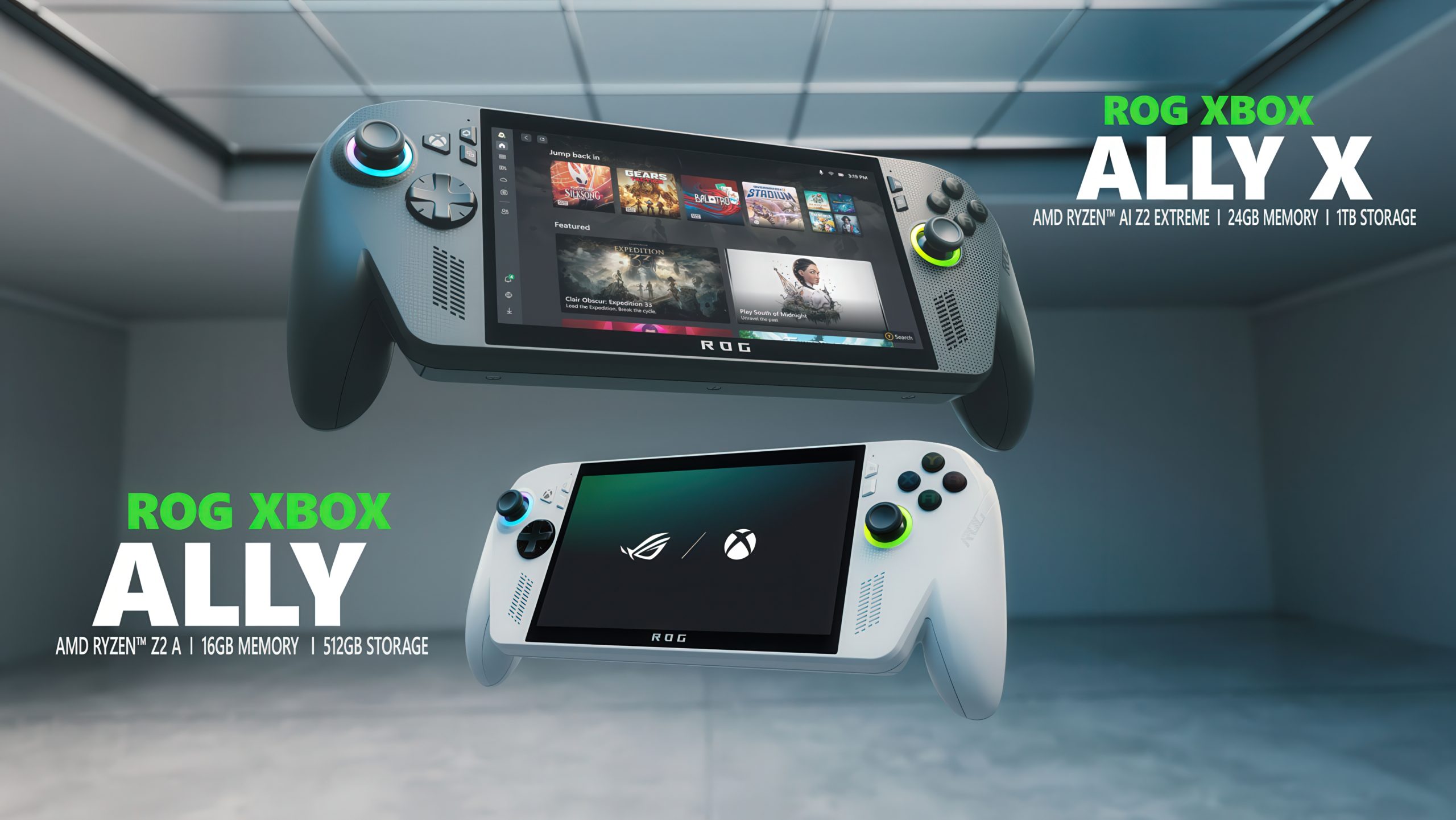
On its Q3 2025 earnings call, ASUS Chief Financial Officer Nick Wu told investors that demand for the newest, third-generation ROG Ally – developed in close partnership with Xbox – has been “extremely positive”, with the most expensive configurations selling out faster than the company can build them.
Wu reminded investors that the first ROG Ally arrived only a few years ago as a bit of a gamble. At the time, handheld Windows gaming PCs were a niche next to Nintendo Switch and Valve’s Steam Deck, and many enthusiasts dismissed them as miniature desktop PCs with a controller bolted on. ASUS leaned into a premium strategy instead, betting that a powerful x86 handheld with a good screen, aggressive cooling and familiar Windows library could carve its own space. That bet appears to be paying off.
The latest model, often referred to as the Xbox ROG Ally, doubles down on that formula rather than reinventing it. The hardware is essentially a high-end portable PC with Xbox branding, deep Game Pass integration, and software tweaks that make it feel more console-like out of the box. For some critics, that branding is little more than an Xbox sticker and green wallpaper on a Windows machine, but for ASUS and Microsoft it is a way to make PC-class performance feel approachable to console players who do not want to worry about drivers and launchers.
What really surprised ASUS, according to Wu, is where the demand is coming from. The company expected the entry-level models to move the most units, yet the premium tiers – the ones priced closer to a full-blown gaming laptop – are the first to run into shortages. ASUS is now working with component suppliers to ramp production and close the gap between supply and demand in the coming quarters.
On the numbers side, ASUS currently expects the Xbox-branded ROG Ally family to contribute roughly 3–5 billion New Taiwan dollars in revenue, or about 96–160 million US dollars, from the recent launches alone. That might sound huge, but some analysts note that at current price points it likely translates to something in the ballpark of a low six-figure unit count – a strong debut for a premium handheld, but not yet Switch or Steam Deck territory. ASUS itself seems to recognize this: the company is positioning Ally as a profitable, high-margin part of its ROG ecosystem rather than a mass-market loss leader.
There is still skepticism in the community. Enthusiasts point out that for the same money you can often build a more powerful desktop PC, and question whether the initial wave of purchases will slow once early adopters have had their fill. Others joke that ASUS is essentially repeating old “Steam Machine” ideas in a more portable form, just with better hardware and a far more mature ecosystem this time around.
Yet, taken together, the signals are hard to ignore. A third-generation device, a deeper partnership with Xbox, recurring shortages at the top end, and a clear revenue contribution that ASUS expects to grow to 4–5 billion NT$ in future quarters all suggest that the ROG Ally is not a short-lived experiment. It is becoming a long-term platform inside the ROG family – one that could push competitors to respond with their own premium handhelds and keep the handheld PC arms race alive for years.
For now, ASUS appears satisfied: the company has a handheld that reviewers acknowledge as technically impressive, even when they wince at the price, and real-world demand that is stronger than many skeptics predicted. Whether that momentum can outlast the launch hype – and whether Xbox branding is enough to convince more console-focused players to treat a Windows handheld as “their next Xbox” – will decide how big a slice of the gaming market the ROG Ally can ultimately claim.