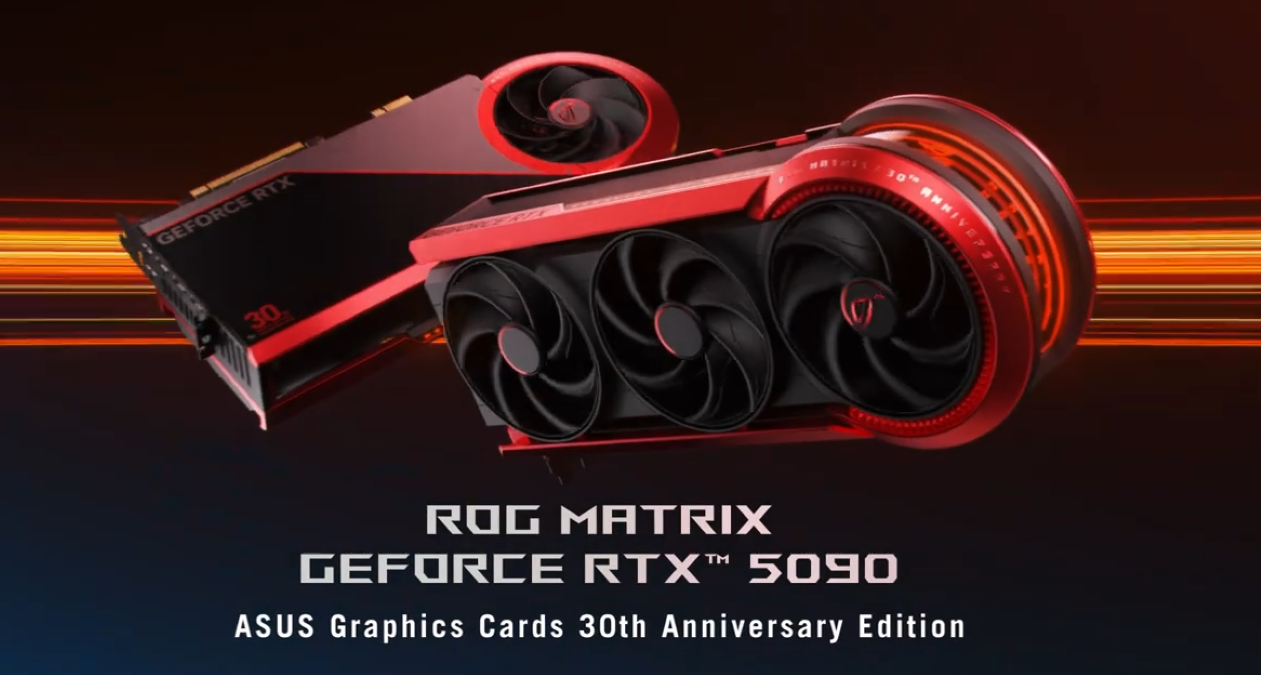
ASUS ROG RTX 5090 Matrix reportedly paused over quality concerns
The ROG RTX 5090 Matrix was supposed to be ASUS's ultimate flex: a hyper-limited, ultra-premium version of NVIDIA's next-gen flagship, priced around 4,000 dollars and capped at roughly 1,000 units worldwide. Instead of arriving as a triumphant halo product, the card is now at the center of a small controversy, with retailers telling customers that ASUS has paused shipments because of unspecified "quality" issues. For a graphics card that costs as much as a full high-end gaming PC, that is the last kind of headline ASUS would want.
What makes the situation even more awkward is the timing. Many enthusiasts never even saw the ROG RTX 5090 Matrix listed in stock, yet some retailers were already taking orders. In a few regions the card reportedly sold out within minutes on hype alone, prompting forum jokes that only Jensen hype could move a 4,000 dollar GPU that nobody has actually touched yet. Now, those same early adopters are being told to wait while ASUS quietly revisits the design.
What exactly is the ROG RTX 5090 Matrix Edition?
The Matrix label has historically been ASUS's most extravagant spin on a flagship GPU, and the RTX 5090 Matrix follows that tradition. It is not just another ROG Strix card with fancier lighting; it is marketed as a showcase of bleeding-edge cooling, power delivery and factory tuning. According to retailer listings, the Matrix version pushes the power limit up to around 800 W, roughly 200 W higher than many "regular" RTX 5090 partner cards. ASUS has hinted at performance uplifts in the 10 percent range compared with more conventional designs, with the expectation of better sustained boost clocks and lower operating temperatures.
On paper, that sounds impressive, but the price jump is equally dramatic. While high-end custom RTX 5090 models are already expected to hover around the 2,000 dollar mark, the Matrix nearly doubles that. At 4,000 dollars, you are not just buying frame rates; you are buying exclusivity, bragging rights and a collector piece that only a tiny fraction of gamers will ever see in person. That makes any hint of trouble much harder to swallow.
How the problem surfaced through retailers and forums
The first warning signs did not come from ASUS itself but from retailers and community chatter. On the ROG forums, one user complained that they could not find the RTX 5090 Matrix listed as in stock anywhere. After hunting around, they managed to place an order with a French retailer, only to discover that the store still had no physical inventory to ship.
Another forum member, going by the handle FalkorArtax, shared a similar story. They had tried to secure the same card from their own local retailer, but this time the store actually responded with an explanation. According to that retailer, ASUS had contacted partners to say that the Matrix edition had run into "quality" problems. As a result, the company had reportedly discontinued the initial batch and planned to send out a revised version at a later date.
So far, ASUS has not issued any public statement clarifying the situation, leaving enthusiasts to rely on second-hand information from shops and forum posts. That lack of transparency by itself does not prove anything sinister, but for a 4,000 dollar product with a four-digit global unit count, it understandably makes buyers nervous.
What could these "quality" issues actually be?
The phrase "quality issues" is simultaneously reassuring and vague. It suggests that ASUS found something it did not like and decided to act before mass deliveries, which is the responsible choice. At the same time, it gives no detail about whether the problem is cosmetic, functional, or potentially damaging to long-term reliability.
In a card that pushes an 800 W power budget, small design missteps can have big consequences. The issue could be related to thermals if, for example, the cooler was not spreading heat evenly across the GPU and memory, leading to hotspots and throttling. It could involve power delivery components operating too close to their limits under sustained load, increasing the risk of instability or premature failure. There might be unexpected coil whine, manufacturing tolerances that are not up to the Matrix branding, or even something as mundane as a batch of components that failed internal quality control.
At this stage, all of that is speculation. Without an official explanation, customers only know one solid fact: ASUS was reportedly unhappy enough with the initial Matrix run that partners have been told to hold back and wait for a replacement revision.
Why this matters more at a 4,000 dollar price point
Every graphics card should meet strict quality standards, but expectations rise sharply as the price climbs. A mainstream GPU can get away with a minor flaw if the overall value is strong. A 4,000 dollar, limited-run flagship has no such margin for error. Buyers are not only chasing performance, they are paying for the idea that they are getting the absolute best engineering ASUS and NVIDIA can offer.
If the Matrix edition were to ship with any performance regressions compared with cheaper RTX 5090 models, or if its thermals were worse despite the higher power envelope, that would be a disaster for the brand. Enthusiasts already question whether a 10 percent uplift justifies double the price. Add in the possibility of teething problems, and suddenly the "regular" premium cards from ASUS and other partners look like the smarter choice.
No wonder some forum users are already poking fun at the situation. One joked that the card sold out in five minutes only thanks to Jensen-level hype around RTX 5090, not because anyone actually knew how the Matrix performed in real builds. When the memes are writing themselves before a product even ships, you know the narrative has slipped out of the marketing department's control.
What prospective buyers should do now
If you managed to place an order for the ROG RTX 5090 Matrix, the best step for now is patience and information. Contact your retailer and ask whether ASUS has issued a notice about revised cards, and whether your pre-order will automatically be transferred to the updated batch. Some shops may offer a refund, while others might simply push back the expected delivery date until ASUS resumes shipments.
For everyone else, this is a good moment to step back and reassess priorities. The standard RTX 5090 designs that sit closer to the 2,000 dollar range will almost certainly deliver extremely high performance without flirting quite so aggressively with 800 W power limits. They may not have the Matrix badge, but they are likely to be easier to find, easier to cool and, crucially, better understood by the time reviews land.
There is also the broader PC building picture to consider. A 4,000 dollar GPU does not live in a vacuum: it demands a huge power supply, robust case airflow, a top-tier CPU and, in many countries, a noticeable bump to your electricity bill. While pure collectors might not care, performance-focused gamers often get better real-world value by spending more evenly across their system instead of pouring half their budget into a single component.
A reminder about early adopters and halo products
The ROG RTX 5090 Matrix situation is a textbook example of the risks that come with chasing the most exotic version of any new GPU. Halo products push boundaries on power, cooling, clock speeds and price. When everything goes right, they become showcase builds and YouTube thumbnail material. When there is even a small engineering hiccup, those same products also tend to be the first ones to expose it.
In that sense, ASUS pausing the Matrix, if the retailer reports are accurate, is actually the responsible move. Catching an issue before hundreds of 4,000 dollar cards hit customer rigs is far better than dealing with an avalanche of RMAs and angry posts later. Still, the episode is a useful reminder: sometimes the most sensible RTX 5090 to buy is not the rarest or the loudest one, but the card that quietly delivers stable, cool performance at a price that leaves room in your budget for everything else.
Until ASUS breaks its silence and explains exactly what went wrong, the ROG RTX 5090 Matrix will remain more legend than reality. For now, the hype machine has to share space with a more mundane story: even the most expensive GPU in the lineup is only as good as its underlying quality control.