South Korea is doubling down on its ambition to become a true semiconductor superpower, and this time it is doing it hand in hand with Arm, the company whose chip designs sit inside almost every smartphone on the planet. 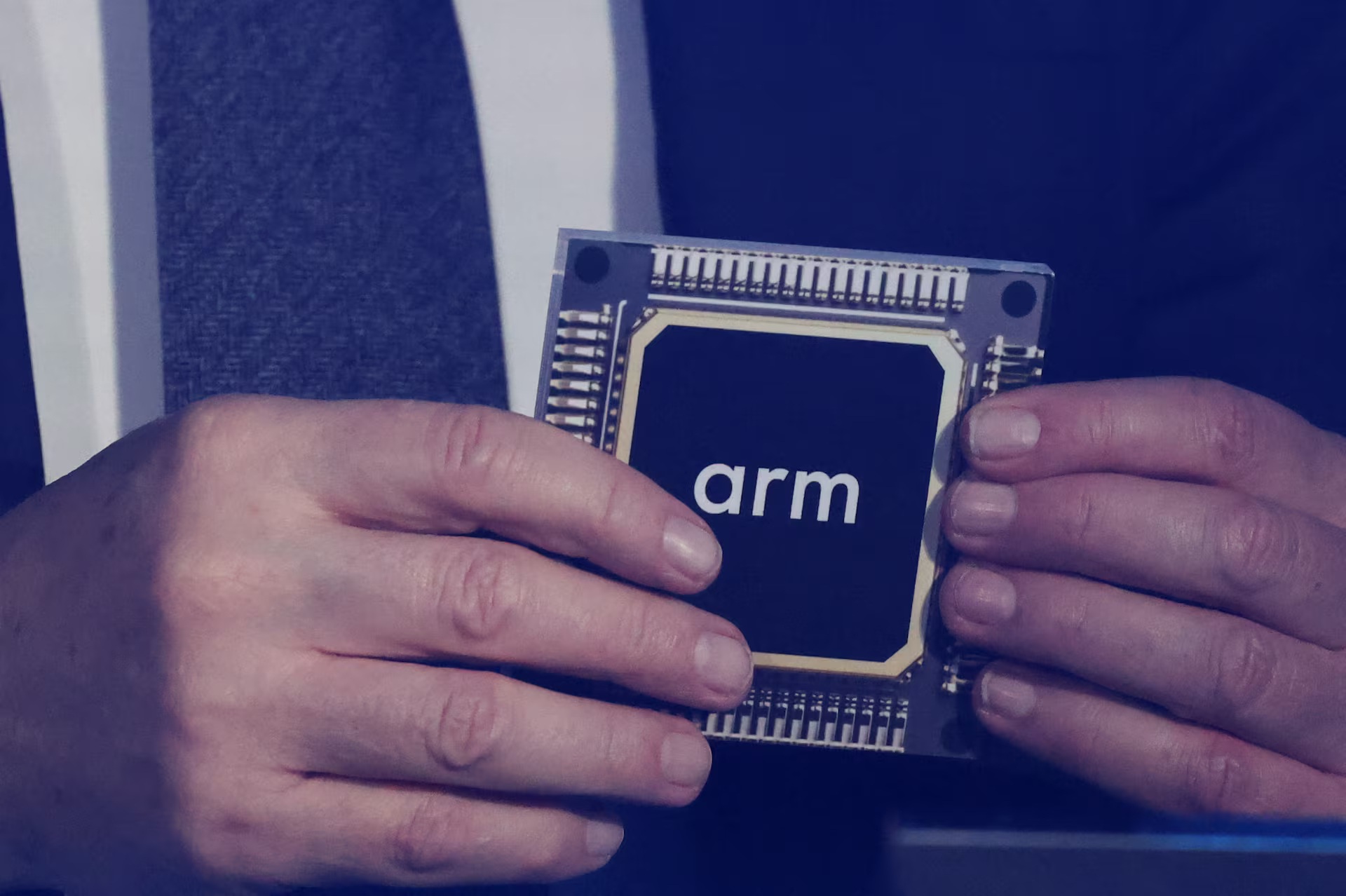
Under a new strategic education partnership, Arm will help train a new generation of Korean chip designers, building not just skills but an entire ecosystem around cutting edge CPU and AI design.
The agreement takes the form of a formal memorandum of understanding between South Korea’s Ministry of Trade, Industry and Energy and Arm, which is controlled by SoftBank. At the heart of the plan is a dedicated chip design school that will be set up in the country and run with Arm’s technology, tools and instructors. By 2030, the program aims to produce around 1,400 highly trained semiconductor design specialists, a cohort large enough to influence the direction of South Korea’s broader tech industry.
Unlike short corporate bootcamps, this school is meant to create world class engineers who understand not only how to use Arm intellectual property but how to architect complex systems on a chip around it. Students are expected to work with real world design flows, simulation environments and verification tools that mirror what the biggest chipmakers use today. That focus on practical, industry grade training is critical in a field where time to market, power efficiency and chip reliability can make or break an entire product line.
The push is especially important for the country’s growing fabless sector – companies that design chips but outsource their manufacturing to foundries. Korean players such as Silicon Works, ADTechnology, Telechips and Nextchip are competing in areas from display drivers and automotive electronics to advanced vision processors. On the AI side, specialists like Rebellions and FADU are trying to carve out a place in the booming accelerator and data centre markets. All of them depend on a pipeline of designers who can quickly turn ambitious ideas into manufacturable silicon.
For these firms, access to engineers well versed in Arm architectures and modern design methodologies is a strategic advantage. It shortens development cycles, reduces expensive design respins and helps small and midsize companies attempt products that previously would have required far larger teams. In parallel, the Ministry plans to support the new school by expanding semiconductor focused graduate programs, creating a ladder that can take students from undergraduate basics all the way to doctoral level research in chip design, packaging and AI hardware.
The educational push is also tied to a bigger conversation about artificial superintelligence, or ASI, that is unfolding at the highest political and corporate levels. In a high profile meeting, South Korean political leader Lee Jae myung and SoftBank founder Masayoshi Son discussed what it would take for Korea to play a leading role in the next wave of AI. Son highlighted four pillars that any ASI capable nation needs to get right: energy, semiconductors, data and education.
His comments underscored a paradox at the heart of Korea’s ambitions. On one hand, the country is home to world leading memory and foundry players and now wants to boost its chip design talent. On the other, Son warned that Korea still faces a serious challenge in securing enough affordable, clean energy to power the massive data centres and AI training clusters that advanced chips make possible. He argued that although global companies are announcing new data centre projects in Korea, their scale remains modest compared with what will be required in an ASI era.
The new Arm backed chip school can not, by itself, solve energy constraints, but it does strengthen the two pillars Korea already excels at: semiconductors and talent. By building a larger community of engineers who understand how to squeeze more performance out of every watt and every square millimetre of silicon, the country can partially offset energy limitations and design hardware that is inherently more efficient.
Arm is not a newcomer parachuting into this story. Through its subsidiary Arm Korea, the company already licenses CPU core designs and other intellectual property to a wide range of Korean manufacturers. The new initiative deepens that footprint, moving from pure licensing into co developing the human capital that will define the next decade of innovation. If successful, the partnership could turn South Korea into one of the world’s most important hubs for Arm based design in everything from smartphones and vehicles to AI accelerators and edge devices.
In the global race for semiconductor dominance, training 1,400 elite designers may sound like a modest number on paper. But when those engineers are embedded across startups, mid size fabless firms and tech giants, the impact compounds quickly. The Arm South Korea education alliance is therefore not just a school project; it is a long term bet that knowledge, more than factories alone, will decide who leads the next era of computing.
2 comments
Korea speedrunning the chip boss level while EU still arguing about subsidies lol
As someone trying to get into VLSI this sounds like a dream program ngl