Apple Vision Pro (M5) Review: Smarter, Stronger, But Still Stuck in Its Own Reality
Apple’s latest iteration of its mixed-reality headset, the new Vision Pro featuring the powerful M5 chip, has officially landed – promising smoother performance, better visuals, and, at long last, a more comfortable fit. Yet for all its technical polish and refinement, the device remains haunted by the same issues that limited its predecessor. In short, Apple’s newest headset feels less like a revolutionary leap and more like a strategic holdover – a polished but transitional product designed to keep Apple’s name alive in the extended reality (XR) market while it quietly prepares its next big step.
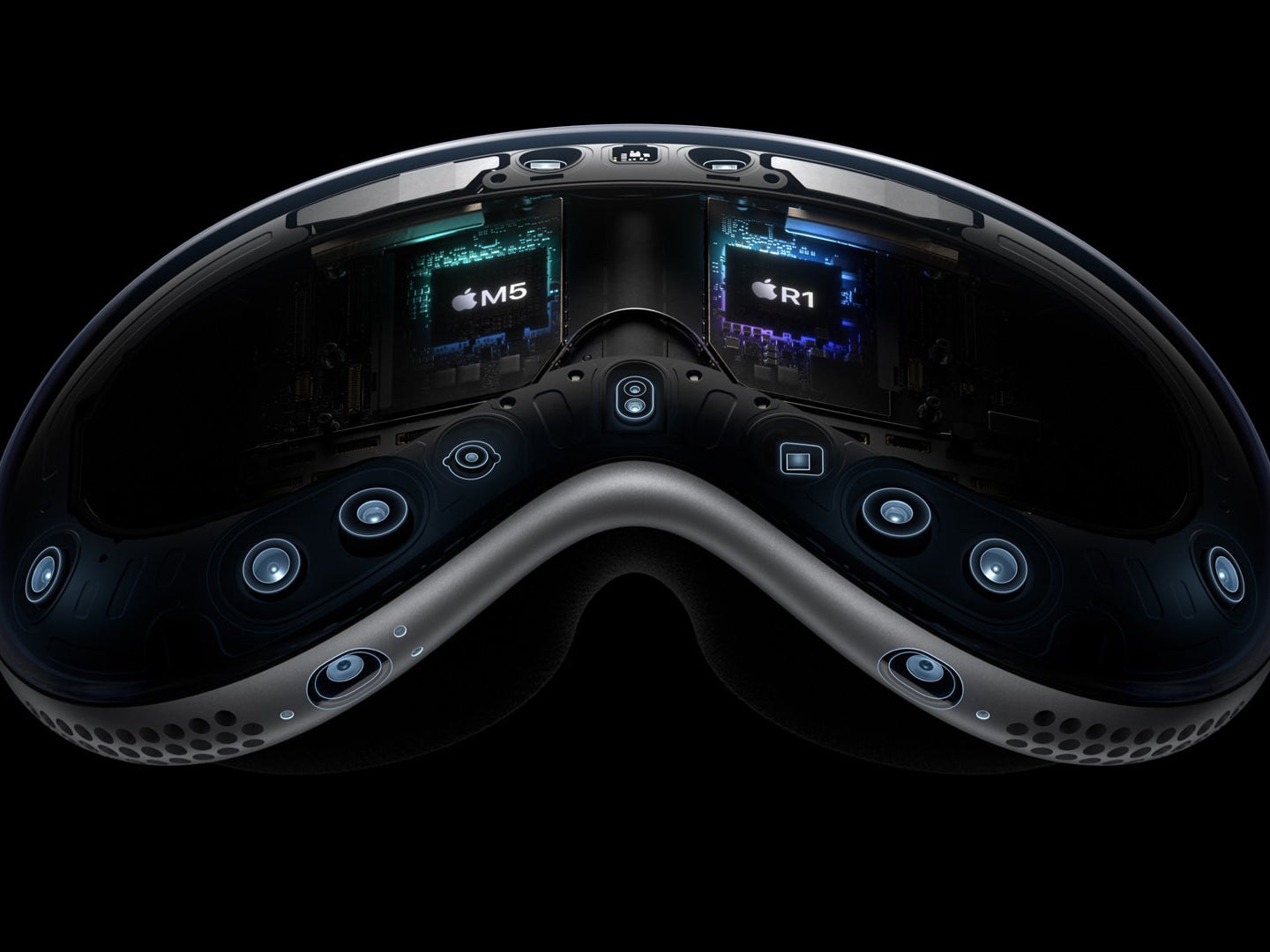
The Vision Pro (M5) marks a meaningful hardware upgrade. The headline feature, of course, is the addition of Apple’s new M5 processor – a chipset that promises not just raw speed but improved thermal efficiency and battery management. According to Apple, users can now expect up to three hours of battery life, a modest but noticeable improvement over the previous model’s two and a half. While this doesn’t entirely free users from the ever-present battery tether, it does make longer sessions a little less of a chore.
Equally important is the improvement in display performance. Apple claims the Vision Pro can now render around 10% more pixels than before, a small bump that nonetheless contributes to a cleaner, more detailed visual experience. The difference isn’t jaw-dropping, but it helps reinforce Apple’s reputation for producing best-in-class visual fidelity. Combined with the company’s trademark color accuracy and depth, the new Vision Pro once again establishes itself as one of the most visually immersive XR headsets on the market.
Interestingly, despite early speculation, Apple has retained the older R1 chip to handle input processing – meaning no new sensory co-processor has been introduced yet. This may disappoint those hoping for better hand-tracking precision or faster real-world responsiveness, but it suggests Apple is reserving major hardware leaps for a future full-fledged successor rather than this incremental refresh.
A Better Fit, Finally
Perhaps the most widely appreciated change comes not from the internals, but from something users literally feel: comfort. One of the loudest complaints about the first-generation Vision Pro was its weight distribution and the resulting discomfort during extended use. Early adopters reported neck strain and general fatigue after only an hour or two of wear, leading Apple to quietly replace demo units’ straps in its stores to avoid bad first impressions.
Now, Apple has officially addressed the issue with what it calls the Dual Knit Band – a redesigned head strap system that promises improved balance and breathability. It looks better, feels sturdier, and distributes the device’s weight far more evenly. The difference is immediate when wearing it: the Vision Pro feels less front-heavy and more like a piece of premium equipment rather than an experimental prototype. However, the catch remains – the Dual Knit Band is sold separately. That decision has already stirred frustration among users, especially considering the Vision Pro’s staggering $3,499 price tag.
Power vs. Purpose
Performance-wise, the new M5 chip delivers what you’d expect from Apple’s silicon pedigree. The interface is more responsive, environments load faster, and virtual worlds appear richer in detail. VR games benefit the most, with fewer stutters and smoother tracking. Yet, beyond the raw performance, one can’t help but ask: what exactly are we doing with all this power?
And that’s where the Vision Pro continues to stumble. Despite its premium build and top-tier hardware, the XR ecosystem around it remains limited. The pace of content releases is still glacial, and developers have yet to fully embrace Apple’s vision of mixed reality. Even the new addition of PSVR2 controller support feels more like a stopgap measure than a genuine solution. The lack of compelling content continues to make the Vision Pro feel more like a luxury tech demo than a must-have platform.
Is It Worth Buying?
Whether the Vision Pro is worth buying depends largely on what you expect from it. If you’re an Apple enthusiast eager to experience the best that mixed reality can currently offer, the M5 model certainly provides the smoothest and most polished experience yet. But if you’re looking for a headset that delivers value, versatility, and a rich ecosystem of applications, the Meta Quest 3 might still be the more practical choice – at a fraction of the cost.
Behind the scenes, Apple’s priorities have already shifted. Reports indicate that the company has quietly shelved plans for a cheaper Vision headset and is now focused on developing lightweight AR smart glasses, betting that the future of computing may eventually move from smartphones to eyewear. In that light, the new Vision Pro feels like a beautiful, expensive bridge – connecting what was to what’s next, but never quite becoming essential in its own right.
So yes, the Vision Pro (M5) is better. It’s faster, more comfortable, and still astonishingly well-built. But it’s also proof that Apple’s true ambitions lie elsewhere – in devices we’ll wear all day, not just for a few hours of digital escape. For now, the Vision Pro remains an impressive but lonely island in Apple’s expanding universe of ideas.
2 comments
At this point Apple just testing stuff before AR glasses drop, mark my words
meta quest 3 gang not switching anytime soon 😂