Apple appears to be reshaping its wearable technology roadmap, pulling resources away from its ambitious high-end Vision Pro successor and instead accelerating work on a very different type of device: AI-powered smart glasses. 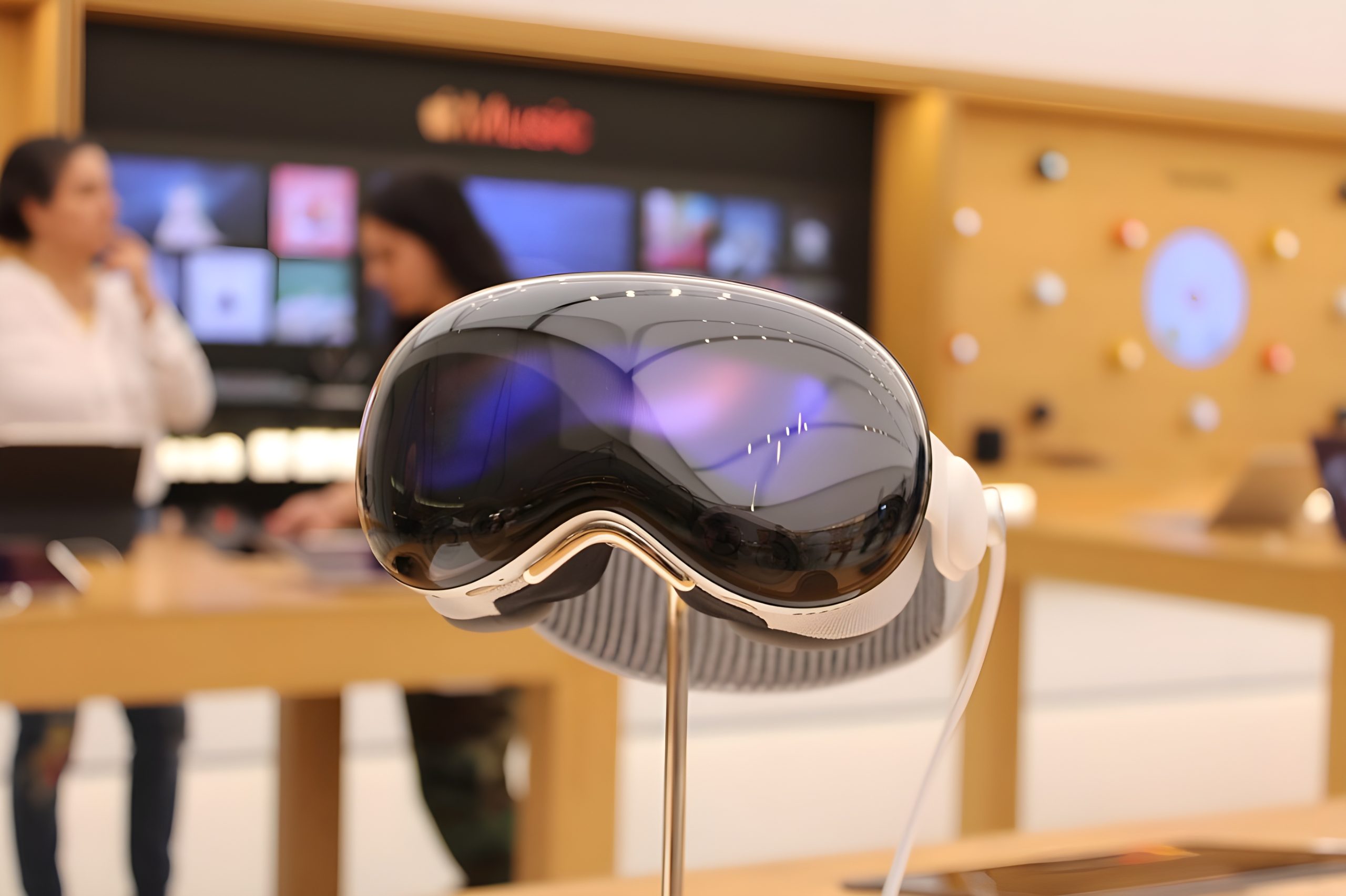
According to Bloomberg’s Mark Gurman, Apple has pressed pause on the 2027 iteration of the Vision Pro headset, codenamed N100, and is concentrating its efforts on launching a product that directly competes with Meta’s rapidly expanding Ray-Ban AI smart glasses lineup.
This shift signals a larger recalibration of Apple’s strategy. While the Vision Pro introduced cutting-edge spatial computing and mixed-reality features, its sky-high pricing and bulky design limited its immediate consumer appeal. Apple’s leadership now seems intent on delivering AI-infused products that could resonate with a broader market, much in the way the iPhone did in its era. The company’s upcoming smart glasses, reportedly targeting a 2026 release, are designed with this mass appeal in mind.
Unlike the Vision Pro, which offers immersive AR and VR environments, Apple’s new AI glasses are expected to take a more practical approach. They will not feature a built-in AR display but will include integrated cameras, microphones, and speakers. Users will interact with a more advanced version of Siri, opening the door for hands-free notifications, real-time translations, and contextual AI guidance. Apple is betting that by simplifying the hardware and emphasizing software intelligence, it can carve out space in the everyday wearables market rather than the niche mixed-reality sector.
Meanwhile, Meta has been moving aggressively with its Ray-Ban partnership. Its current generation of Ray-Ban smart glasses allows up to eight hours of use, live AI support, ultra HD 3K video recording, and advanced microphone arrays. The most recent addition, the Ray-Ban Display smart glasses, goes even further: they come with a micro-display that enables users to read texts, check directions, and watch small videos. At 42 pixels per degree, the resolution rivals some standalone VR headsets. With brightness reaching 5,000 nits and a custom light engine, Meta claims these glasses are usable both indoors and outdoors, a huge step forward in wearable displays. The glasses retail for $799 and include Meta’s Neural Band, which uses electromyography (EMG) to detect neural signals from the hand, translating subtle gestures into app controls without traditional buttons.
Despite Meta’s push toward display-equipped eyewear, Apple seems to be deliberately sidestepping this direction. According to Gurman’s sources, Apple is not chasing Meta’s flashy Ray-Ban Display features. Instead, it is focused on replicating and refining the core functionality of Meta’s earlier non-display Ray-Ban glasses: discreet AI interactions, voice-first navigation, and seamless integration into daily life. The absence of a display could reduce technical risks, extend battery life, and keep costs lower – all elements that may appeal to a larger consumer base.
The decision to halt development on the Vision Pro’s high-end sibling underscores a practical reality: building ultra-advanced headsets is expensive, technically demanding, and risky in terms of adoption. By contrast, AI glasses with lightweight hardware and cloud-powered intelligence may offer Apple a more direct pathway into mass adoption. The FCC filing from earlier this week, which referenced a new head-mounted device (model A3416), is widely believed to refer to Apple’s cheaper Vision Pro iteration, codenamed N109. This product will likely serve as a transitional step before Apple unveils its AI glasses.
What remains clear is that Apple and Meta are now on a collision course in the wearable AI space. Where Meta pushes high-brightness displays and gesture-controlled interfaces, Apple is betting on simplicity, elegance, and its proprietary AI ecosystem to attract consumers. The battle over smart glasses could end up shaping the next decade of personal technology, with the winner defining how we blend AI into everyday life. As Apple pivots its strategy, the tech world will be watching closely to see if its bet on AI-powered glasses pays off more than its ambitious but polarizing Vision Pro headset.
3 comments
finally apple focusing on mass market instead of overpriced toys
hope they make it stylish and not like those clunky vr headsets
bro apple just copying meta now