Apple once again finds itself at the center of a controversy with what online commentators have started calling #scratchgate. Reports have surfaced from several Apple Store visitors claiming that the brand-new iPhone 17 Pro, iPhone 17 Pro Max, and iPhone Air models displayed in-store appear to have scratches on their bodies and screens. 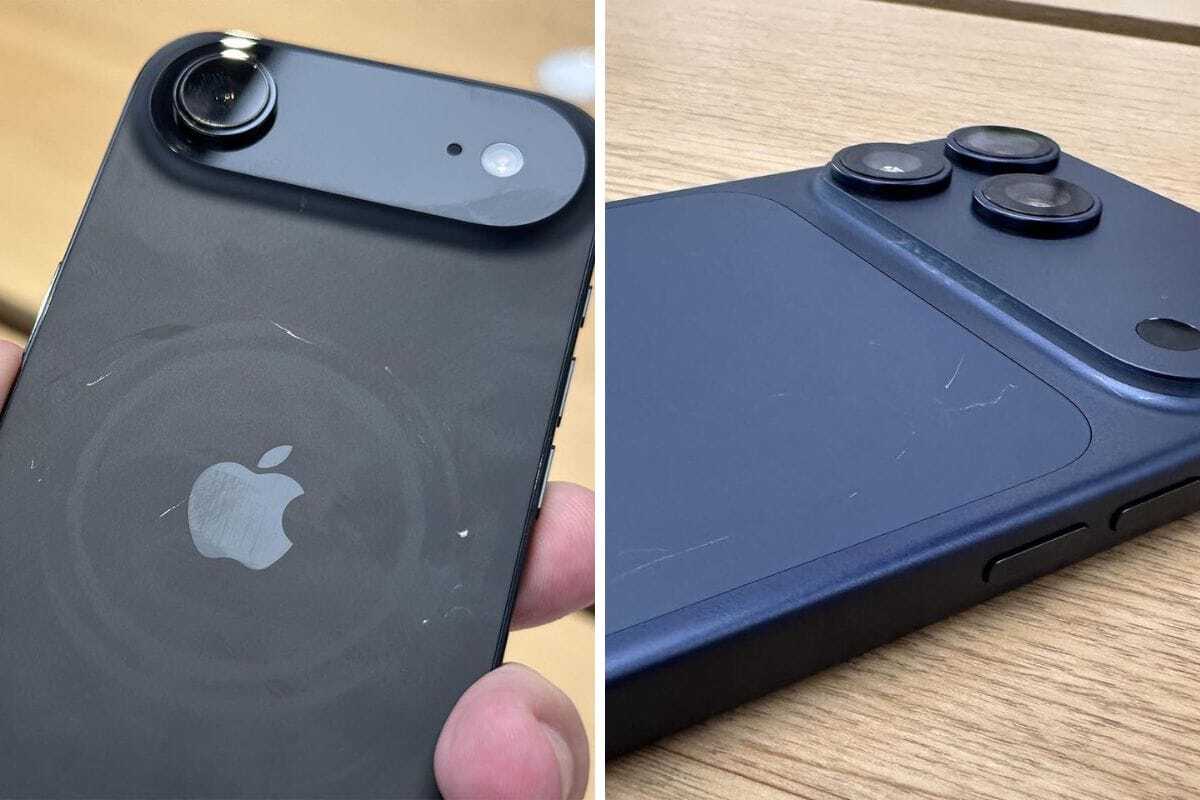
Considering the reputation Apple has cultivated for precision design and flawless aesthetics, the sight of blemishes on devices fresh out of the box has raised eyebrows and stirred debate among customers and tech enthusiasts alike.
Apple, however, has issued a firm response to clarify the situation. According to the company, what some are interpreting as scratches are not actual damage to the iPhones. Instead, Apple says the marks are caused by MagSafe risers – the special stands used in Apple Stores to showcase devices. When these risers wear down over time, small particles of their material allegedly transfer onto the aluminum and glass surfaces of the displayed iPhones. Apple stresses that this same cosmetic effect has been observed not just on the iPhone 17 series, but also on older iPhone 16 units still used as demo models. The company reassures customers that with a simple cleaning, these marks can be removed without leaving behind permanent damage.
The issue recalls earlier controversies Apple has faced, such as the infamous “Antennagate” of 2010, which questioned the reception quality of the iPhone 4. Now, with the return of aluminum construction on the iPhone 17 Pro and Pro Max, a new debate has emerged. While the elegant deep blue finish has proven a popular choice, it also seems to show every imperfection more prominently. Similarly, the black variant of the iPhone Air has drawn attention for visible scuffs in store displays.
Adding fuel to the discussion, well-known durability tester Zach Nelson from JerryRigEverything published his own video analysis of the iPhone 17 Pro. Nelson pointed out that Apple’s aluminum oxide coating – designed to protect the finish – doesn’t adhere strongly to the sharp edges of the new camera bump. He explained that everyday items like keys or coins could easily cause micro-abrasions along those sharp corners. The scratches, he noted, appear far worse on the blue model compared to lighter shades. While international standards exist for anodizing sharp corners, Nelson argued that Apple’s approach, though perhaps not best-in-class, doesn’t violate any industry laws or regulations.
For consumers, the key takeaway is that this issue is mostly cosmetic. It doesn’t impact the performance, speed, or durability of the iPhone itself. Still, the optics matter: customers spending premium prices expect pristine devices. That’s why even if Apple insists these are only riser transfers, many users may feel compelled to protect their new phones with a case or skin. After all, a phone designed for its sleek look loses part of its appeal if scratches – or apparent scratches – appear almost immediately when displayed in-store.
Despite the chatter, Apple’s iPhone 17 lineup has enjoyed a strong sales start. The introduction of the iPhone Air in particular has provided a boost, appealing to those who want modern features without the heft of the Pro Max. But the shadow of #scratchgate serves as a reminder that in the smartphone world, design choices and finishing details can quickly become flashpoints for debate, especially when magnified by social media and popular reviewers. Whether customers ultimately see this as a minor quirk or a warning sign about durability remains to be seen.
3 comments
lol so its not scratches just dirt? feels like apple excuse again
cosmetic or not, it kills the premium feel ngl
my old 16 had same thing so prob true its the store risers