Some luxury products are so over the top that their price tag almost makes sense. A phone made of solid gold, a six-figure art toy, a watch that is really sculpture for the wrist – they live in a world where logic stopped applying long ago. Apple’s new collaboration with Issey Miyake, the iPhone Pocket, is not one of those objects. At around 230 dollars for what is essentially a knitted phone sling, it lands in a far more uncomfortable zone: not quite art, not quite tech, not quite fashion masterpiece, but priced as if it were all three.
On paper, the idea sounds harmless enough. Apple teams up with the Japanese design house behind the iconic Pleats Please line and other experimental garments. 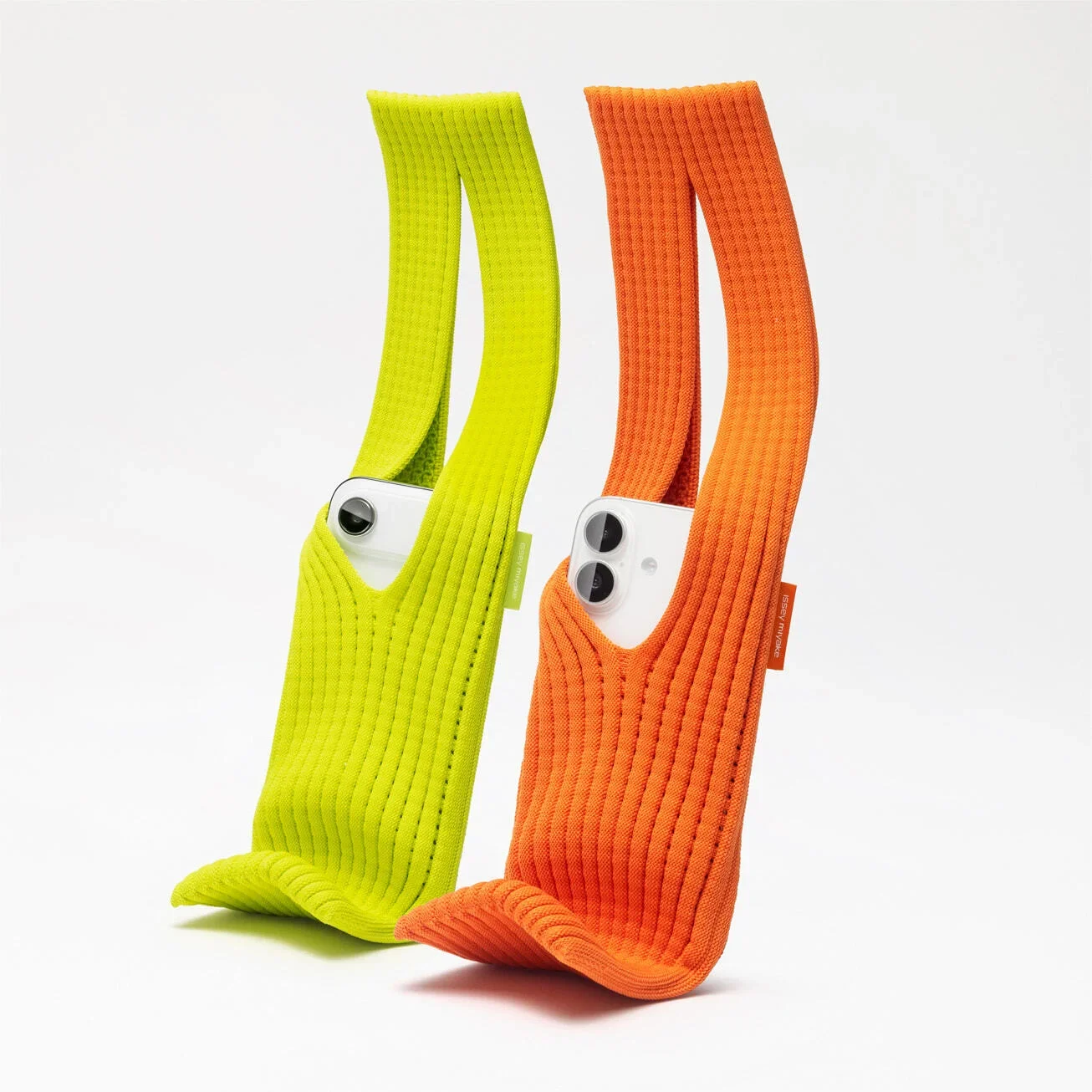
The result is a minimalist pouch, 3D knitted in a single piece, meant to hold your iPhone close to the body with either a long crossbody strap or a short one. Apple leans on the poetic concept of a simple piece of cloth, almost a pure gesture: something soft, sculptural, unobtrusive. It is the sort of language you usually hear in museums or design biennales rather than in an accessories press release.
Look at it for more than a second, though, and the contrast between story and reality becomes glaring. The iPhone Pocket is basically a stretchy sock for your phone with a logo and a carefully chosen color palette. Yes, the 3D knitted, single piece construction is technically impressive, but it is also the same family of techniques used for knit sneakers, sweaters and the literal socks your grandmother might crank out while watching daytime TV. The technology is not magical; it is industrial knitting applied to a very small silhouette.
Design-wise, it does tick a few boxes. The lines are clean, the shape hugs the phone, and the way the fabric curves around the device does have that modern gallery vibe. You can easily imagine it hanging as part of an installation on fashion and technology. The surface is smooth, the branding subtle, and the whole thing has that quiet luxury energy that Apple and Issey Miyake fans gravitate to. Seen from afar, it looks like a tiny, wearable sculpture.
But once you strip away the design jargon and the museum lighting in your imagination, you are left with what it actually does: it carries your phone. It does not charge it, protect it particularly well from drops, or hide some clever extra function. It is not a mini bag with pockets for cards or keys. It is not even especially weatherproof. It is, at the end of the day, a soft tube of knit wrapped around an already expensive device, hanging from your shoulder.
That is where the 230 dollar price starts to feel less like fashion and more like a test of how far we are willing to go in normalizing absurd accessory markups. For roughly the same money, you could buy a decent midrange Android phone, an actual piece of hardware with a screen, cameras and a processor. For a fraction of the price, you could find a perfectly nice fabric or leather crossbody pouch from a non-luxury brand. And if you are nostalgic, you can get something that looks suspiciously similar to those old phone socks that cost pocket change in the early smartphone era.
To be fair, collaborations like this are not really about practicality. They are about signaling. The iPhone Pocket is a tiny billboard for taste, for a particular tribe that appreciates Apple minimalism and avant garde Japanese design. Wearing it says you care about aesthetics more than function, that you are willing to pay for the story behind an object even when the object itself is almost aggressively simple. In that sense, it is perhaps the purest distillation of haute couture in tech accessories: not useful, not comfortable in any transformative way, but loaded with meaning.
There is nothing inherently wrong with that, as long as we admit what is going on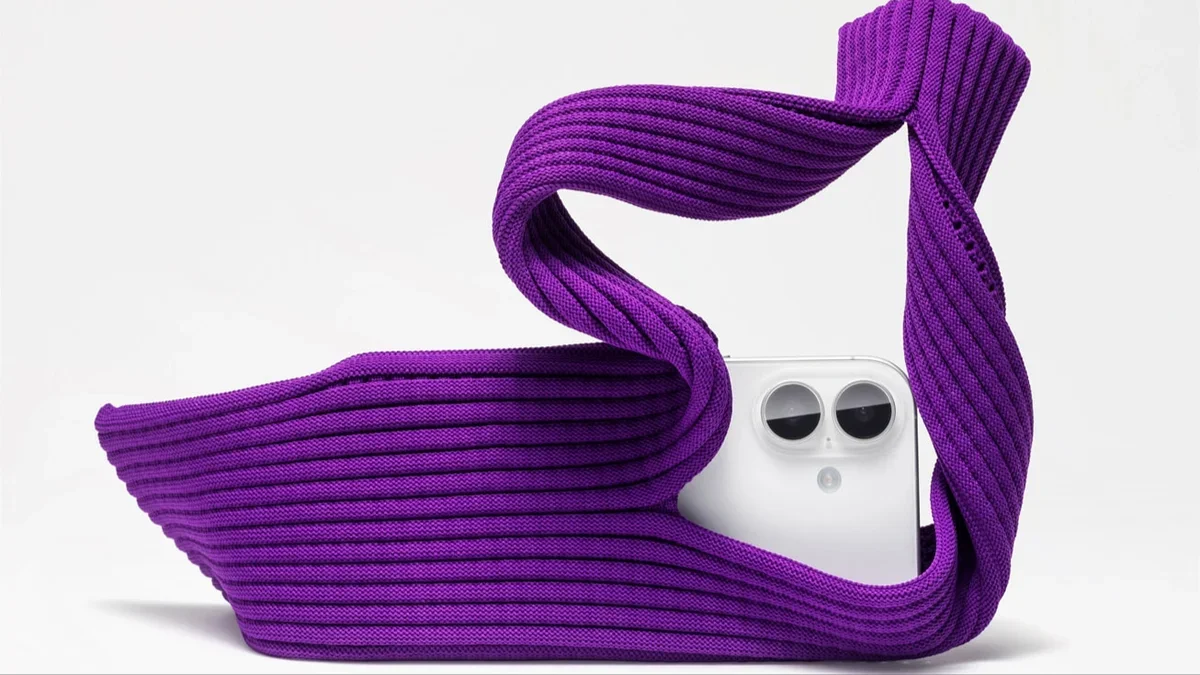
. The issue is that when 149 dollars for the short strap version and 229 dollars for the long strap version become the new normal for what is essentially a phone sock, the line between thoughtful design and pure price performance theater gets blurry. If this sells out quickly, which it likely will in certain style circles, it reinforces the idea that calling something a collaboration and weaving it from premium yarn is enough to justify any number printed on the product page.
Compare that to genuine, deliberate extravagance in the tech world. Last year Huawei’s Mate XT Ultimate, the first tri foldable smartphone, already felt like something out of science fiction. Then Caviar, the company known for turning gadgets into jewelry, created a one off edition of that phone in 18 karat gold. It weighed around two pounds and reportedly cost about 100000 dollars. The piece was built for a single wealthy client in the United States, more comparable to a custom watch or a piece of jewelry than to a regular handset.
You do not have to like that golden tri foldable, or the infamous 150000 dollar Labubu art toy that also made people question the sanity of the luxury market. But in both cases you can see a kind of internal logic. These are collectibles, limited objects, things that enter the realm of art ownership and speculation. You might roll your eyes at the prices, yet you also understand that they are anchored in rarity, in precious materials, in the psychology of collecting.
The iPhone Pocket, by contrast, does not feel like a future auction piece. It is not made of gold, it is not mechanically complex, and it is not released as a one off sculpture in a vault. It is a small fabric accessory, produced in batches, meant to be worn and tossed in the laundry basket. In a year or two, it is easy to imagine it looking like any stretched out knit once the elasticity softens. It is hard to picture collectors fighting over it as the next iconic artifact of 2020s design.
What makes the situation slightly tragic is how easily this could have been different. Imagine the exact same object released as a playful, democratic collaboration at around 40 dollars. It would still be more expensive than a generic phone sleeve, but positioned as a fun entry point into the Issey Miyake universe for Apple fans. The conversation would shift from outrage over pricing to appreciation of the shape, the knit, the colors and how it hangs with different outfits. Instead, the current price pushes it into a space where even people who love design feel conflicted.
Meanwhile, the internet reaction tells its own story. Under news posts and videos about the iPhone Pocket, you already see sarcastic comments about paying luxury money for what looks like a cut up sock, jokes about knitting your own for the price of a coffee, and blunt reactions calling it ridiculous. Some people genuinely like the object and say it fits their style perfectly. Others feel insulted by a product that seems to assume the audience will buy anything as long as the right names are printed on the tag. That tension is exactly where this accessory lives.
In the end, the iPhone Pocket is not an evil product, just a very revealing one. It shows how far brand power can stretch, how willingly some of us will trade function for pure vibe, and how the line between clever design and self parody can vanish once a number with two extra zeros appears on the price sticker. If you adore the look and you can afford it without blinking, you will probably enjoy wearing it. If you are staring at the price and wondering when a phone sleeve started cost more than your monthly phone bill, you are not alone.
Between a two pound golden tri foldable that openly declares itself a toy for the ultra rich and a 230 dollar knitted phone sling trying to pass as a small everyday luxury, it is strange to say this, but the gold brick feels more honest. At least it never pretended to be just a piece of cloth.
1 comment
This is the first time a 100k gold phone from Caviar actually feels more honest than what Apple is selling here