Apple’s upcoming iPhone 17 series is shaping up to be one of the company’s biggest releases yet, with fresh supply chain data pointing to record assembly volumes in the final months of 2025. According to Taiwan’s Commercial Times (CTEE), Apple suppliers expect around 62 million iPhone 17 units to be assembled in the fourth quarter alone – roughly 3 million more than the same period last year. That translates to an estimated 5% year-over-year growth, signaling steady demand despite a maturing global smartphone market.
The report further notes that Apple’s latest A19 processor, built on TSMC’s advanced third-generation 3nm (N3P) process, will play a central role in maintaining this momentum. The new chip, which powers the iPhone 17 lineup, ensures TSMC’s high-end production lines continue to run at full capacity. 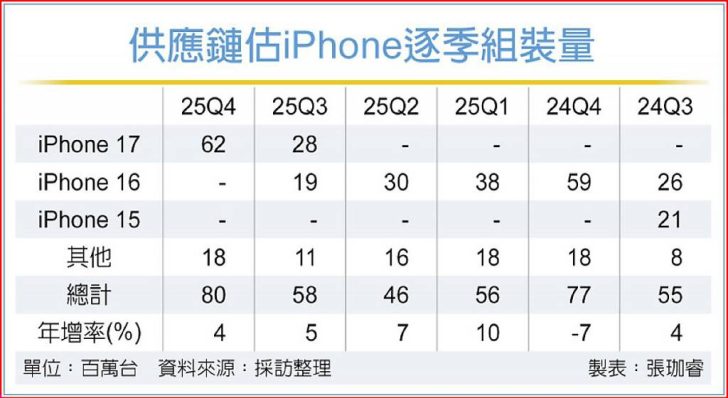
This surge in orders is also driven by the upcoming iPad Pro and MacBook Pro refreshes, both expected to adopt the A19 architecture, further tightening TSMC’s wafer supply schedules.
Looking ahead, Apple is already preparing for an even more ambitious leap in silicon technology. The A20 chip – slated for 2026 – will migrate to TSMC’s cutting-edge 2nm process, with trial runs reportedly beginning at the Kaohsiung Fab 22 facility. In parallel, the upcoming M6 chip for Mac devices will also use the same 2nm process, and early supply forecasts suggest capacity will be stretched to its limits once production ramps up.
These numbers, while impressive, come with important caveats. Analysts note that most iPhone assembly now takes place in India, marking a strategic shift away from China. The CTEE’s estimate likely relies on data tied to TSMC’s wafer output and utilization rates, offering a snapshot of how many units might realistically roll off production lines by year’s end. For comparison, the third quarter of 2025 saw 28 million iPhone 17 models assembled – up from 26 million in Q3 2024, representing a 7.7% increase. When combining Q3 and Q4, Apple’s total assembly numbers are tracking roughly 5 million units ahead of last year’s iPhone 16 series figures for the same period.
However, Apple’s momentum isn’t without friction. The iPhone 17 Air, the lightest member of the new lineup, still hasn’t launched in China due to ongoing regulatory delays surrounding eSIM compatibility. Despite this hiccup, the broader production picture remains upbeat. With supply chains humming and TSMC’s advanced nodes in full swing, Apple seems well-positioned to maintain its dominance as the global premium smartphone leader heading into 2026.
2 comments
5% growth might sound small but that’s huge at this scale
interesting that india assembly is ramping up so fast