Apple’s new iPhone 17 Pro is finally in reviewers’ hands, and with it the company has launched yet another redesign that sparks both excitement and debate. This year, Apple didn’t just tweak the formula – it went back to a material it hasn’t used in a premium iPhone for many years: aluminum. 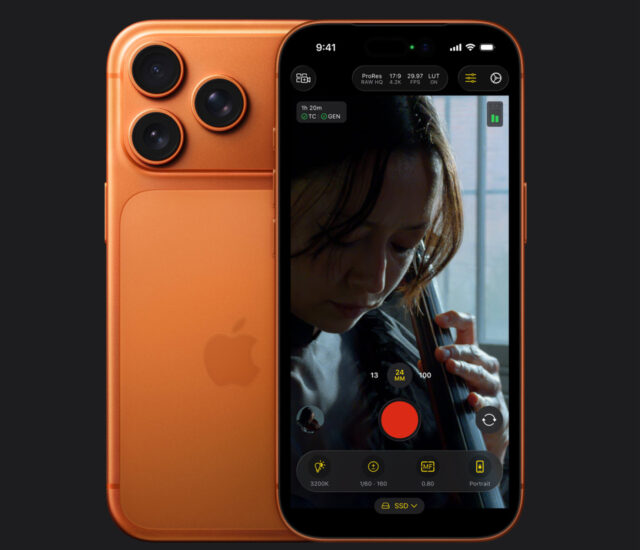
The change is more than cosmetic, affecting weight, heat management, and even how the device feels in the hand.
Looking at the numbers, the iPhone 14 Pro, Apple’s last stainless steel model, tipped the scales at 206g. The shift to titanium in the iPhone 15 Pro shaved weight down to 187g, but that trend didn’t last. By the time the iPhone 16 Pro Max came around, titanium bulked up again to 199g. Now with the iPhone 17 Pro’s return to aluminum, weight is back at 206g. The phone also grew ever so slightly in each dimension, which you’ll notice if you’re used to previous Pros. At 6.3 inches, it remains one of the heavier handsets in its class, a fact Apple seems comfortable with in exchange for thermal and durability gains.
The choice of aluminum isn’t random. The material conducts heat far better than titanium, and Apple complemented this with a vapor chamber cooling system tied directly to its new Apple A19 Pro chipset. This suggests a focus on sustained performance – a crucial improvement as modern mobile games, 4K video capture, and AI-driven tasks demand more from the hardware. For once, Apple seems to be acknowledging the importance of thermal consistency, a domain where rivals like ASUS and Samsung have often outpaced them.
On the design front, the iPhone 17 Pro has what some are calling the most dramatic back panel Apple has released. The dual-tone finish – a Deep Blue review unit in our case – features a Ceramic Shield window that visually splits the back. Add to that the full-width camera island, and you have one of the busiest-looking iPhones ever. It’s divisive, but undeniably bold. Whether you find it stylish or overdesigned depends on taste, but Apple clearly wants to break away from its iterative reputation.
The front also gets attention, not just in looks but in function. Apple reengineered its Ceramic Shield to triple scratch resistance, now testing at Mohs level 5, while improving crack resistance fourfold. An anti-reflective coating was added – something previously reserved for iPad Pro’s expensive nano-etched displays. Combined with a display peak brightness of 3,000 nits (up from 2,000), outdoor readability finally matches or exceeds Samsung’s Ultra series. While you won’t notice the jump indoors, step under bright summer sunlight and the difference is stark.
The cameras, always a headline feature, see a big evolution. The telephoto lens moves to a 48MP sensor, but drops to a 100mm focal length compared to last year’s 120mm. Apple compensates with in-sensor zoom, offering 8x/200mm in addition to the 1x, 2x, and 4x modes already familiar to users. This flexibility may prove more useful than a single fixed 5x lens, especially for mixed photography styles. Meanwhile, the front-facing Center Stage camera gets an 18MP square sensor, expanding field of view when more people enter the frame. Dual Capture mode is another Apple-first, recording simultaneously from front and back cameras with picture-in-picture overlays. It’s a feature Android users have seen before, but its polished implementation here could make it a favorite among vloggers and content creators.
Charging has also changed – but with a catch. Apple now supports faster wired charging through AVS technology, but no compatible charger is included in the box. This echoes the charger removal controversy of years past, though now it stings more: the average user doesn’t own an AVS brick. You’ll find only a USB-C cable in the package. If your 65W PPS charger suffices, you’re lucky. Otherwise, Apple offers its own $40 AVS charger as the official route, and you can bet many buyers will cave for optimal speeds. The irony of needing to buy a new charger after years of Apple insisting you already had plenty isn’t lost on long-time fans.
Under the hood, there’s also a bigger battery – 406mAh more in nano-SIM models and a hefty 670mAh bump in eSIM-only versions, depending on region. While real-life endurance tests are still pending, these numbers suggest that even with a brighter screen and more powerful silicon, users should expect noticeably longer battery life compared to the iPhone 16 Pro.
So, what do we make of the iPhone 17 Pro at first glance? It’s a device full of contradictions: lighter-than-steel yet heavier than titanium, bold yet polarizing in design, practical in thermal management yet impractical in charging accessories. But these contradictions are also what make it fascinating. It feels like Apple is both doubling down on tradition – refining Ceramic Shield, pushing iOS camera tricks – and daring to pivot, with the return to aluminum and the embrace of PC-style cooling techniques. Whether this chapter is seen as groundbreaking or just another stepping stone will depend on how these changes hold up under extended use.
Our tests are only beginning, but first impressions suggest that Apple hasn’t played it safe this year. The iPhone 17 Pro is bigger, brighter, more thermally ambitious, and more daring in style than its predecessors. The real question is whether it ages like the iPhone 14 Pro, remembered fondly as a turning point, or ends up like a placeholder before the next big leap. Stay tuned for detailed benchmarks, camera shootouts, and endurance trials in the coming days.