For more than a decade, AirDrop has been one of the most powerful lock in tools inside Apples ecosystem. It is fast, invisible most of the time, and famously effortless when you are moving photos, documents, or videos from one Apple device to another. Now Google has quietly kicked open a side door, reverse engineering how AirDrop talks and wiring its own Quick Share system on Pixel 10 phones into that conversation. For the first time, truly seamless sharing between select Android devices and iPhones is possible without cables, clouds, or clumsy third party apps.
On paper this sounds like the exact sort of move that would infuriate Apple. The company has built a huge business on the idea that the best experience lives inside its own walled garden, not in some messy cross platform middle ground. 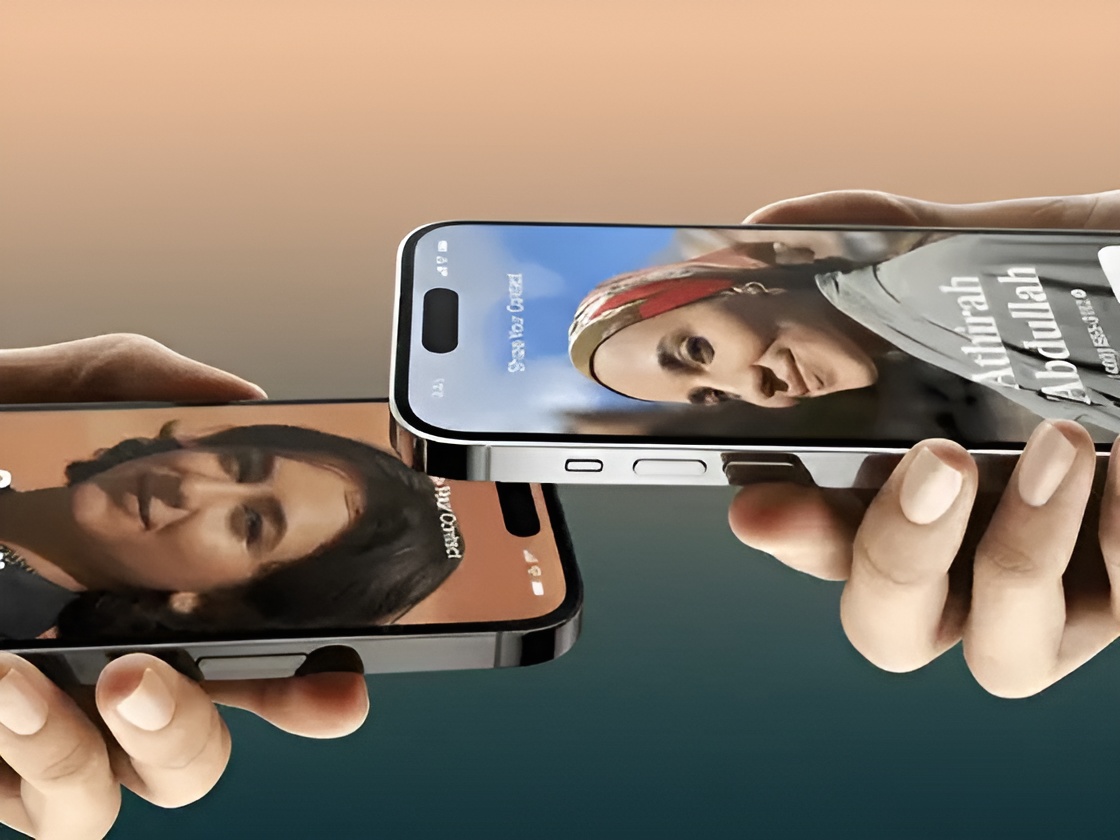
Apple could, in theory, shut this down with a technical tweak and close that side door overnight. Yet the more you look at the bigger picture, the clearer one thing becomes. Right now, Apple has a very expensive reason to tolerate Googles AirDrop style workaround, at least for a while.
How Google quietly plugged Quick Share into AirDrop
Apple never published the full blueprint for how AirDrop works end to end. The feature is proprietary and sits deep inside the companys software stack, but it rides on top of familiar open standards. Discovery and negotiation lean on Bluetooth, while the actual transfer of files happens over a direct Wi Fi link, similar in spirit to Wi Fi Direct. That mix of standard plumbing and secret sauce is exactly what allowed Google to study the behavior of AirDrop on iPhones and build Quick Share so that it speaks the same language at just the right moments.
According to Google, the bridge between Quick Share and AirDrop has been engineered with a strong focus on security. The core is written in Rust, a modern memory safe programming language whose compiler enforces ownership and borrowing rules that make entire categories of memory bugs impossible by design. On top of that, Googles engineers ran internal threat modeling, formal privacy reviews, and red team style penetration tests meant to mimic real attackers. The company even brought in security firm NetSPI to poke at the feature from the outside and validate that the new cross platform sharing channel is not a soft target.
Despite the careful engineering, this bridge still exists entirely at the mercy of Apple. A single change to how AirDrop advertises itself, authenticates peers, or hands off data could scramble the assumptions that Quick Share relies on today. Apple would not need a press release or a lawsuit to kill the party. It could simply ship an iOS update, claim that it improved reliability and security, and quietly sever the connection. That is why the central question is not whether Apple can stop this, but whether it wants to.
The billion dollar Gemini AI deal that changes the power balance
To understand why Apple may hesitate, you have to zoom out beyond file sharing and look at artificial intelligence. Apple is in the middle of a huge strategic pivot around Siri, which for years has felt inferior to the newest wave of generative AI assistants. Internally, Apple has decided that catching up requires partnering with the very company that just tunneled into its AirDrop moat. Reports indicate that Apple plans to rely on a gigantic custom tuned version of Googles Gemini model, weighing in at around 1 point 2 trillion parameters, to handle the heaviest Siri requests in the cloud.
That number matters. It dwarfs the roughly 1 point 5 billion parameter model that Apple has been using to power its existing cloud Siri and reflects the sheer computational muscle needed for modern conversational AI. Building and serving such a model at scale is extraordinarily expensive. Instead of trying to reinvent that wheel from scratch, Apple is apparently ready to pay Google roughly 1 billion dollars per year for access to Gemini under a long term arrangement. This is not a simple API line item. It is a foundational dependency related to how future iPhones will feel and compete.
And that billion dollar check is not the only one moving between the two giants. Google already pays Apple an estimated 20 billion dollars a year to remain the default search engine inside Safari and across a wide range of Apple services. Put those together and you see a relationship that looks far less like rivals hurling chairs at each other across the room and much more like two powerful companies holding large levers over one another. In that context, blowing up Googles carefully crafted Quick Share bridge would be a far more political act than a simple protocol change.
Why Apple chose Google over other AI partners
Some might argue that if Apple really dislikes Googles workaround, it could simply swap AI partners. In practice, it has already tried that route and still circled back to Google. Reports suggest that Apple tested OpenAIs ChatGPT and Anthropic Claude models for cloud based Siri before making its decision. Those systems are more than capable in many use cases, yet Apple ultimately picked a customized Gemini variant that runs inside its Private Cloud Compute framework. That infrastructure is designed so that even while requests are processed on remote servers, Apple can enforce strict privacy guarantees and keep oversight over how data is handled.
The fact that Apple ended up with Google after experimenting with multiple leading models suggests that Google offered the best combination of performance, integration options, privacy concessions, and cost. Reopening that evaluation would be messy and time consuming, especially as Apple races to convince investors and customers that it is serious about AI. Starting a public feud with Google by breaking Quick Share could easily complicate ongoing AI negotiations or trigger tougher contractual terms the next time the two companies sit down to talk about money.
A world of antitrust pressure and open ecosystem demands
There is another reason Apple may tread carefully. Regulators around the world are already scrutinizing the company for its tight control over software, payments, and distribution on its platforms. In the United States, Apple recently lost major points in its long running fight with Epic. Courts compelled Apple to permit external payment options and to allow Epics Fortnite back onto its platforms. Apple technically complied but layered on new commissions and conditions, which in turn led the judge to warn that the company could face contempt proceedings and even criminal exposure if it keeps stretching the spirit of the ruling.
Across the Atlantic, the European Union has taken an even more aggressive stance. Under the Digital Markets Act, Apple has been officially labeled a gatekeeper, a term applied to companies with such dominance that they can distort competition. As a result, Apple is now required to allow third party app stores on its devices and to modify how developers can distribute and monetize their apps. Developers who enroll under the new European program can hand over a smaller share of their app revenues to Apple, breaking the traditional one way toll booth the company enjoyed for years.
These changes are not confined to Europe and the U S in the public imagination. They create a powerful legal and political precedent that lawyers in other regions are already citing. In Australia, Epic has asked courts to let its apps be sideloaded onto Apple hardware without paying commission at all. In China, a group of roughly 55 consumers has filed a formal antitrust complaint arguing that Apple runs a monopoly in local app distribution and payment processing while quietly offering more flexibility to users in other markets through alternative app stores and off App Store payment routes.
If Apple were to suddenly and aggressively shut down Googles newly created cross platform file sharing path, it would hand critics a fresh exhibit. Regulators could frame it as yet another example of Apple using its control of low level technologies to prevent interoperability, punish rivals, and keep users trapped inside one ecosystem. Even if the official justification was security or privacy, the optics would be ugly. In an era when lawmakers are demanding more openness, voluntarily ripping out one of the first effortless bridges between iOS and Android is politically risky.
Why tolerating Quick Share might be the least painful option
Seen through that lens, leaving Googles AirDrop style workaround in place begins to look like the default low friction choice for Apple. It keeps the peace with a crucial AI supplier, avoids generating another round of antitrust headlines, and still lets Apple maintain the public stance that it did not officially endorse any cross platform standard. From the companys point of view, Quick Share remains an external experiment that happens to work with AirDrop today, not a core feature it must support forever.
There are also softer benefits. Many iPhone owners live in mixed device households and workplaces where someone always has an Android phone. Letting those people move files quickly without emailing themselves or bouncing through chat apps makes the overall Apple experience feel less claustrophobic without actually erasing the advantages of staying inside the ecosystem. AirDrop will still behave more seamlessly between Apple devices, remain more widely available across the lineup, and keep its privacy controls tied tightly to iOS and macOS settings.
Crucially, Apple still retains the option to change course if something goes wrong. If a genuine security flaw is discovered in the way Quick Share interacts with AirDrop, Apple could harden the protocol and explain the change as a necessary defense. If future regulatory guidance forces a more formal common standard, Apple could pivot to an official cross platform solution and retire ad hoc arrangements. For now, though, the path of least resistance is to do nothing dramatic and let Googles bridge live.
The near term outlook for AirDrop and Quick Share
Putting all of this together, the picture that emerges is not one of sudden generosity from Apple. Instead, it is a pragmatic calculation shaped by money, AI strategy, and legal pressure. Underneath the surface of an apparently small feature like file sharing sits a billion dollar Gemini deal, a twenty billion dollar search partnership, and a long list of regulators looking for any sign that Apple is abusing its gatekeeper status.
Unless those forces shift dramatically, the most realistic expectation is that cross platform file sharing between Pixel 10 devices and modern iPhones will continue to function. It will remain unofficial and somewhat fragile, always vulnerable to the next software update, but also quietly protected by the larger strategic interests tying Apple and Google together. For users, that means a rare win. For Apple, it means living with a slightly leakier moat in exchange for continued access to the AI engine it believes is essential for the next generation of Siri and the broader future of the iPhone.