Apple’s latest experiment, the iPhone Air, was meant to redefine sleekness and minimalism – but despite its stunning engineering, the ultra-thin iPhone has hit a commercial snag. Reports from industry insiders suggest that Apple is cutting production of the iPhone Air by nearly one million units after slower-than-expected sales. 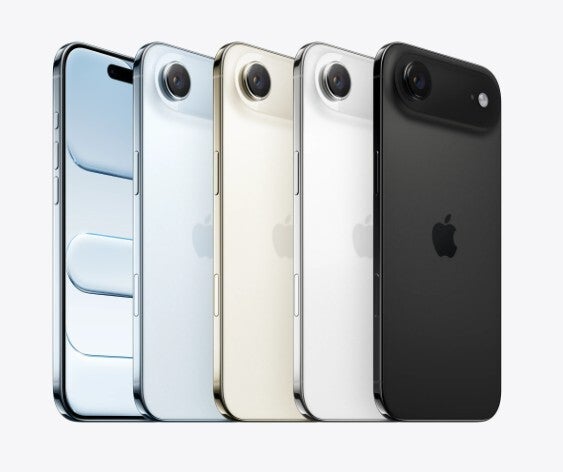
While the iPhone 17 lineup thrives, Apple’s thinnest-ever device is struggling to find its audience.
The iPhone Air is, by all accounts, an engineering marvel. At just 5.6 mm thick, it’s about 19% thinner than the iPhone 6 – which itself was once considered impossibly slim. Apple’s goal with the Air was to revive the excitement once reserved for the Mini and SE series – offering a premium yet uniquely lightweight experience. Inside that ultra-slim frame lies a 3,149 mAh battery on eSIM-only models and 3,036 mAh on versions with a physical SIM slot, capable of what Apple calls “all-day battery life.” It’s impressive, though many users found that the real-world endurance didn’t quite match the marketing claims, especially during gaming or extended 5G use.
Design-wise, the iPhone Air exudes elegance – clean lines, featherlight feel, and a finish that makes older models look bulky by comparison. But this beauty came with compromises. The device houses a single 48MP Fusion rear camera, delivering solid images but lacking the versatility of the Pro series’ telephoto and ultra-wide lenses. With only a 2x optical zoom and no dedicated night mode improvements, photography enthusiasts were quick to notice the limitations. The mono speakers, though clear, sounded flat when compared to the spatial audio quality on other iPhones. Priced at $999 or $41.62 a month over two years, many found themselves wondering if the Air justified its cost when the iPhone 17 base model brought more features to the table.
According to South Korea’s The Elec, Apple’s supply chain partners have confirmed that the company is cutting iPhone Air production by around one million units. Analysts from Mizuho Securities attribute this to tepid demand, noting that consumers are gravitating toward more familiar and feature-rich models. In contrast, Apple is reportedly ramping up production for the iPhone 17 Pro and 17 Pro Max by an additional five million units combined – a clear sign of where demand is strongest.
The irony, as analysts point out, is that the iPhone Air’s biggest rival might be Apple itself. The iPhone 17 introduced ProMotion to its base model for the first time, offering a buttery-smooth 1-120Hz adaptive refresh rate display and up to 30 hours of video playback – a substantial leap from the iPhone 16’s 22 hours. This unexpected upgrade blurred the line between the base and Air models, leaving the latter without a clear niche.
Global demand reflects this imbalance. In major markets including the U.S., U.K., China, Japan, and Switzerland, iPhone 17 orders still have a waiting time of two to three weeks. Meanwhile, iPhone Air units are reportedly available almost immediately, hinting that shelves are better stocked than Apple would prefer.
Still, calling the iPhone Air a failure misses the broader context. Insiders suggest that the model might have served as a testbed for the rumored foldable iPhone – which Bloomberg has described as resembling two iPhone Air units joined together. If true, the Air could be less about sales and more about refining the technology that will power Apple’s first foldable device. Initially rumored for a 2025 release, the so-called iPhone Fold may not arrive until 2027, as Apple continues to refine its hinge mechanism and durability standards.
Despite lukewarm sales, reviewers gave the iPhone Air a respectable 7.4 out of 10, praising its bright, vivid display and premium feel while criticizing its heat output and audio quality. Available in Space Black, Cloud White, Light Gold, and Sky Blue, it remains a statement piece – more design philosophy than mass-market product.
In short, Apple’s thinnest iPhone ever is both a triumph and a warning. It proves that Apple can still innovate on the edge of physics but also that the market’s appetite for minimalism has limits. As one analyst summed it up: “Consumers want light and thin – but not at the expense of power and versatility.”
1 comment
Samsung did the same thing with the Edge. Pretty but not practical