For years, Apple’s in-house silicon has been regarded as the gold standard for smartphone performance. Each fall, the company unveils a new application processor (AP) that routinely outpaces rivals in raw power and efficiency. But with the introduction of the A19 Pro, Apple’s latest premium chip, the narrative has shifted. Instead of widening the gap, Apple has made a strategic pivot – one that emphasizes efficiency and battery life at the expense of peak multi-core performance. 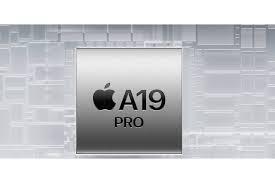
The result: competitors like Samsung’s Exynos 2600 and Qualcomm’s Snapdragon 8 Elite 5 are suddenly looking stronger than expected in head-to-head benchmarks.
The A19 Pro powers Apple’s current lineup of high-end devices, including the remarkably thin iPhone Air, the iPhone 17 Pro, and the iPhone 17 Pro Max. Built by TSMC using the company’s refined third-generation 3nm process node (N3P), the chip sports a six-core CPU with two performance cores and four efficiency cores. Compared with the A18 Pro, which used TSMC’s earlier 3nm design, the new processor brings a modest 13% performance improvement. On paper, this sounds like progress – but Apple’s design philosophy this time around makes all the difference.
Geekbench 6 scores highlight the trade-off. In single-core tests, where Apple has traditionally dominated, the A19 Pro still leads with a score of 3,895. But in multi-core performance, where workloads scale across many cores, Apple’s decision to limit the A19 Pro to just six CPU cores became apparent. Its multi-core score landed at 9,746 – falling behind both the Snapdragon 8 Elite 5 and Samsung’s Exynos 2600. For comparison, Qualcomm’s flagship chip, even when underclocked to 4.0GHz from its usual 4.74GHz, achieved a blistering 11,515 multi-core score inside the Galaxy S26 Edge. That’s an 18% advantage over Apple’s silicon, though the A19 Pro maintained a roughly 13% lead in single-core.
Samsung’s Exynos 2600 tells a similar story but with an added twist: it is the world’s first smartphone processor built on a 2nm Gate-All-Around (GAA) node. This breakthrough architecture wraps the transistor gate around all four sides of the channel, drastically reducing current leakage and improving drive strength. The benefit? More performance with less wasted energy. The Exynos 2600, expected to appear in most Galaxy S26 Pro and Galaxy S26 Edge models outside the U.S., Canada, and China, posted multi-core numbers about 15% higher than Apple’s A19 Pro. However, it still lagged Apple’s chip in single-core performance by roughly the same margin. In short: Samsung’s chip has the horsepower for parallel workloads, while Apple maintains its edge in tasks that rely on sheer per-core efficiency.
This marks a rare moment where Apple’s rivals have turned the tables. For years, many dismissed the idea that Android processors could ever outperform Apple’s custom designs. Yet, thanks to more cores and cutting-edge process nodes, both Qualcomm and Samsung have finally found ways to edge out Apple in benchmarks – though the story is more nuanced than raw numbers suggest.
Consumers should remember that benchmarks are just one lens. Geekbench scores rarely dictate real-world sales or daily user experience. Apple’s ecosystem optimization – tight integration of hardware and software – means even lower multi-core scores don’t necessarily translate into sluggishness. In fact, the iPhone Air and iPhone 17 Pro still feel as responsive as ever, with battery life improvements being a clear upside of Apple’s efficiency-first philosophy. Meanwhile, Samsung and Qualcomm may win the numbers game, but whether everyday users notice the difference between a 9,700 and 11,500 multi-core score is debatable.
Apple also appears comfortable letting rivals chase higher clocks and more cores. The A19 Pro’s six-core design looks modest next to the Snapdragon 8 Elite 5’s eight cores or the Exynos 2600’s ten cores. But fewer cores don’t automatically mean worse performance – especially for apps optimized for iOS’s single-threaded tasks. And with TSMC set to roll out its own 2nm GAA chips later this year, Apple could quickly rebound in future generations.
There’s also the question of how users choose devices. Very few buyers base their smartphone purchase on benchmark charts. Instead, factors like camera quality, display, ecosystem, and brand loyalty carry more weight. The Pixel 10 XL, for instance, runs Google’s Tensor G5 chip, which lags far behind with scores of 2,285 (single-core) and 6,191 (multi-core). Yet many buyers will happily pick it for its software experience, exclusive AI features, or photography tools.
In essence, the A19 Pro is less about brute force and more about balance. Apple has consciously prioritized efficiency, thermal stability, and battery longevity. Yes, rivals now claim higher multi-core numbers, but for Apple’s customer base, the payoff is phones that remain cooler, last longer, and still deliver leading single-core strength. The benchmark crown may have slipped, but Apple’s grip on the premium smartphone market remains secure – for now.
2 comments
pixel 10 xl scores are lol but ppl still gonna buy it for the cam
apple went for battery life this time, kinda makes sense tbh