The Apple 14-inch MacBook Pro with M5 Chip Ushers in a Subtle but Significant Leap Forward
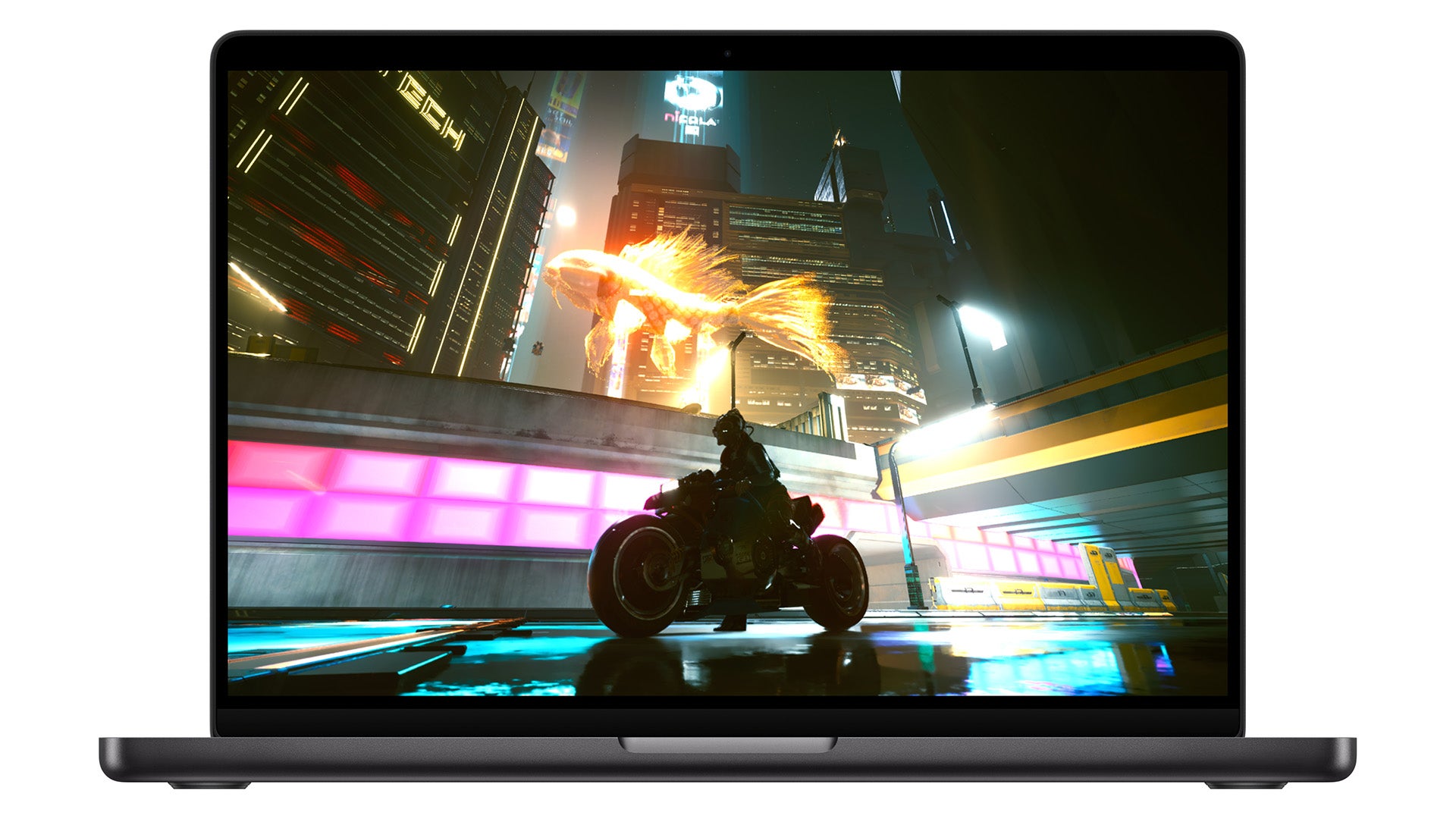
Apple’s fall product wave has arrived, and this time it’s all about refinement. The company has quietly introduced the new 14-inch MacBook Pro with the M5 chip, a move that keeps the familiar design intact but infuses it with meaningful power gains. While there’s no flashy redesign or new color to gawk at, the changes under the hood represent the kind of silicon evolution that Apple now builds its entire ecosystem around. This is the first laptop to feature the M5, signaling the next step in Apple’s relentless march away from Intel and into its own hardware destiny.
The new chip doesn’t radically change the layout – there are still 10 CPU and 10 GPU cores – but performance climbs notably. Apple claims 1.6× better graphics output and a whopping 3.5× improvement in AI-related tasks, thanks to a neural accelerator embedded in every GPU core. That’s not just marketing fluff: Apple’s emphasis on AI processing is now central to its devices. Multithreaded CPU performance reportedly jumps by about 20%, and memory bandwidth has been pushed up to 153GB/s – a substantial increase from the 120GB/s found in the M4 generation.
Visually, the laptop looks the same, but the refinement is in the details. You still get the stunning 120Hz mini-LED display, with brightness and color precision that keep the Pro name justified. Battery life remains excellent, with Apple estimating up to 16 hours of wireless web browsing or 24 hours of video playback. The 72.4Wh battery is paired with Apple’s smart power management, ensuring that efficiency matches raw power. And while it ships with a 70W USB-C adapter, faster charging is possible with a higher-watt brick. Sadly, Wi-Fi 7 is still missing; you’ll be dealing with Wi-Fi 6E again this round – a mild disappointment for those expecting the latest standard.
Connectivity remains generous by Apple standards: three Thunderbolt 4 ports, an HDMI port, an SD card reader, MagSafe charging, and even a 3.5mm headphone jack. The base model still starts with 16GB of unified memory and 512GB of storage, but as always, you can bump those up – to 32GB RAM and a roomy 4TB SSD if your wallet can bear it. Prices start at $1,599, with shipping slated for October 22.
Alongside the laptop, Apple is extending the M5 upgrade to its other devices. The iPad Pro now gets the same silicon treatment, boasting similar 3.5× AI performance gains and 2× faster storage speeds. Memory bandwidth is also aligned at 153GB/s. Interestingly, while the MacBook Pro sticks with Wi-Fi 6E, the iPad Pro jumps to Wi-Fi 7 – a notable reversal of expectations. The cellular model gets Apple’s new C1X modem, first seen in the iPhone Air, promising more stable connections and better power efficiency.
The iPad Pro ships in 11-inch and 13-inch variants, starting at $999 for the 256GB model with a 9-core CPU and 10-core GPU. If you want the full 10-core CPU, though, you’ll need to shell out for the 1TB or 2TB models – priced at $1,599 and $1,999 respectively. It’s a frustrating reminder that Apple’s storage-linked performance tiers are as confusing as they are expensive. Still, the tablet remains an engineering marvel for creative professionals who want laptop-level performance in a tablet form factor.
Then comes Apple’s most polarizing product: the Vision Pro. Instead of the rumored affordable variant, Apple delivered a heavier, more powerful model that doubles down on the existing concept. The new unit weighs between 750 and 800 grams – significantly more than the previous 600–650g. Apple introduced a new Dual Knit Band to improve comfort, though early testers remain skeptical. The company insists that the added weight supports upgraded internals and improved optics, including hardware-accelerated ray tracing, mesh shading, and a jump to a 120Hz refresh rate (up from 100Hz on the M2 model).
Battery life is modestly improved: up to 2.5 hours for general use and 3 hours for video playback. Apple calls the visuals “sharper and more detailed throughout the system,” but critics note that developer support for VisionOS still lags far behind expectations. The new Vision Pro’s raw power might make it a technical wonder, but it remains unclear whether there’s enough compelling software to make the $3,499 price tag feel justified. For now, Apple seems determined to push its mixed-reality ecosystem forward, even if consumers aren’t following as quickly as it hoped.
Across the lineup, one thing is clear: Apple’s focus has shifted to AI acceleration and unified silicon performance. From laptops to tablets to headsets, the M5 generation marks a broader convergence of hardware philosophy – where every Apple device becomes part of one intelligent network. Whether this will be enough to reignite interest in the Vision Pro or simply strengthen the MacBook’s already stellar reputation remains to be seen. What’s certain is that Apple’s idea of progress now lives inside the chip itself, and for better or worse, the M5 is its latest heartbeat.
5 comments
bro why is it HEAVIER?! wasn’t the point to make it more comfy? 🤦♂️
ipad pro with wifi 7 but macbook stuck with 6E makes zero sense 😂
AI everywhere now… even in my toaster soon 😅
imagine paying 3.5k for 30 more mins of battery 💀
not gonna lie the m5 numbers sound insane but wifi 6E again? come on apple