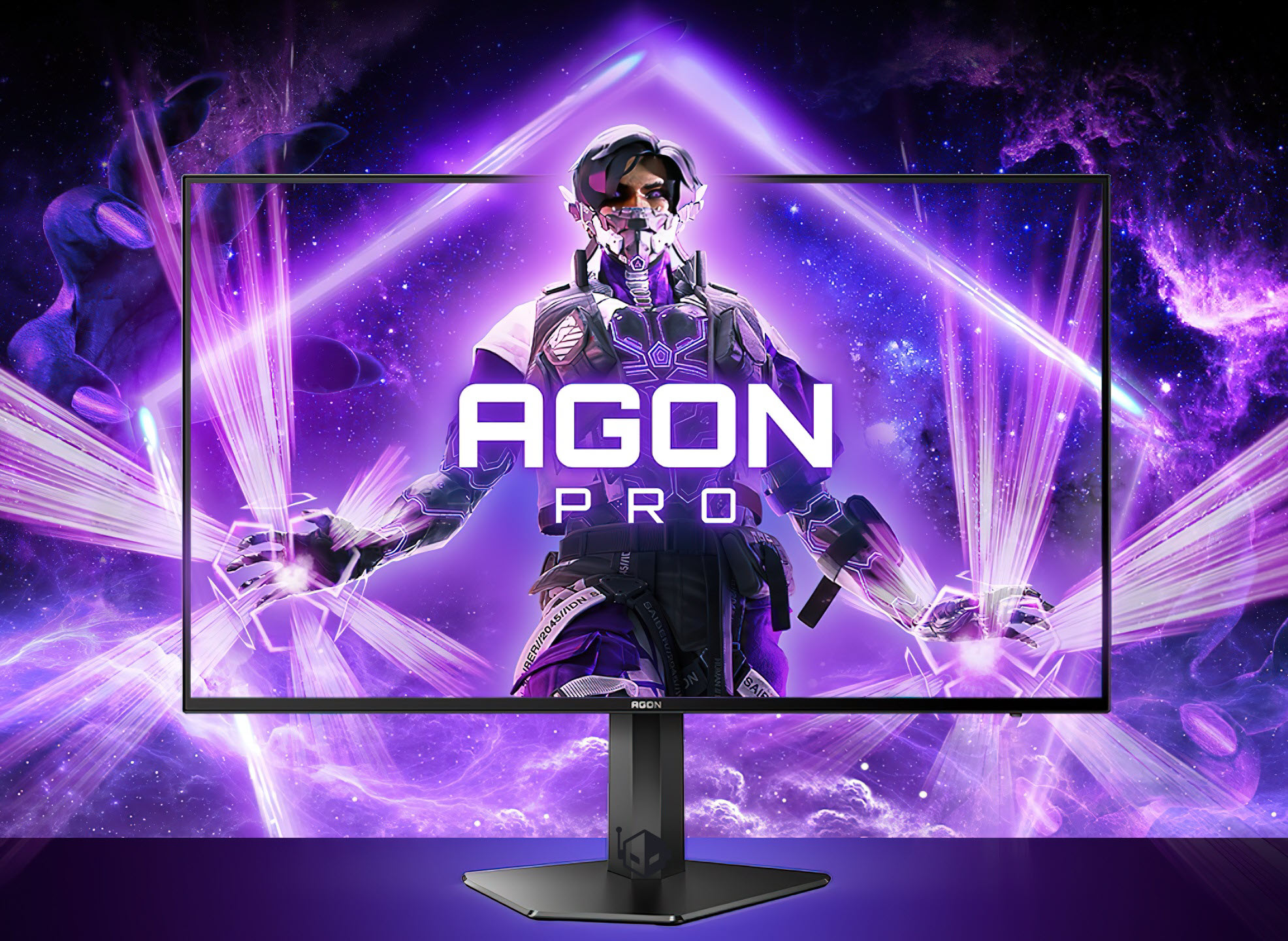
AOC’s AGON Roadmap Teases a 1000Hz 1080p Esports Display – Plus an Aggressive Wave of High-Refresh Models
The refresh-rate arms race isn’t slowing down. A leaked roadmap for AOC’s AGON gaming lineup suggests the company is preparing a headline-grabbing 1000Hz mode at 1080p, arriving alongside a stack of fast panels spanning 360Hz to 500Hz and even a dual-mode 5K/330Hz concept. It’s the latest volley in competitive display tech, where manufacturers chase ever lower input latency and sharper motion clarity for esports players – even if most gamers will never drive four-digit frame rates.
What’s allegedly coming in the next AGON wave
The leak outlines six models, each aimed at a different slice of the performance market. Several feature dual-mode operation, allowing the display to trade resolution for speed when a match demands absolute smoothness:
- 27-inch 5K 165Hz with a QHD 330Hz dual-mode option.
- 27-inch UHD (4K) 160Hz dual-mode, with an AI-assisted gaming feature to auto-tune visuals by genre.
- 27-inch QHD 500Hz panel that can switch to FHD 1000Hz dual-mode.
- 27-inch QHD 420Hz with a circular polarizer aimed at improving perceived contrast and reducing reflections.
- 27-inch QHD 360Hz touting PULSAR technology promising a “1000Hz effect.”
- 24.1-inch TN 400Hz, a classic esports-centric size and tech pairing for absolute responsiveness.
AOC also hints at a refreshed industrial design, a revamped OSD, and customizable physical buttons – small but welcome quality-of-life upgrades for players who frequently swap presets between titles or tournament rulesets.
Dual-mode displays: why resolution trading is back
Dual-mode isn’t new, but it’s becoming smarter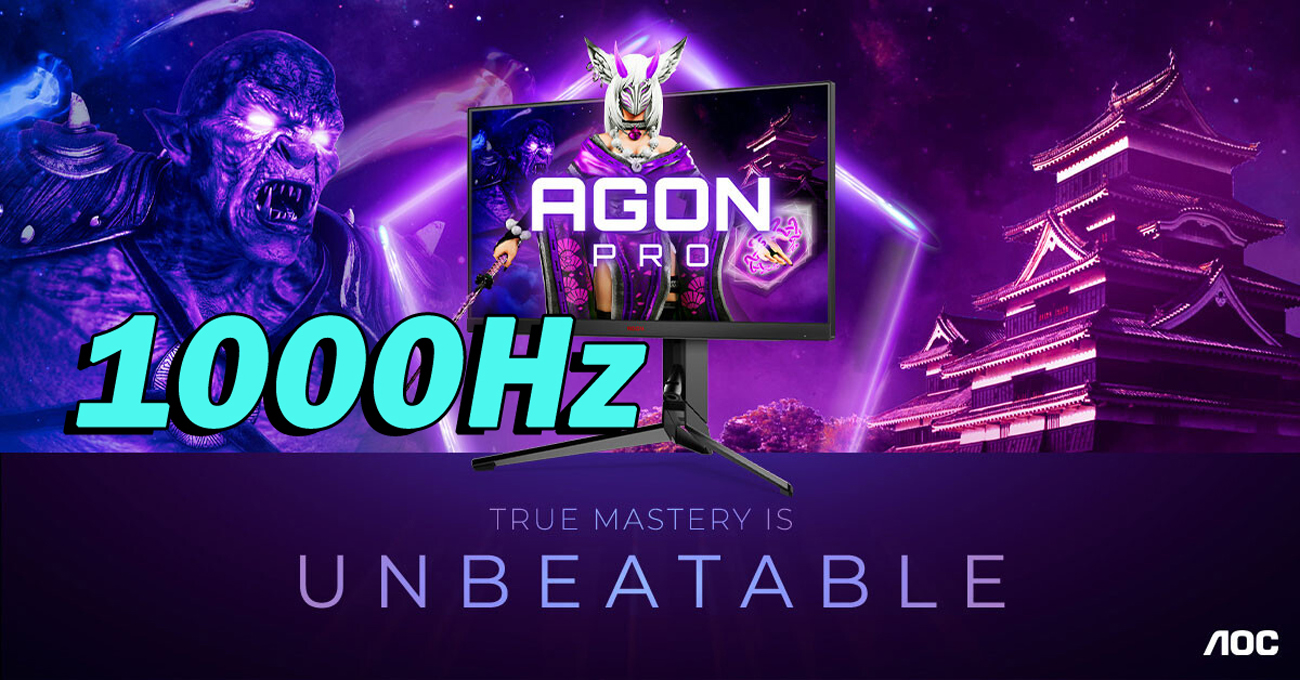
. By dropping from 5K or 4K to QHD, or from QHD to FHD, the scaler and panel timing can push dramatically higher refresh rates without exceeding bandwidth limits. For competitive shooters, that trade is often worthwhile: hitting a moving head hitbox on a jitter-free target can matter more than rendering ultra-fine texture detail. The key will be how well AOC handles scaling, overdrive tuning, and color consistency between modes so that switching doesn’t introduce ghosting or gamma shifts that force mid-match adjustments.
1000Hz at 1080p: real signal or clever trick?
The biggest headline is obvious: FHD 1000Hz. If delivered as a native scanning refresh, it would mark a dramatic step beyond today’s bleeding edge. But the fine print matters. Many “effective refresh” claims use techniques such as Black Frame Insertion (BFI) or advanced backlight strobing to reduce sample-and-hold blur and make motion appear clearer without the panel physically updating a thousand times per second. AOC’s mention of PULSAR and a “1000Hz effect” strongly suggests at least one model will lean on precision strobing rather than pure refresh. That can still be meaningful: well-tuned strobing can tighten motion resolution and cut perceived blur substantially – provided brightness, crosstalk, and eye comfort are managed.
Context helps here. We’ve just seen panels and products flirting with 720Hz at 720p, demonstrating what extreme scanning speeds can do for input latency and motion clarity. AOC’s claim pushes even further by targeting 1080p, which demands greater bandwidth and tighter drive electronics. Whether that’s native, strobed, or some hybrid approach will define how impressive it feels in practice.
Do gamers actually need 1000Hz?
Short answer: most don’t. The curve of perceptual benefit flattens hard as you climb past 240–360Hz. But “most” is not “all.” In esports, especially aim-precision titles, micro-advantages stack: lower end-to-end latency, steadier frame pacing, less blur during fast flicks, cleaner tracking of strafing targets. If a panel can deliver those wins without severe compromises – no distracting strobe crosstalk, minimal inversion artifacts, consistent overdrive – pros and serious grinders will notice. The real bottleneck is the rest of the system: CPUs and GPUs capable of sustaining 500–1000fps at competitive settings, network consistency, and game engines optimized for ultra-high frame pacing.
Panel tech trade-offs you should expect
TN at 400Hz: Expect the smallest panel to target esports venues where viewing angles and deep color are secondary to response time. QHD 360–500Hz: These sweet-spot models will live or die by overdrive tuning; overshoot and inverse ghosting are more obvious at high Hz. Strobed “1000Hz effect” modes: Great motion clarity when tuned right, but brightness and eye comfort can suffer, and some users are sensitive to flicker. Dual-mode 5K/330Hz and 4K/160Hz: Ideal for creators who want detail by day and ranked queues by night, provided color calibration holds across modes.
AI gaming and control ergonomics
The roadmap mentions an AI gaming function that tweaks image parameters by game type. If executed tastefully, this could save the hassle of per-title profiles for gamma, sharpness, local contrast, and overdrive. Combined with a redesigned OSD and physical macro buttons, there’s potential for faster, more reliable preset switching on stage or between scrims.
The bottom line
Whether the headliner is a true 1000Hz 1080p panel or a refined strobing implementation that mimics its motion clarity, AOC’s AGON wave signals an unrelenting push toward esports-first performance. For most players, the QHD 360–500Hz options – or even the 4K 160Hz dual-mode – will likely be the smarter balance of clarity, speed, and usability. But if AOC ships a convincing 1000Hz experience without brutal trade-offs, it could redefine how motion should look and feel in competitive PC gaming. As ever, the proof will be in the tuning: overdrive, strobe timing, brightness retention, and consistent color behavior across every mode these panels promise.
1 comment
If they nail strobing without dimming, I’m in. Big IF tho