Andrzej Sapkowski, the outspoken Polish author behind The Witcher saga, has once again made headlines for his sharp criticism of video game adaptations of his work. Known for his dismissive stance toward gaming, Sapkowski has never been shy about expressing his view that the written word far outweighs visual mediums in power and longevity. 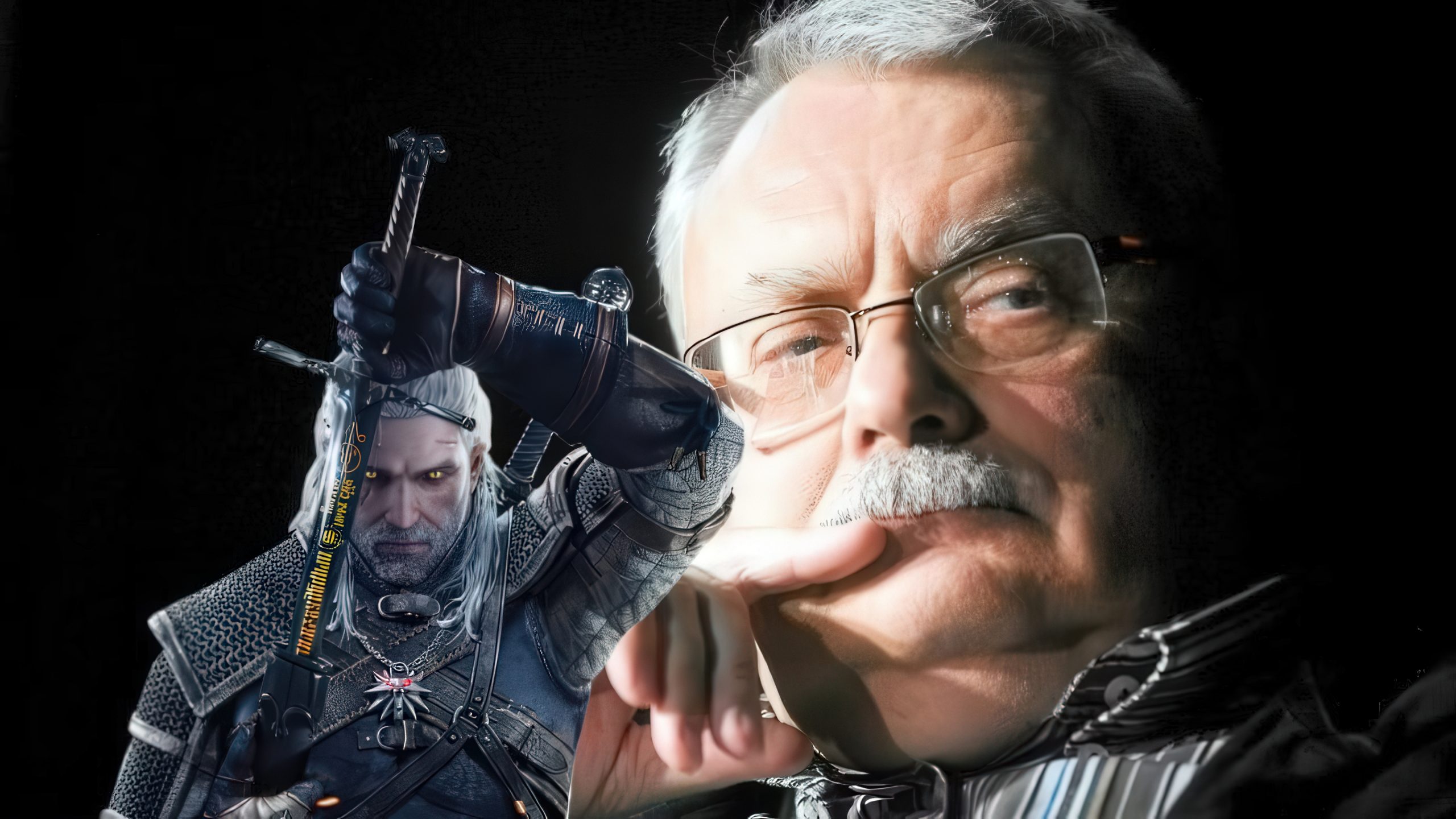
This time, his critique emerged during a Reddit AMA, where he revisited an old grievance: the invention and expansion of so-called Witcher schools in CD Projekt RED’s games.
Sapkowski explained that a single passing mention of a ‘school of the Wolf’ slipped into The Last Wish, one of his earliest Witcher short story collections. Later, he decided this reference was narratively unnecessary and even detrimental to the internal logic of his world. However, that small detail became the seed for a sprawling expansion in CD Projekt’s games, where multiple Witcher schools – Wolf, Cat, Griffin, Bear, and others – became central to the lore and player identity. To Sapkowski, this creative liberty taken by the developers remains baffling and unwelcome, describing it as a ‘completely unnecessary’ fabrication that has snowballed beyond his control.
In fact, he suggested he might even erase that original reference from future editions of his book, or alternatively, reinterpret and clarify its meaning by delving deeper into the symbolism of Witcher medallions. His comments underline the long-standing tension between an author’s intent and the freedom of adaptations. Sapkowski maintains that each adaptation – be it a video game or television series – exists as a separate entity with no intrinsic bond to the literary source. As he put it, words cannot be translated into images without something essential being lost in the process.
This philosophical stance is not new for him. Years earlier, Sapkowski famously underestimated the potential of video games as a storytelling medium. When CD Projekt RED approached him for the rights, he insisted on a lump sum payment rather than royalties, dismissing the idea that the games could succeed internationally. The Witcher III: Wild Hunt went on to become a global phenomenon, winning hundreds of awards and shaping the identity of Polish gaming culture. Sapkowski, realizing the missed opportunity, later demanded additional compensation of $16 million. After legal disputes, the two parties reached a new agreement that both sides publicly described as satisfactory.
To many fans, this history casts his critiques in a bitter light. Some accuse him of biting the hand that fed him, suggesting that without CD Projekt RED, his books might never have reached global audiences. For others, however, his frustration is understandable: seeing your fictional universe reinterpreted, and in his view distorted, by more commercially successful mediums could sting deeply. Still, even among detractors, there is acknowledgment that his sharp pen and imagination built the foundation upon which all adaptations stand.
Sapkowski’s remarks also reignite debate over the role of adaptations in preserving – or altering – the soul of original works. Where Sapkowski sees dilution, others see enrichment. Comparisons have been drawn to authors like Dmitry Glukhovsky of Metro 2033 fame, who openly praised developers 4A Games for expanding and refining his stories into gripping game narratives. Glukhovsky embraced collaboration, whereas Sapkowski draws a hard line between literature and its adaptations.
Despite his criticism, CD Projekt RED has no intention of abandoning its reinterpretations. The studio has already hinted that its upcoming The Witcher IV, not expected before 2027, will draw inspiration from Sapkowski’s more recent book, Crossroads of Ravens. Whether the relationship between the developer and the author remains pragmatic or grows more antagonistic is anyone’s guess. What is certain, though, is that Sapkowski continues to court controversy with his unapologetic statements, keeping the cultural debate alive over who truly ‘owns’ a fictional universe once it leaves the page.
For readers and gamers alike, the divide highlights a broader cultural question: does an adaptation owe strict fidelity to its source, or is creative liberty part of the evolution of storytelling? In Sapkowski’s case, the answer remains as combative and uncompromising as the man himself.
3 comments
Wonder how he feels about tv show if he hates game version so much 🤔
He may write decent stories but damn he bites the hand that feeds him, bad look
He should use the hype to push more book sales instead of whining all the time