Android and iOS have spent more than a decade acting like they live on different planets, especially when it comes to something as basic as sending a file. Today that cold war quietly thawed: Google has switched on a new layer for Quick Share that lets Pixel 10 owners beam photos, videos, and documents directly to an iPhone using Apple AirDrop as the bridge. It is the first time Google’s built-in sharing system and Apple’s wireless transfer feature have been able to talk to each other in a genuinely seamless, native way.
Instead of emailing yourself a file, uploading to a cloud folder, or juggling half a dozen chat apps, a Pixel 10 can now open Quick Share, select a nearby iPhone, and hand off the content almost as though it were another Android device. 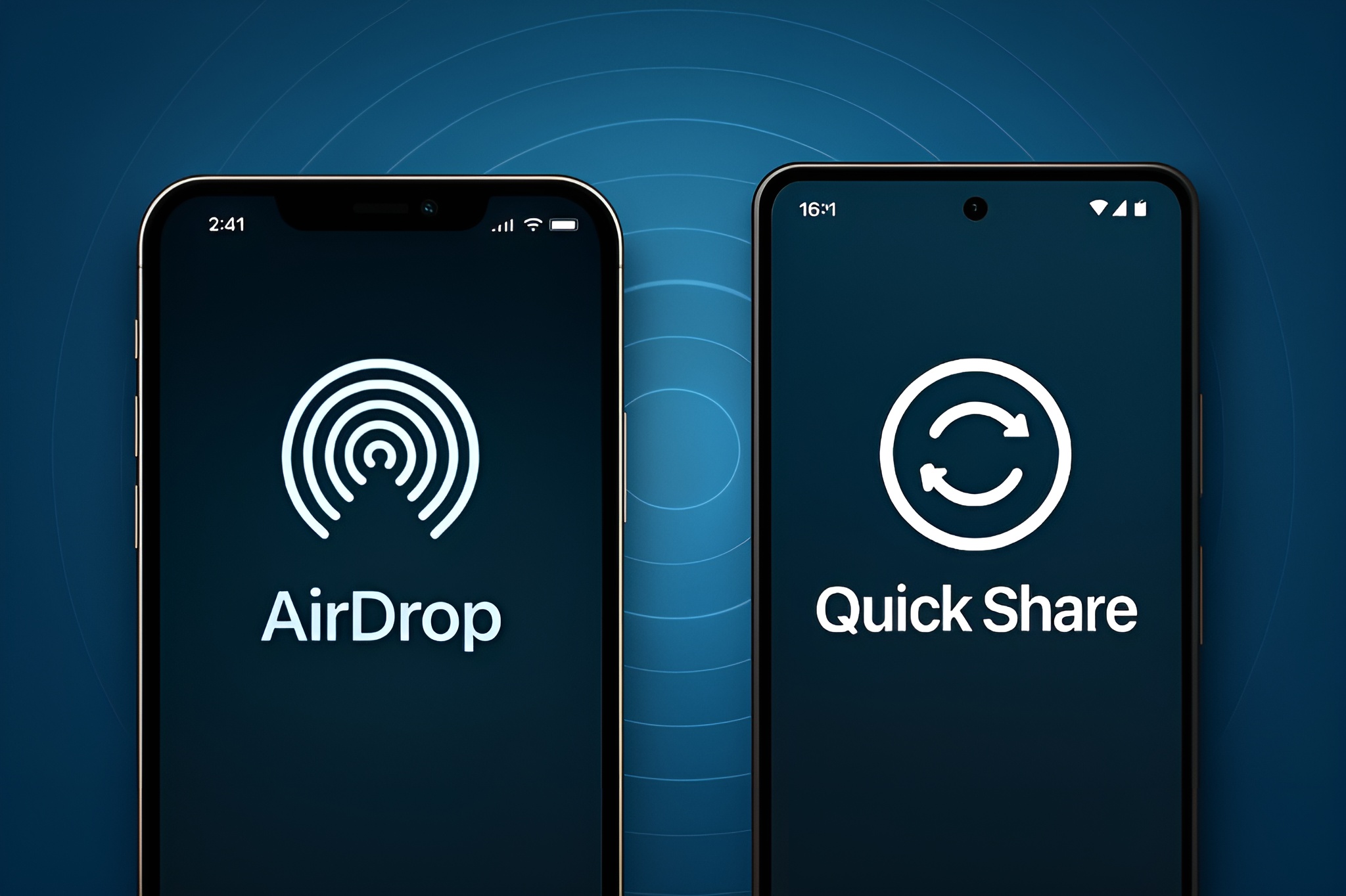
On the Apple side, the transfer simply appears as a regular AirDrop request, so iPhone users do not need to install anything, set up an account, or learn a new interface. For mixed households, offices, and project teams where Android phones and iPhones constantly bump into each other, this small tweak has the potential to remove a surprising amount of daily friction.
Exactly how Google achieved this détente is still a mystery. AirDrop remains a proprietary Apple technology, but underneath it relies on familiar open standards such as Bluetooth and Wi-Fi Direct to discover nearby devices and move data at high speed. Google could have quietly worked with Apple behind the scenes, as the companies have already done for bringing RCS messaging features and unknown tracker alerts to both ecosystems. It is equally plausible that Google’s engineers built a compatible implementation on their own, carefully respecting Apple’s security expectations while speaking the same low level wireless language.
From a user’s point of view, the setup is straightforward, but there are a few toggles to understand. For an iPhone to receive a file from a Pixel 10 via Quick Share, AirDrop visibility has to be set to "Everyone", and that mode must remain active for at least ten minutes before the transfer begins. This window ensures that the iPhone is discoverable when the Android device looks for it. On the Android side, a Pixel 10 that wants to receive an incoming file routed through AirDrop needs Quick Share placed into its dedicated receiving mode, which temporarily opens the phone to nearby senders while still letting you shut sharing down again with a single tap once you are done.
Because this bridge now handles deeply personal content, from work documents to vacation videos, Google is leaning heavily on security messaging. The company highlights that the core code responsible for the Quick Share and AirDrop connection is written in Rust, a memory safe programming language whose strict ownership and borrowing rules are enforced at compile time. That design dramatically reduces entire classes of bugs, such as buffer overflows and use after free errors, that have historically led to serious exploits in large C and C++ codebases. Rust does not magically guarantee perfect software, but it makes it significantly harder for attackers to weaponize low level mistakes in the way they traditionally have on native platforms.
Beyond language choice, Google says it subjected the feature to internal threat modeling and detailed privacy reviews, then unleashed in house red teams to attack the implementation as if they were external hackers trying to break in. To add another layer of assurance, the company also brought in security specialists at NetSPI to independently probe the system and validate that the file transfer pipeline behaves as intended under pressure. The message is clear: if you are going to let an Android phone plug into a sensitive wireless feature on an iPhone, you need defenses that feel worthy of both ecosystems’ reputations and of the sensitive content users are likely to move across this bridge.
The result is more than just a clever convenience trick. Interoperable sharing chips away at one of the most stubborn walls between Apple and Android users, making it easier for families with a mix of devices, creative teams on tight deadlines, or students in shared spaces to pass large media files around without thinking about cables, intermediate apps, or cloud quotas. It also sends a subtle signal about where the industry may be headed: cross platform cooperation is no longer unthinkable when it demonstrably improves the everyday experience for hundreds of millions of people. For now the experience is limited to Google’s Pixel 10 line acting as the Android ambassador, but if this model proves successful it could pressure other phone makers and even Apple itself to treat smooth cross platform compatibility as an expected feature rather than a rare diplomatic gesture.