AMD’s next big move in mobile computing is starting to leak out of shipping logs rather than glossy keynotes. 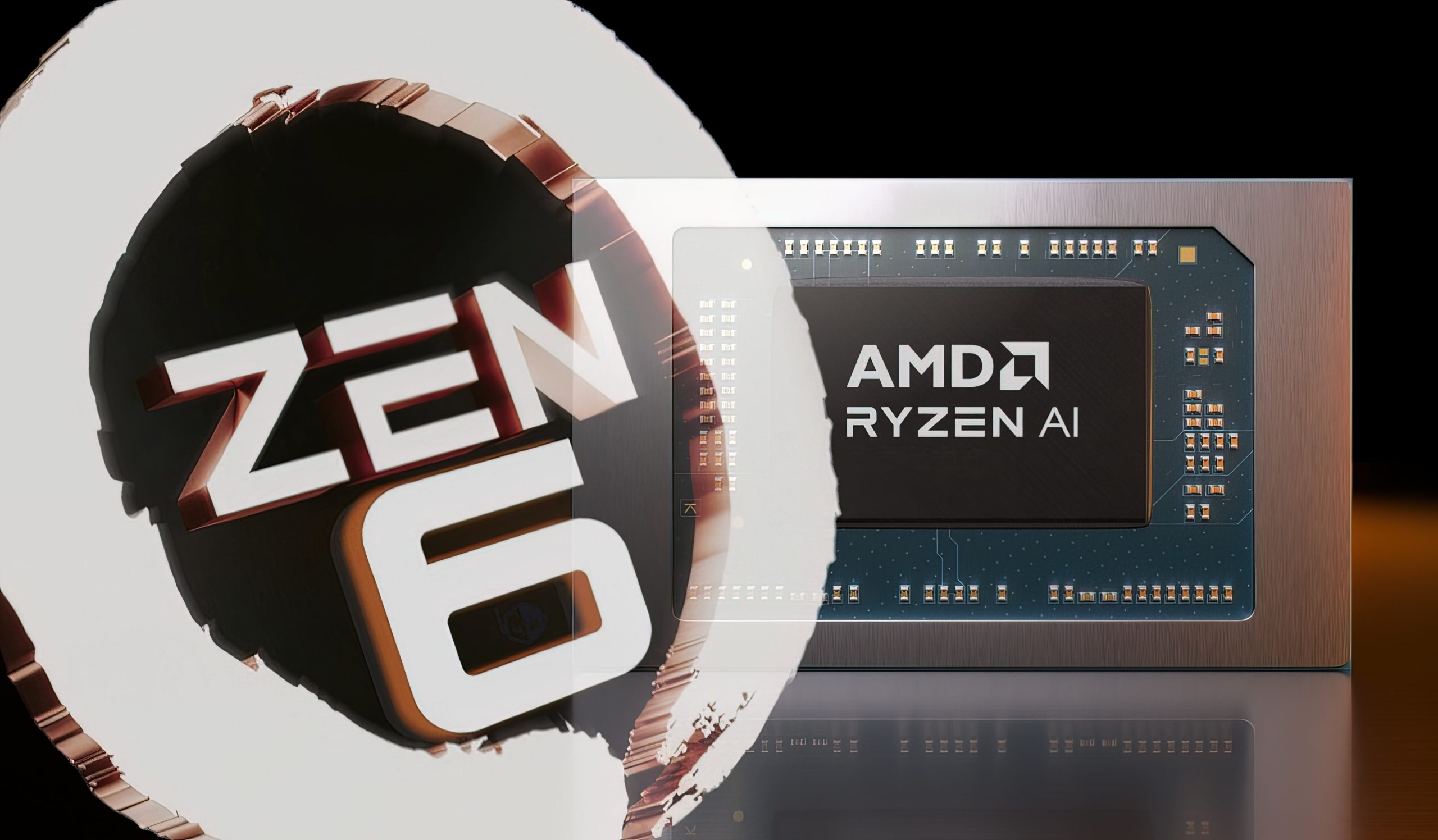
The company’s Zen 6–based Medusa Point APUs have surfaced in an NBD manifest with a twist that laptop makers will love: instead of a single fixed power target, Medusa Point is coming in both so-called High-TDP and Low-TDP versions, topping out at 45 W while still embracing the familiar 28 W class.
That immediately tells us two things. First, AMD is not walking away from the thin-and-light segment that Strix Point currently serves so well at 28 W. Medusa Point is designed as its direct successor, taking over the mainstream Ryzen 5 and Ryzen 7 slots in premium ultraportables and compact notebooks. Second, the introduction of 45 W variants opens the door to much more aggressive performance tuning for beefier cooling systems, gaming laptops and creator-class machines that can make real use of higher sustained clocks and a stronger integrated GPU.
The same manifest also confirms a key platform change: Medusa Point will use a new FP10 socket. Today’s Zen 5 Strix Point APUs are built for the smaller FP8 package, while the monster Strix Halo dies step up to the much larger FP11 footprint. FP10 neatly splits the difference. It is reported to be around six percent larger than FP8, giving AMD extra room for more pins, sturdier power delivery and denser memory traces, while still remaining far more compact than FP11. In practice, that positions Medusa Point squarely in the mobile and small-form-factor world rather than in giant desktop-replacement chassis.
Under that FP10 heat spreader, things get interesting. Flagship Medusa Point configurations are rumored to scale up to 22 CPU cores, using a hybrid layout that mixes a 12-core Zen 6 CCD with additional classic, dense and low-power cores. Below the top tier, mainstream Ryzen 5 and Ryzen 7 models are expected to stick to a 4C + 4D + 2LP configuration, which trades brute-force thread counts for better efficiency, more predictable thermals and easier cooling. For most users this still means more than enough multithreaded performance for video calls, photo editing, code compiling, streaming and a dozen browser tabs at once.
On the graphics side, Medusa Point integrates an RDNA 3.5-based iGPU with eight Compute Units, in line with earlier whispers. That might not sound earth-shattering on paper, but remember how far integrated graphics have come. Enthusiasts are already joking that if AMD dials in clocks and memory bandwidth properly, a 45 W Medusa Point laptop could handle 1080p – and maybe even light 1440p – gaming well enough that many users simply skip an entry-level discrete GPU entirely. It’s optimistic, sure, yet it reflects how closely the low end of the dGPU stack now sits to modern iGPUs.
Efficiency is where the community is getting especially animated. Some observers half-seriously claim that a fully enabled 22-core Medusa Point part could still pull less current at the wall than Intel’s upcoming Panther Lake chips running at comparable TDPs, particularly in sustained all-core loads where recent Ryzen generations have shined. We will need independent testing before crowning any efficiency champion, but AMD clearly believes it can once again push both performance and battery life forward by combining mature manufacturing, a flexible core mix and smarter power management.
The split between Low-TDP and High-TDP Medusa Point SKUs also gives AMD’s partners a cleaner way to segment products. Low-TDP chips should slide naturally into ultraportables, business notebooks and mini-PCs where quiet fans and long battery life matter more than maximum frame rates. High-TDP variants, on the other hand, are tailor-made for gaming laptops, compact workstations and performance-oriented SFF builds with stronger cooling and bigger power bricks. Instead of asking one compromise configuration to serve every chassis, Medusa Point lets OEMs choose the power envelope that matches the experience they want to deliver.
There is a broader roadmap context as well. Enthusiasts looking several years out expect Zen 6 to land toward the back half of the decade, with Zen 7 following later, likely paired with RDNA 5 graphics and next-generation DDR6 or LPDDR6X memory in future halo APUs. Those future chips are often talked about as the true “console-in-a-laptop” endgame. But Medusa Point shows that AMD does not need to wait for brand-new memory standards to deliver a major jump: higher core counts, a more capable iGPU and smarter power options can dramatically change what a mainstream Ryzen notebook feels like today.
It is also worth remembering that Medusa Point is explicitly mobile-first. Comment threads may veer off into wild speculation about Nvidia swooping in with ARM-based APUs or about far-future Zen 7 designs, but FP10, 28 W and 45 W all point in the same direction: efficient Windows laptops, handheld gaming PCs and compact living-room mini-rigs, not power-hungry tower builds. In that space, even relatively small advantages in battery life, sustained boost clocks or iGPU performance can be the difference between a good system and a great one.
For now, the hard facts are simple enough. Medusa Point is a Zen 6 APU family for the FP10 socket, with up to 22 CPU cores in hybrid configurations, an RDNA 3.5 iGPU with eight Compute Units and clearly defined 28 W Low-TDP and 45 W High-TDP variants. It will succeed today’s Strix Point parts in mainstream laptops while sitting below massive halo dies aimed at the absolute upper end of performance. If AMD delivers on what these early listings suggest, the next wave of Ryzen notebooks could blur the line between efficient ultrabooks and compact gaming machines more than ever before.
Medusa Point at a glance
- Architecture: Zen 6
- CPU cores: up to 22 in hybrid layouts
- TDP targets: 28 W Low-TDP and 45 W High-TDP variants
- iGPU: RDNA 3.5 design with eight Compute Units
- Socket: FP10, larger than FP8 but smaller than FP11, tuned for mobile and SFF devices
3 comments
people keep forgetting medusa point is mobile first… this is for thin laptops and handhelds, not some 2kg desktop replacement box
if AMD really nails efficiency here, panther lake battery life memes are gonna write themselves lol
I don’t think the title of your article matches the content lol. Just kidding, mainly because I had some doubts after reading the article.