AMD says it now has export licenses for a China-specific Instinct MI308 accelerator, a disclosure made on its Q3 earnings call that instantly reshaped the conversation around who can legally sell advanced AI GPUs into the world’s second-largest market. CEO Lisa Su described the situation as “dynamic,” noting AMD has approval for “some” MI308 shipments, but that the company did not include any MI308 revenue for China in its Q4 outlook – clear evidence that paperwork is not the same thing as purchase orders.
What we actually know about MI308
AMD hasn’t published full public specifications for MI308. The broad expectation – because export rules define the lane – is that it’s a constrained configuration designed to comply with U.S. performance thresholds, much like competing China-bound parts. 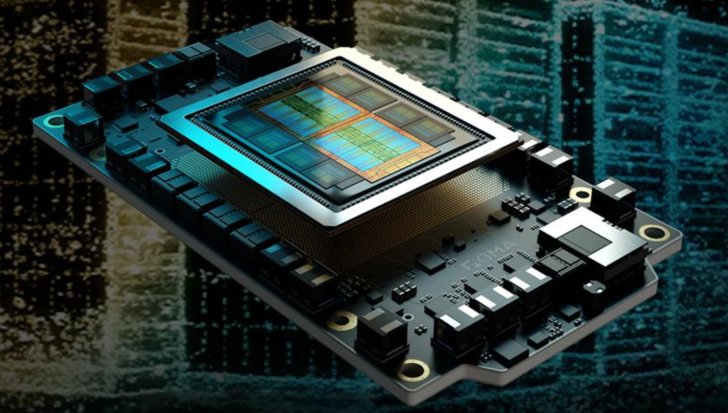
Think trimmed interconnects and bandwidth ceilings rather than a radical new architecture. In other words, MI308 is likely engineered to be competitive within the export envelope, not a no-compromise flagship.
Meanwhile, Nvidia’s China outlook is stuck in neutral
While AMD says it has a path to ship, Nvidia remains in a holding pattern on approvals for its next-gen Blackwell family into China, after earlier turbulence around H-series variants. For buyers in China, that limbo has real consequences: procurement timelines stretch, pilots stall, and software roadmaps get messy. Some local decision-makers also appear increasingly cautious about external tech stacks, which – at least in the short run – gives AMD a slender opening simply by virtue of having a go-to-market option.
License ≠ demand (yet)
AMD’s own guidance is the tell. If the company had high confidence in near-term China sell-through, we’d see it reflected in Q4 numbers. We don’t. That suggests two things can be true at once: (1) approvals are real; and (2) the demand picture is still being negotiated, qualified, and budgeted. Hyperscalers and research clouds in China will test any compliant accelerator against local needs, total cost of ownership, delivery timing, and – crucially – software.
The software gravity well
CUDA remains the world’s deepest GPU compute ecosystem. AMD’s ROCm has improved quickly, but migrations are non-trivial. Porting frameworks, matching kernel performance, re-validating models, and retraining ops teams all carry switching costs. That doesn’t make MI308 a non-starter; it does mean early traction will likely cluster where workloads are portable, vendor-agnostic, or newly green-fielded – and where supply assurance beats peak specs.
China’s domestic priority complicates everyone’s story
Even with a license, foreign vendors are navigating a policy environment that strongly emphasizes domestic alternatives. That sets the baseline: MI308 can be evaluated and even deployed, but volume will hinge on how procurement officers balance political risk, performance per watt, software lock-in, and delivery schedules against homegrown options.
The online reaction: triumphalism vs. skepticism
Reactions to AMD’s news split into two loud camps. One camp cheers that Nvidia’s uncertainty hands AMD a “Trojan Horse” moment – get compliant accelerators in the door and let incumbency do its work. The other camp snarks that a compliant MI308 will be too clipped to matter, arguing that if H-class alternatives weren’t slam-dunks, MI308 won’t be either, and that buyers will keep pushing toward domestic silicon regardless. There’s also a thread blaming Nvidia’s public lobbying for political backlash, though that’s more meme than market analysis.
Reality check and near-term outlook
Here’s the sober read: AMD has achieved the most essential prerequisite – legal clearance. That alone creates conversations and proofs-of-concept. But until we see signed frameworks, committed volumes, and ROCm-first reference wins, the financial impact remains theoretical. Nvidia’s position is not permanently impaired, and China’s domestic ramp isn’t guaranteed to be linear. Expect cautious pilots, mixed stacks, and a procurement chess match that plays out over multiple quarters, not weeks.
Bottom line
AMD’s MI308 license is a meaningful opening, not a market capture. Nvidia’s approvals limbo keeps doors ajar for competitors, but software gravity and policy headwinds still define the battlefield. The company that converts pilots into repeat orders – by aligning compliance, availability, and developer experience – will own the real victory. For now, AMD has the ball. Whether China runs with it is the next headline.