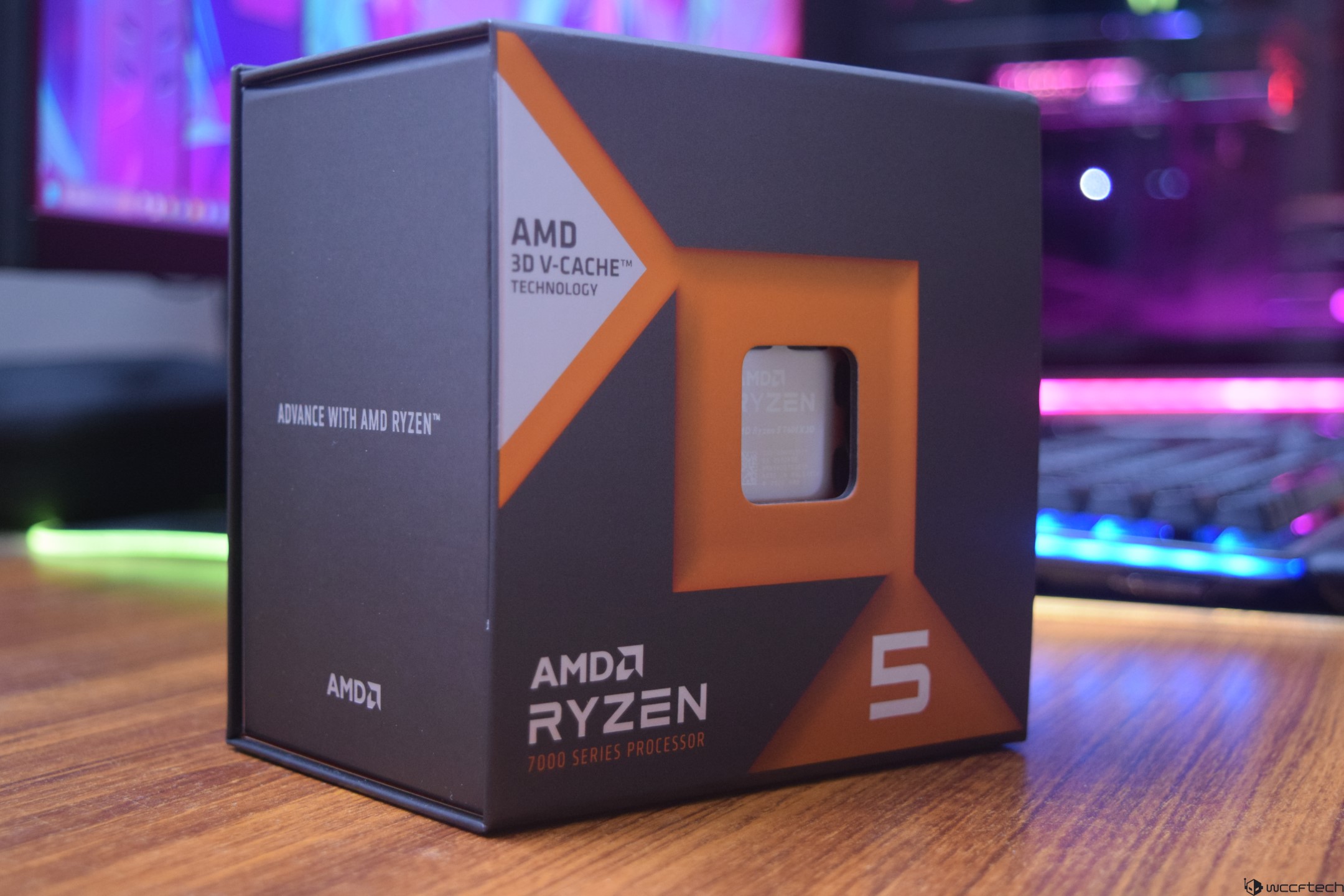
AMD Ryzen 5 7500X3D: 3D V Cache Budget Gaming CPU That Wants To Humble Intel
AMD has officially pulled the curtain back on the Ryzen 5 7500X3D, a 6 core, 12 thread Zen 4 processor that arrives with one clear mission: dominate mainstream gaming builds. On paper it looks like classic AMD playbook material – a relatively compact core count, big cache, aggressive gaming claims and a price tag of 269 US dollars that tries to sit between true budget and upper mid range. The question is whether this chip is a smart value play for gamers or a last gen six core that costs a bit more than it should.
The 7500X3D is part of AMD’s continuing push to stretch the life of its Zen 4 lineup with 3D V Cache variants. These chips take the proven gaming strengths of Zen 4 and turbo charge them with a massive chunk of extra L3 cache stacked on top of the core complex. It is the same idea we saw on Ryzen 7 7800X3D and others, now brought down to a more accessible six core configuration for players who live at 1080p or 1440p and care more about frame rates than productivity scores.
Zen 4, 3D V Cache And A Modest Power Budget
Under the heat spreader, Ryzen 5 7500X3D is a familiar configuration: 6 cores and 12 threads based on the Zen 4 architecture, paired with 32 MB of standard L3 cache plus an additional 64 MB of 3D V Cache. In total, you get a huge slab of L3 that helps keep game data closer to the cores, reducing memory latency and boosting performance in many titles that thrive on fast cache access.
The base clock lands at 4.0 GHz with a boost up to 4.5 GHz. That is slightly more conservative than its bigger X3D sibling, the Ryzen 7 7600X3D, which clocks higher, but AMD is leaning on cache rather than raw frequency. Thermal design power is rated at 65 W, which means it should be easy to cool with a decent air cooler and still deliver high gaming performance without sounding like a jet engine.
Unlike older Ryzen chips that shipped with no graphics at all, the 7500X3D includes a small RDNA 2 based integrated GPU with two compute units running at 2200 MHz. It is not designed for serious gaming, but it is useful for troubleshooting, basic desktop use, or waiting for a discreet GPU deal. And because it sits on the AM5 platform, you get DDR5 memory, PCIe 5 connectivity on the right boards and an upgrade path that AMD has promised to support for multiple future generations.
AMD’s Gaming Numbers Versus Intel Rivals
AMD’s own slides position the Ryzen 5 7500X3D directly against Intel’s Core Ultra 5 245KF and the Core i5 14600K. According to the official numbers, the 7500X3D is around 13 percent faster on average in modern triple A titles compared to the Core Ultra 5 245KF and roughly 22 percent faster in esports and competitive games. Against the Core i5 14600K, the lead is slimmer but still notable, with an 8 percent advantage in demanding single player titles and about 12 percent in fast paced competitive workloads.
These are of course vendor supplied benchmarks, carefully chosen games and settings that put 3D V Cache in the best possible light. Real world testing may show smaller gaps or variations from title to title. Still, the broad pattern is familiar from previous X3D launches: when a game loves cache, these chips can punch well above what their core counts and clock speeds suggest. AMD also hints that 7500X3D performance should sit close to the Ryzen 7 7600X3D, which is already known to outrun both the Intel competitors and even AMD’s own newer Zen 5 based Ryzen 5 9600X in many gaming scenarios.
Six Cores In 2025: Still Enough For Gamers
One of the spicier talking points in the community is whether a six core, twelve thread CPU can still be called a budget chip when it costs close to 270 dollars, especially when some users are still running older six cores like Ryzen 5 1600X from 2017 and finding them good enough for 1080p with the right graphics card. On the other hand, modern games increasingly lean on more threads for background tasks, asset streaming and heavier engines.
For pure gaming, a high efficiency six core with big cache is still a smart sweet spot, especially if the goal is to feed a powerful GPU at high frame rates rather than render or stream at the same time. Enthusiasts chasing long term future proofing may prefer an eight or more core part, but a lot of players simply want the best frames per dollar today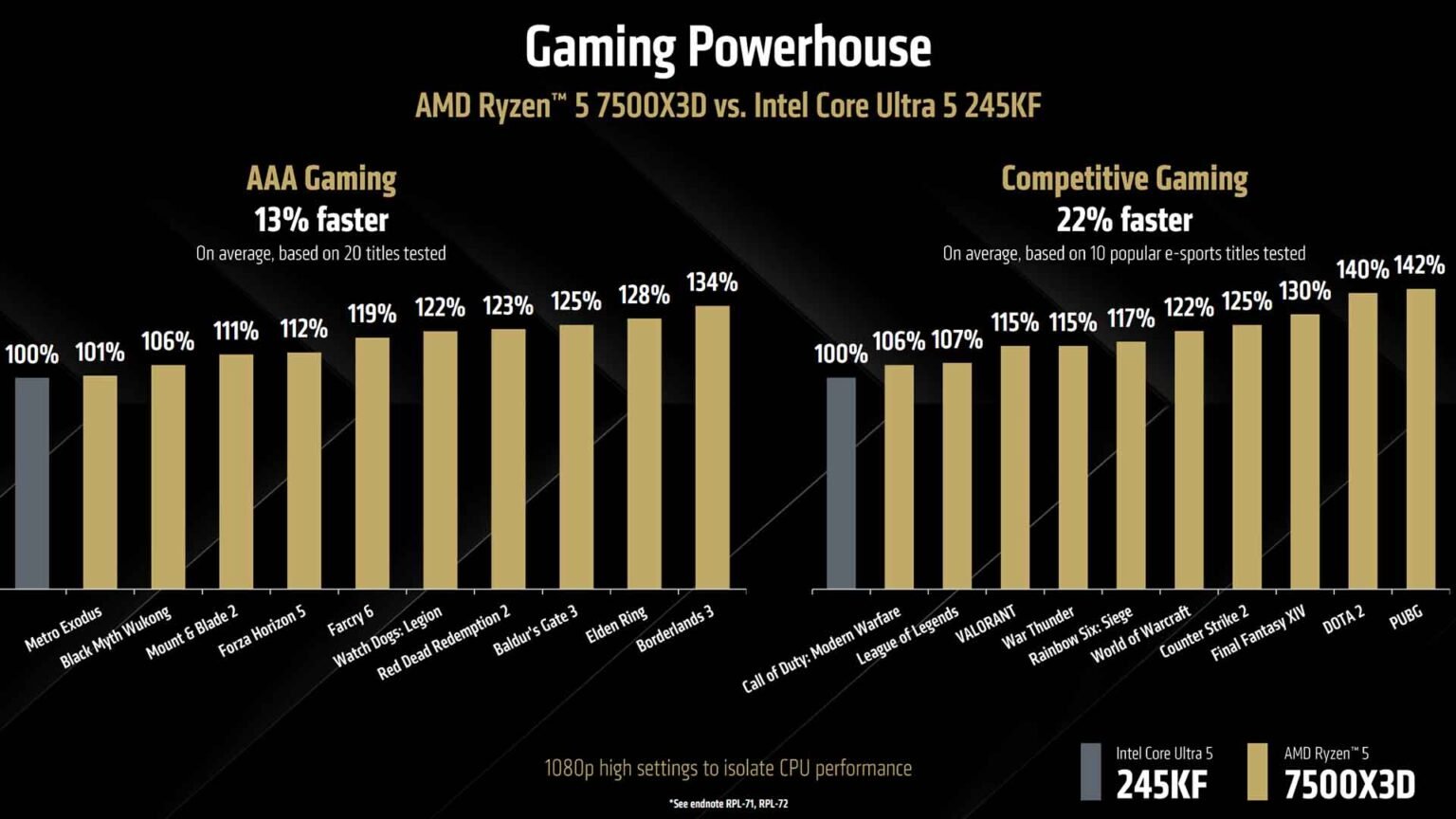
. In that context, 7500X3D looks like a deliberate answer to people who stuck to older Ryzen six cores for years and now want a dramatic uplift without going all in on a flagship CPU.
Pricing, Value And The Competition
Where things get more complicated is the price. AMD has set the Ryzen 5 7500X3D at 269 dollars. Before launch, many observers expected a price closer to 200 dollars, partly because Intel’s current lineup has some tough value contenders in the same bracket. You can find 20 core Intel chips like the Core i7 265KF around 249 dollars, a 14 core 245K near 199 dollars, and mainstream options such as the Core i5 12600KF often discounted well below 160 dollars. AMD’s own non X3D Ryzen 5 9600X is commonly listed lower than the new 3D part.
That is the heart of the criticism from price sensitive PC builders. Calling a 269 dollar six core a budget chip feels strange when ten or more core parts sit below it on the price ladder. And while 3D V Cache delivers impressive gaming numbers, it also erodes pure performance per dollar if the price premium is too high. Many buyers will be watching for street prices to drop into the 230 dollar range or below, where the chip suddenly becomes much easier to recommend for new AM5 builds.
Historically, X3D processors have held their value well and sometimes even sold above MSRP because they top gaming charts. If that pattern continues, the 7500X3D may live as a niche favorite among enthusiasts who are willing to pay extra for top tier frames without chasing huge productivity scores. For others, a cheaper Zen 5 or Intel part with more cores but slightly lower gaming performance may be the smarter play.
Platform Longevity And Upgrade Path
Platform considerations also matter. For anyone already on AM5, 7500X3D is a straightforward drop in upgrade and an attractive way to turbo charge an existing rig for gaming. For people stuck on older AM4 systems or even older Intel platforms, the equation is different: you must factor in a new motherboard and DDR5 memory on top of the CPU price.
AMD has repeatedly pitched AM5 as a long term socket, which means chips like the 7500X3D could be a mid cycle upgrade for early adopters or a starting point for those planning to ride the platform through future Zen 5 and beyond generations. Some users in the community joke about waiting for Zen 8 before upgrading at all, but the reality is that not everyone wants to wait several years while their aging CPU struggles in new releases. For players whose main priority is gaming and who want an upgrade path without abandoning AMD, the 7500X3D is a compelling anchor chip.
Early Verdict: Strong Gaming Promise, Questionable Budget Label
On balance, AMD’s Ryzen 5 7500X3D looks like another very capable gaming chip built around 3D V Cache magic. The specs are modest, the power draw is sensible, and the claimed performance gains over Intel’s Core Ultra 5 245KF and Core i5 14600K are sizable enough to get attention. If independent benchmarks confirm double digit leads in popular triple A and competitive titles, this six core could once again leave Intel on the defensive in the segment that matters most to many enthusiasts.
At the same time, the 269 dollar price makes it hard to call this a true budget processor when compared to cheaper multi core Intel parts and AMD’s own non X3D offerings. For now, the 7500X3D looks like a premium mainstream gaming CPU that trades extra cores for extra cache and bets that players will pay for smoother frames. With availability rolling out across North America and EMEA, the next step is simple: wait for unbiased testing and real world pricing to show whether this chip is a legendary value, or just another flash point in the never ending AMD versus Intel flame wars.