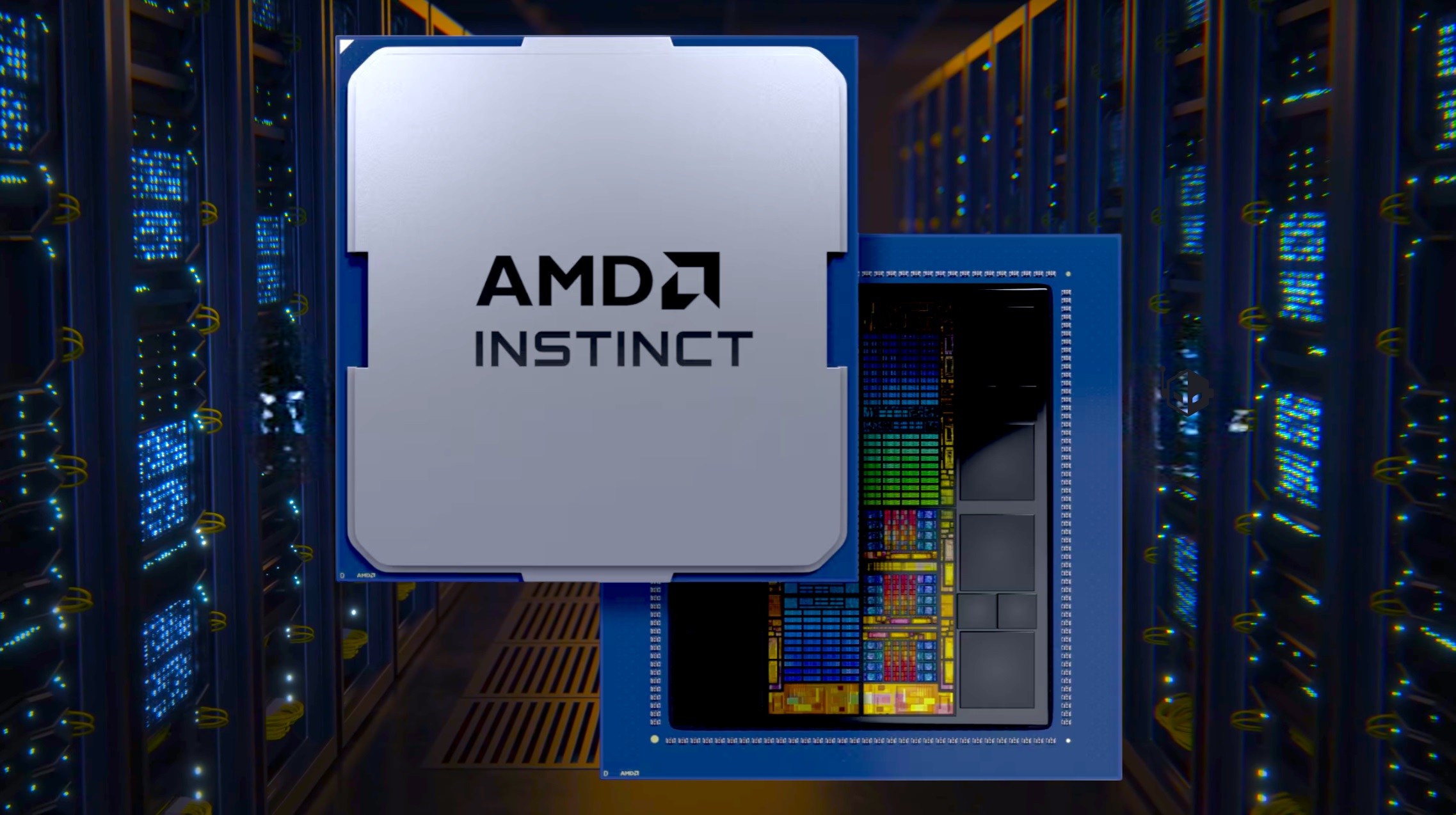
AMD pushes MI400 deeper into the AI data center
AMD is wasting no time moving beyond its Instinct MI300 family. With Instinct MI430X, the first publicly detailed member of the MI400 generation, the company is clearly aiming at one thing above all else: powering gigantic AI and high performance computing workloads inside tightly integrated supercomputing systems. Rather than being a mild refresh, MI430X is framed as a major step in AMDs data center roadmap, combining a new CDNA accelerator design with cutting edge HBM4 memory and aggressive performance per watt targets. The message from AMD is simple and ambitious, even if some readers roll their eyes at the familiar leadership performance slogan that accompanies every big launch.
That marketing tagline has baggage. Enthusiasts still remember the Radeon 7900 XTX era, when slide decks suggested comfortable victories over Nvidia that did not always survive contact with independent benchmarks. Those memories colour the reaction to MI430X, with online threads joking that moving from MI300 to MI400 sometimes feels like changing a number in a presentation. Under the memes, however, sits a serious question that large customers keep asking: is this generation finally strong enough, and mature enough, to justify shifting real AI capacity away from an almost entirely Nvidia based world.
Next generation CDNA meets massive HBM4
At the heart of MI430X is the next generation CDNA architecture, widely expected to be the fifth major version of AMDs dedicated data center compute design. Unlike the gaming focused RDNA line, CDNA is built from the ground up for servers, dense matrix operations, and fast interconnects between accelerators. Every square millimetre of silicon is tuned for data center scale work rather than consumer graphics. In MI430X that philosophy is paired with a staggering 432 gigabytes of HBM4 memory and peak bandwidth quoted at 19.6 terabytes per second, enough to host truly enormous models on the GPU itself instead of constantly spilling to host memory or external storage.
For practical users, that combination matters far more than any isolated teraops number on a slide. Being able to keep hundred billion parameter models resident in a node, run long training jobs without hitting a wall, and stream data fast enough to keep the cores busy is what turns an accelerator from a showroom piece into a productive workhorse. With HBM4 and next gen CDNA, AMD is signalling that MI430X is meant to sit at the centre of serious AI factories, not on a side rack reserved for experimental ports of CUDA code.
FP64 heavy design for the new HPC and AI mix
One of the most revealing aspects of MI430X is its explicit emphasis on hardware based FP64 performance. Double precision remains the currency of traditional supercomputing, from climate and energy simulations to materials science, and AMD is leaning into that heritage. The company positions MI430X as the true successor to Instinct MI300A, the accelerator line that underpins flagship machines such as El Capitan in the United States. This is not a clean break from the past so much as a continuation of a strategy that merges classical numerics and modern AI under one hardware umbrella.
In day to day work, this means research centres can run tightly coupled physics codes, optimisation routines, and large language models on the same clusters, drawing from the same high bandwidth memory pool and interconnect fabric. Instead of treating generative models as a bolt on workload, MI430X is designed for an environment where scientific codes increasingly embed learned surrogates and AI assistants alongside conventional kernels. That blended workflow is exactly what many national labs and industrial research groups are moving toward.
Discovery and Alice Recoque set the tone
The first confirmed design wins for MI430X say a lot about where AMD wants this generation to land. Discovery, at Oak Ridge National Laboratory, is billed as one of the first true AI factory class supercomputers in the United States. It pairs Instinct MI430X accelerators with next generation Epyc processors code named Venice on HPEs Cray GX5000 platform, giving researchers a dense, tightly coupled environment for training and fine tuning massive models while continuing classic work in energy research, materials discovery, and emerging generative workflows.
In Europe, the exascale class Alice Recoque system takes a complementary approach. Built around Evidens BullSequana XH3500 platform, it combines MI430X GPUs and next gen Epyc CPUs with a hard focus on power efficiency and sustained double precision throughput. The goal is to deliver breakthroughs in science and industry while staying within increasingly strict energy budgets that many European sites treat as non negotiable constraints. Together, Discovery and Alice Recoque present MI430X not as a niche experiment, but as a central pillar in serious national and regional compute strategies.
Leadership performance or just another slide deck
Despite the impressive specifications, AMD once again leans on the leadership performance phrase that has been attached to so many launches. Community reactions mix cautious optimism with healthy scepticism. Some commenters joke that MI400 feels like the MI300 presentation with a few numbers updated and a new logo pasted on top. Others draw direct parallels to previous GPU launches where on paper victories shrank once third party tests arrived.
Underneath the sarcasm are legitimate concerns. In this market, leadership is not defined by a single synthetic chart. It is measured by how many clusters choose to deploy the hardware at scale, how much wall clock time is saved on critical jobs, and how consistent the experience is compared with the incumbent platform. MI430X has clearly moved the needle on raw capability, but AMD still has to prove that those gains translate into easier scheduling decisions for procurement teams who have lived through multiple hype cycles.
The software and ecosystem hurdle
Another recurring theme in user discussion is software. AMD often highlights how well its accelerators handle what it calls hardware based workloads, but that can sound like a polite way of saying you may need to make it work yourself. Compared with the deeply entrenched CUDA stack around Nvidia, where many frameworks simply assume a green device is present, ROCm still demands more manual tuning and occasional workarounds. That reality fuels the running joke that AMD is effectively recruiting an army of students and open source developers to build the missing software layers in exchange for raw compute grunt.
For national labs and large research institutions, this is acceptable; they already employ teams of performance engineers whose job is to port codes, profile kernels, and squeeze utilisation from every watt. For commercial AI start ups and many enterprises, however, time is the most precious resource. The promise of better performance per watt or better pricing only pays off if the engineering effort to adopt MI430X does not wipe out those savings. This is why the next wave of ROCm releases, framework integrations, and high quality reference examples will matter just as much as the hardware specs.
MI455X, Rubin, and geopolitics in the background
Importantly, MI430X is only the opening move for this generation. AMD is already teasing the Instinct MI455X, a higher end accelerator positioned as a direct challenger to Nvidias coming Rubin family. Where MI430X aims to be the dependable building block for AI factories and HPC centres, MI455X is pitched as the halo product that shows AMD can fight at the extreme edge of performance, memory capacity, and interconnect bandwidth. If the company can deliver on both tiers, it will have a more complete story than in previous cycles.
At the same time, the list of potential buyers is changing. Major cloud platforms are hunting for a credible second source to reduce dependence on a single vendor. Sovereign AI projects, including large funds in the Middle East, are shopping for accelerators at national scale and do not want to stand in the same queue for Nvidia hardware as everyone else. If AMD can convert early wins like Discovery and Alice Recoque into broader platform deals, including deployments backed by oil rich states and European alliances, it could finally shift some of the gravitational pull in the accelerator market.
What MI430X really signals for the AI race
Ultimately, Instinct MI430X is less about one spec sheet and more about momentum. It shows that AMDs Instinct roadmap is maturing into a cadence where each generation delivers tangible advances in architecture, memory, and system level integration instead of sporadic one off appearances. The early adoption of HBM4, combined with a strong emphasis on FP64 and AI in the same package, signals that AMD wants to own the overlap between supercomputing and generative models rather than treating them as separate worlds.
Whether that will be enough to claw market share away from Nvidia remains an open question, and community scepticism about leadership claims will not vanish overnight. Yet for customers who are tired of waiting months for a single vendors accelerators, or who want a serious alternative without sacrificing capability, MI430X and the wider MI400 family represent the most credible AMD play yet in large scale AI systems. Even if Nvidia remains ahead in many areas, a stronger challenger will push the entire ecosystem forward, and that alone makes this generation one of the more interesting turns in the AI hardware race.