AMD has acquired MK1, a Mountain View–based AI startup best known for its high-speed inference and reasoning stack called Flywheel. The move folds MK1’s team into AMD’s Artificial Intelligence Group and, more importantly, brings software tuned for the memory architecture of AMD Instinct™ GPUs – particularly the MI300 generation – directly under AMD’s roof. 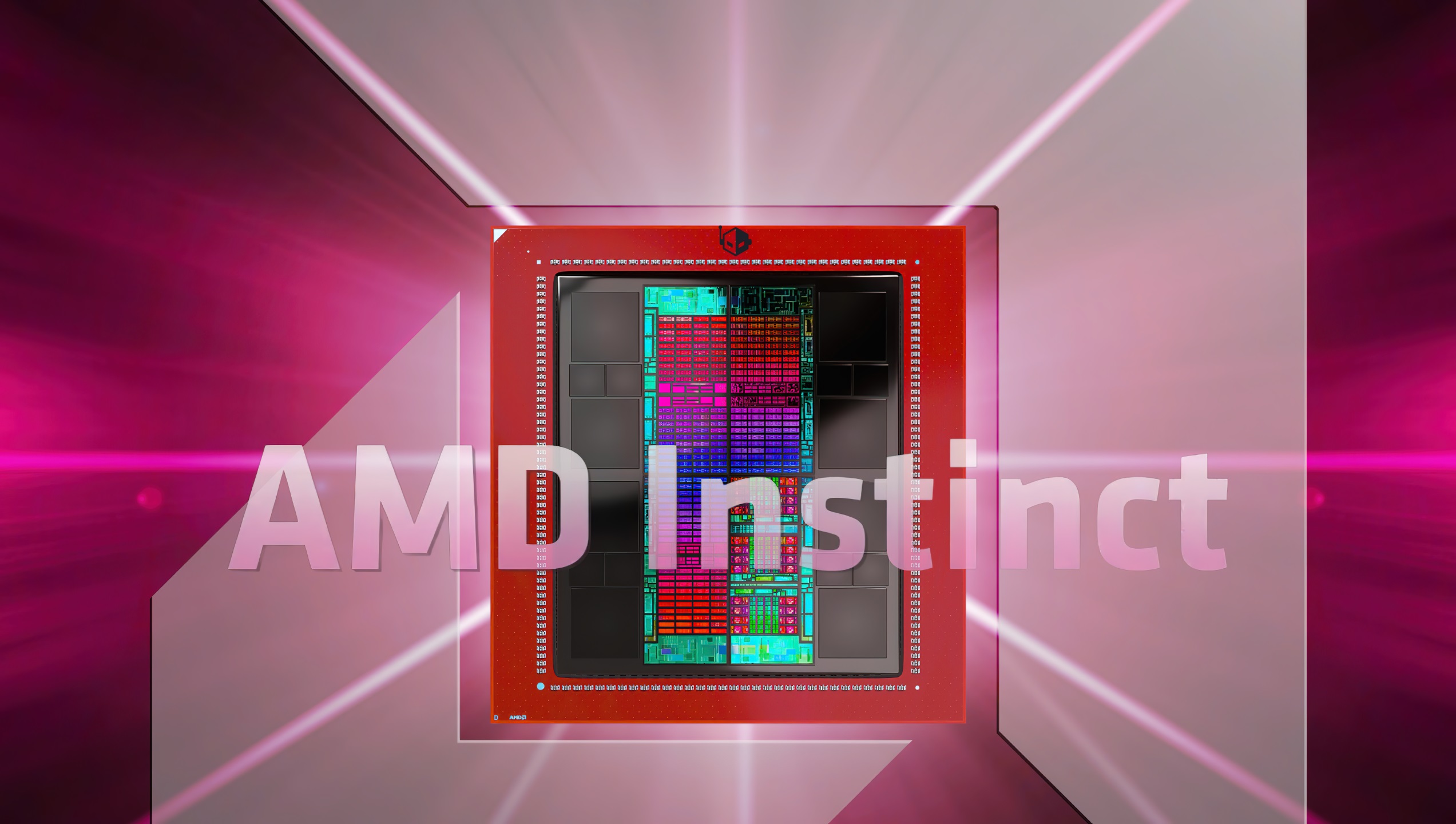
MK1 claims its Flywheel platform already serves over one trillion tokens per day, and it emphasizes cost-efficient, fully traceable reasoning that large enterprises increasingly demand for auditability and governance.
On paper, the fit is unusually clean. Flywheel and MK1’s comprehension engines were built to exploit high bandwidth memory and parallelism characteristics that Instinct accelerators are known for, so AMD isn’t just buying headcount – it’s buying time. Instead of rebuilding a mature inference runtime, AMD can press MK1’s stack into service to accelerate its push in low-latency, high-throughput inference, the side of AI that today drives real, recurring revenue across customer support, analytics, code assistants, and search augmentation.
Why this matters now
Training gets headlines, but inference is the grind: predictable SLAs, strict budgets, and relentless efficiency targets. MK1 touts not only speed but traceability – an increasingly critical feature as enterprises face internal compliance rules and external regulators. If Flywheel can map neatly onto Instinct MI300’s memory hierarchy and ROCm’s evolving kernels, AMD can sell a unified story: competitive hardware, an open software stack, and a production-tested inference layer in one package.
How it fits AMD’s stack
AMD’s software journey has been defined by ROCm, its open compute platform. The company has steadily chipped away at gaps in libraries and frameworks to make deployment less finicky. MK1 gives AMD a pragmatic top-of-stack piece built for large-scale, reasoning-heavy workloads – exactly the kind of jobs where token-per-dollar and token-per-watt decide contracts. Expect tighter integration points: scheduler awareness of HBM, memory-savvy attention kernels, and per-token observability baked into Flywheel so ops teams can track cost, drift, and compliance in real time.
Lessons from Xilinx – and a reality check
AMD’s purchase of Xilinx became a case study in effective integration, especially compared to Intel’s long slog with Altera. That success sets expectations here: customers will look for tangible wins, not just slideware. Still, readers’ perennial question remains: what about consumer GPUs? Just as FPGAs rarely touch the gaming desktop, Flywheel’s first stop is the data center. If benefits trickle down, it’ll likely be via optimized inference runtimes and better framework support – nice quality-of-life improvements for developers, not a headline feature for gamers tomorrow.
Competitive angle
NVIDIA still dominates mindshare and ecosystem gravity, but buyers increasingly run the math on total cost of ownership and vendor concentration risk. If AMD can show lower cost-per-million tokens or consistent latency at scale – backed by tractable logs for governance – procurement teams will take meetings. MK1’s trillion-token throughput claim suggests Flywheel isn’t a lab toy, and pairing that with MI300-class bandwidth could give AMD a credible wedge in inference-heavy accounts.
What to watch next
- Native ROCm integrations for Flywheel: containers, operators, and observability hooks that deploy cleanly on Instinct.
- Benchmarks that break out cost-per-token and traceability overheads under real enterprise loads.
- Roadmaps that clarify how Flywheel will support multi-model routing, retrieval-augmented generation, and long-context reasoning on MI300.
Bottom line: MK1 gives AMD a fast-forward button for enterprise inference and reasoning. If AMD executes the integration with the same discipline it showed post-Xilinx, Instinct + ROCm + Flywheel could evolve into a tightly-coupled platform that competes not only on FLOPS, but on the operational details – cost, latency, and audit trails – that actually win renewals.