Adeia, a long-running intellectual property licensing company, has filed a pair of patent infringement lawsuits against AMD in the U.S. District Court for the Western District of Texas. 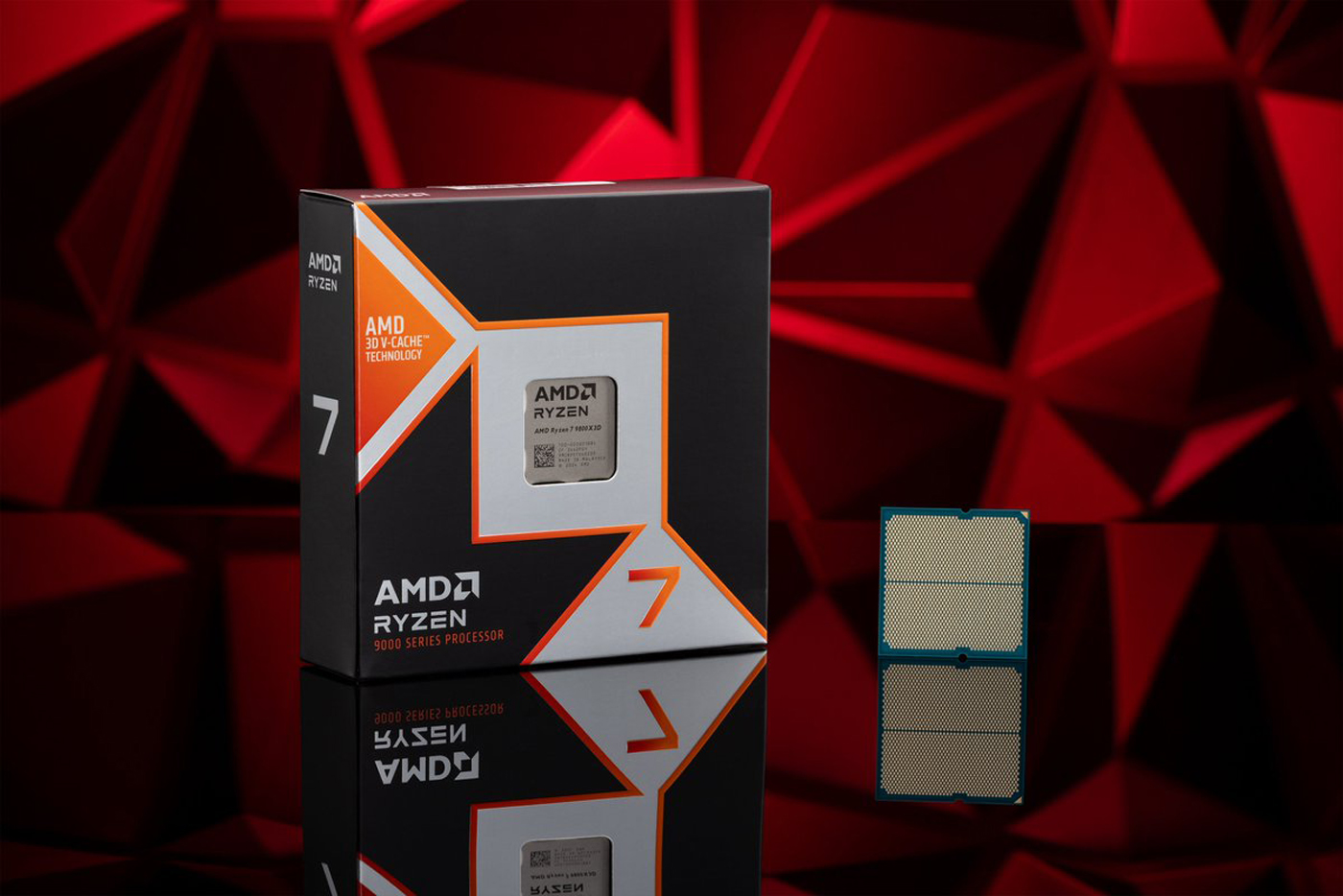
At the center of the complaint: the advanced hybrid bonding techniques that make AMD’s 3D V-Cache possible and power the popular Ryzen X3D lineup. Adeia argues that AMD has relied on its patented semiconductor innovations for years without a license, and after extended but fruitless negotiations, litigation is now on the table.
Why hybrid bonding matters
Hybrid bonding is a packaging method that fuses layers of silicon – logic and cache, or chiplets and interposers – at extremely fine pitches, delivering higher bandwidth, lower latency, and improved power characteristics compared with older microbump approaches. In AMD’s case, it’s the foundation that lets the company vertically stack extra SRAM (V-Cache) atop the CPU die. Since debuting in 2022, this architecture has delivered eye-catching gains in gaming and certain cache-sensitive workloads, and it helped AMD carve out a visible advantage in the client market during key product cycles.
The scope of Adeia’s claim
Adeia says ten patents are in play – seven focused specifically on hybrid bonding and three covering other advanced process techniques. The company contends these inventions are used broadly across AMD’s modern portfolio that employs 3D-stacked cache. Adeia maintains it attempted to reach a business resolution for years and remains open to a license, but it also says it is “fully prepared” to argue the case in court if talks fail. As of publication, AMD has not issued a public response to the complaint.
Why AMD, not TSMC?
Some readers immediately ask: if the chips are fabricated at TSMC, why isn’t the foundry in the crosshairs? Adeia’s answer, in effect, is that TSMC acts as the contract manufacturer while AMD is the designer and direct commercial beneficiary of the contested technology. That puts AMD in the role of alleged implementer. In the semiconductor world, suits often target the architect and marketer of the finished product, even when manufacturing is outsourced.
What’s at stake for Ryzen X3D and beyond
Should Adeia prevail – or should the parties settle – AMD could face royalty payments on products that employ 3D stacking. That might not disrupt current shipments, but it could nudge bill of materials and, by extension, end-user pricing. More strategically, if licensing terms are steep or narrow, AMD may need to redesign aspects of its packaging stack, potentially complicating future roadmaps that rely heavily on stacked cache or other bonded layers. None of this is predetermined; many patent disputes conclude with cross-licensing or a confidential settlement that preserves product cadence.
Legal terrain: familiar but important
Patent fights are a staple of the chip industry, where the pace of packaging and process innovation is blistering and the lines between invention, implementation, and standard practice can blur. The Western District of Texas has become a notable venue for IP cases, and early procedural milestones – venue challenges, claim construction (Markman) hearings, and motions on damages – often shape outcomes long before a jury is empaneled. Adeia’s decision to note its willingness to negotiate while also signaling readiness for trial suggests classic leverage building.
Community reaction: from skepticism to concern
Public sentiment quickly bifurcated. Some regard Adeia as a classic IP licensor flexing its portfolio – “patent trolling” in the harsher phrasing – and predict the case will fizzle or settle with minimal impact. Others fear a sizable royalty could add friction to AMD’s aggressive client and gaming plans, or that the dispute lands at an awkward moment as the market anticipates new X3D refreshes. There’s also the inevitable console-war-style banter, with competitors’ fans cheering from the sidelines and tossing memes into the discourse. Strip away the noise, and the core question is simple: who controls which pieces of modern 3D stacking, and what is a fair price for access?
What to watch next
- AMD’s response: a formal answer will frame non-infringement and validity defenses and may preview any license history.
- Claim construction: how the court interprets key terms around “hybrid bonding” and interconnect structures could make or break infringement arguments.
- Injunction vs. damages: courts rarely halt shipping products in complex tech disputes; monetary remedies are more common.
- Negotiation signals: if both parties inch back to the table, look for language about a “comprehensive business resolution.”
Bottom line
This case won’t rewrite the physics that make Ryzen X3D compelling, but it could influence how AMD prices and plans future stacked designs. For gamers and creators today, nothing changes overnight. For AMD’s packaging roadmap tomorrow, the license calculus just got more complicated.
1 comment
Lmao someone else trying to own 10% of AMD’s 🍑 again 😂