Another big name has slipped out of Apple’s design labs, and once again fans are asking the uncomfortable question: who is really going to shape the next generation of the iPhone? This time it is Abidur Chowdhury, the designer most closely associated with the ultra-thin iPhone Air, and his quiet departure adds fuel to the narrative that Apple is struggling to hold on to its most ambitious talent at a pivotal moment for the smartphone.
As reported by Bloomberg’s Mark Gurman, Chowdhury has left his comfortable role in Cupertino to join an artificial intelligence startup. 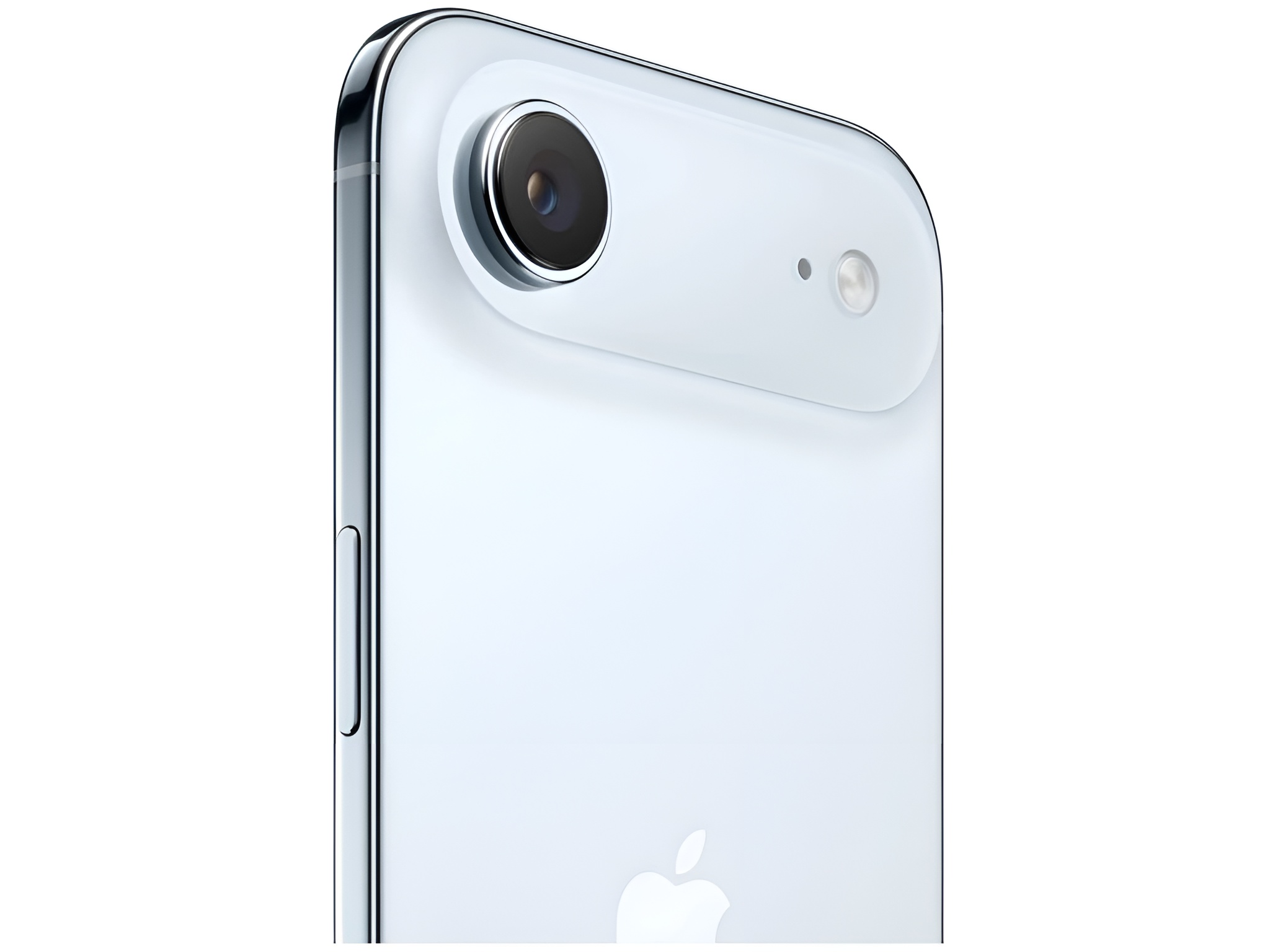
On the surface, it is a very 2020s story: a rising designer walks away from one of the most coveted jobs in consumer tech to chase the promise of building something fresh around AI. The move seems so recent that, at the time of reporting, his LinkedIn profile still lists Apple as his current employer, a small reminder of how quickly careers can pivot in Silicon Valley.
Inside Apple, Chowdhury was not just another name on an org chart. He had become one of the visible faces behind the iPhone Air project, the company’s thinnest and arguably most polarizing iPhone. Apple never intended the Air to rival the mainstream models in volume. Internal expectations pegged it at roughly six to eight percent of annual iPhone sales, more of a specialty device than a mass-market staple. Its real purpose was to serve as an experimental platform, a rolling testbed where Apple could push new component layouts, materials and thermal tricks to extremes before deciding which ideas were mature enough for the broader iPhone lineup.
Out in the wild, the story around the iPhone Air has been far less generous. A vocal slice of the community has reduced the device to the punchline of modern industrial design: a slightly thinner rectangle. Jokes about Apple’s next big breakthrough being a ‘circle that’s circular’ capture a real frustration – when almost every phone is already a flat slab of glass and metal, another half-millimeter shaved off the chassis can feel underwhelming, especially if it brings trade-offs in battery life, camera versatility or repairability.
That scepticism has coloured discussion of the follow-up model. Rumours suggest that the iPhone Air 2 could be pushed back to 2027 instead of appearing in 2026, with some reports initially claiming Apple wanted extra time to rework the internal plateau to accommodate a dual-camera system and other easily visible upgrades. Gurman is doubtful that cameras are the real reason: rebuilding the cramped interior of such a thin device just to improve what is, statistically, one of the least-used lenses on most iPhones would be an expensive way to chase a problem that few buyers actually notice.
A more convincing explanation lies deeper on the logic board, in Apple’s silicon roadmap. The next big leap is the A20 chip, expected to be manufactured on TSMC’s cutting-edge 2-nanometer process. Beyond the usual promises of more performance and better battery life, the A20 is tipped to make heavy use of wafer-level multi-chip module (WMCM) packaging. In plain language, that means Apple can integrate the system-on-chip and DRAM more tightly at the wafer level, boosting bandwidth between CPU, GPU and memory, cutting latency and opening more headroom for on-device AI features that Apple wants to push as a signature capability of future iPhones.
The catch is that 2-nanometer capacity will be limited at launch. If the iPhone Air is indeed meant to carry the A20 as part of Apple’s first wave of 2 nm devices, the company has every incentive to reshuffle its usual product calendar. Current expectations point to a spring 2027 debut for the next iPhone Air, aligned with the iPhone 18 and iPhone 18e, rather than the traditional fall 2026 window. Grouping devices that share the same chip family within a different launch cadence could help Apple stretch every precious TSMC wafer while still keeping the high-volume flagships in stock.
Seen from that angle, Chowdhury’s departure looks less like a dramatic reaction to weak iPhone Air sales and more like one more sign of a broader trend: key designers and engineers are drifting away from Apple toward projects that promise a cleaner slate and bolder experimentation. And some of the most aggressive hiring is coming from people who know Apple’s culture and standards inside out.
Former Apple design chief Jony Ive, whose fingerprints are all over the original iPhone, now runs his own studio and is collaborating with OpenAI on a new hardware concept frequently described as an ‘iPhone killer’. Rather than another glass rectangle, the device is rumoured to be a screenless, pocket-sized object built around voice, ambient intelligence and subtle interactions instead of an app grid and endless notifications. To make that vision real, OpenAI has reportedly recruited around two dozen Apple veterans, including designers, hardware engineers and human-interface specialists.
Among them are figures like manufacturing design expert Matt Theobald and interface lead Cyrus Daniel Irani, both credited with helping shape how recent iPhones look, feel in the hand and behave on screen. Their shift, alongside designers such as Chowdhury choosing AI-centric roles, strengthens the perception that the gravitational centre of hardware innovation may be drifting away from Apple’s tightly managed campus toward a looser constellation of startups and design labs experimenting at the edges of what a personal device can be.
Does that mean the iPhone’s future is doomed because one more visionary has walked out the door? Probably not. Apple still commands enormous resources, runs one of the most efficient hardware-software integration pipelines in the industry and retains plenty of experienced designers and engineers who are far from household names. Yet symbolism matters. When people behind even niche, experimental projects like the iPhone Air decide that their most interesting work now lies elsewhere, it raises uncomfortable questions about whether Apple is still willing to take the kind of design risks that once made the iPhone feel like a glimpse of the future, not just a thinner version of last year’s rectangle.
Ironically, this wave of departures could end up benefiting users in the long run. Stronger competition from AI-first devices and radical new form factors will put pressure on Apple to be bolder with both hardware and chips, not just iterate safely. If Apple manages to combine its manufacturing scale and ecosystem with the kind of daring thinking that seems to be flourishing outside its walls, then the iPhone Air that finally lands in 2027 – alongside the iPhone 18 family and powered by the A20 – could feel far more exciting than the memes suggest. And if it doesn’t, there will be no shortage of rivals ready to prove that a phone, or its replacement, can be more than a slightly thinner rectangle.
1 comment
lmao so the big innovation was making the rectangle thinner 😂 feels like peak apple sometimes