China’s AI race just jumped from chatbots to the object in your pocket. After the shock of the DeepSeek boom earlier in 2025, ByteDance is now chasing a "DeepSeek moment 2.0" with a piece of hardware: the Nubia M153, an engineering prototype smartphone built with ZTE’s Nubia brand and marketed as the world’s first truly agentic AI phone. 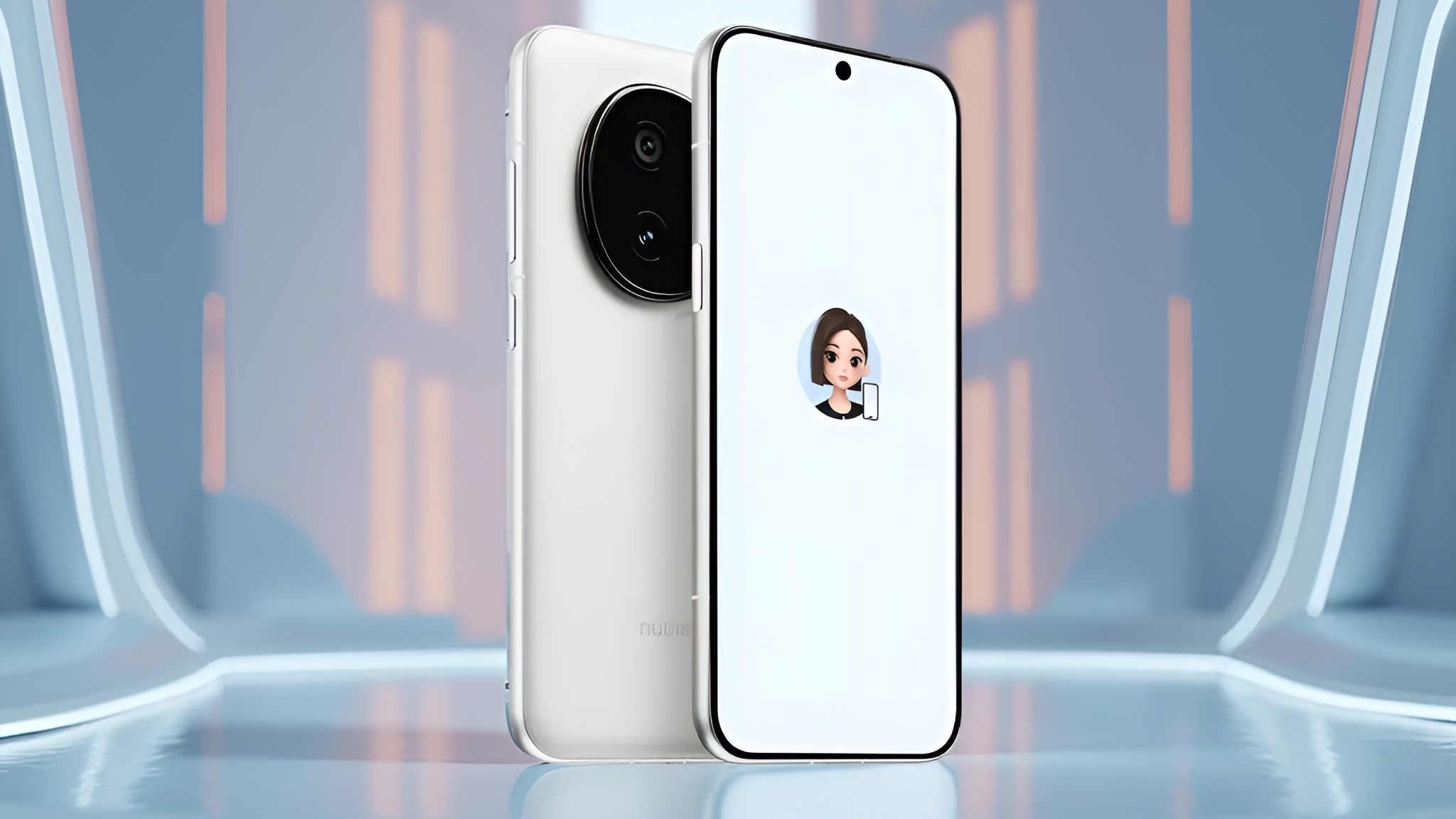
It is a device that doesn’t just answer questions or summarize emails. It looks at your screen, understands what it is seeing, and then takes action on your behalf.
On paper, the Nubia M153 is a fairly classic Chinese flagship: aggressive specs, sharp pricing, and a design that feels purpose-built for heavy AI workloads. Priced at 3,499 yuan (about $494), the phone is currently sold only online and framed as a limited engineering prototype rather than a mass-market handset. The message is clear: this is an early peek at where smartphones might be headed, and you’re signing up to be part of the experiment.
What agentic AI actually means on a phone
Most of us are used to assistants that live inside a single app or a narrow box. They set alarms, dictate short messages, maybe rewrite an email. ByteDance’s Doubao agent, which powers the Nubia M153, aims for something far more ambitious. It sits at the operating-system level, tightly fused with Android, and is given the kind of permissions usually reserved for accessibility tools. Instead of politely asking apps to cooperate via official APIs, it behaves almost like an invisible user.
Give it a voice command and Doubao can jump between apps, read whatever is on the display, interpret buttons and menus, and then tap, swipe, scroll and type as if a real human were holding the phone. Ask it to book a restaurant for Friday night and it can search through food apps, check availability, compare options, fill in the details and confirm the reservation. Tell it to find the best price for a gadget and it hunts across e-commerce apps, compares listings and, with your consent, completes the purchase. Need a photo cleaned up? It can open your gallery or editing app, select the picture and remove that random passer-by from the background.
This is why early reactions online describe the device as both "cool and scary". For the first time, a mainstream phone is being sold on the promise that it will literally operate itself.
Flagship hardware built around an AI core
To make that vision credible, ZTE has wrapped Doubao in very capable hardware. The Nubia M153 comes in a single high-end configuration with 16GB of RAM and 512GB of storage, leaving plenty of headroom for local AI models, multitasking and aggressive app caching. Under the hood is Qualcomm’s Snapdragon 8 Elite SoC, one of the most powerful chips in the Android ecosystem, with the kind of NPU performance that modern agentic systems demand.
The display is a 6.78-inch LTPO OLED panel with a 1264 x 2800 resolution, promising sharp text, deep blacks and the power-saving benefits of variable refresh rates. On the back, ZTE has gone all-in on symmetry: a 50MP main camera, a 50MP telephoto, and a 50MP ultra-wide, joined by a 50MP selfie camera on the front. It is the kind of spec sheet that screams "no obvious compromises" and positions the phone as a serious camera tool as well as an AI testbed.
Powering it all is a chunky 6,000mAh battery with support for 15W wireless charging. That capacity matters: an agent that is constantly scanning the UI, talking to servers and juggling tasks across apps will eat through power more aggressively than a traditional passive assistant. ZTE and ByteDance clearly expect users to lean on the AI heavily, not just summon it once or twice a day.
- Engineering prototype available only via online orders
- Price set at 3,499 yuan (roughly $494)
- Dimensions: 163.12mm x 77.04mm x 8.52mm
- 6.78-inch LTPO OLED display at 1264 x 2800
- 50MP main, 50MP telephoto, 50MP ultra-wide and 50MP front camera
- 16GB RAM and 512GB internal storage
- Qualcomm Snapdragon 8 Elite SoC
- 15W wireless charging
- 6,000mAh battery capacity
How Doubao works under the hood
The most radical choice is how Doubao talks to apps. Instead of negotiating bespoke integrations or relying on limited official APIs, ByteDance’s agent uses system-level permissions to simulate finger taps and gestures. It reads whatever is on the screen, converts visual elements into a structured understanding of buttons, text boxes and lists, and then decides what to press next. In other words, it treats every app the way a human user would treat it.
The upside is obvious: Doubao can, in theory, work with almost any Android app without waiting for developers to add special support. If an interface changes, the agent can adapt dynamically rather than waiting for an update. It is a glimpse of a future where your phone behaves like a small, tireless intern that never gets bored of repetitive tasks.
But this approach also makes some people uneasy. Granting an AI this level of access means it can see everything you see: private chats, banking apps, medical results, sensitive work tools. It is not hard to understand why some observers label the phone as equal parts futuristic and unsettling.
Power, privacy and the inevitable geopolitics
The Nubia M153 also lands in a climate where every major Chinese tech move is read through a geopolitical lens. ByteDance, as the owner of TikTok and its Chinese cousin Douyin, already sits at the center of global debates about data, privacy and influence. Handing one of its AI agents OS-level control of a device will inevitably raise eyebrows outside China, even if the company emphasizes user consent and security controls.
Interestingly, early online discussions around the phone have been less dominated by knee-jerk anti-China rhetoric than some might expect. A common reaction is closer to: this is insane tech, why didn’t Western brands ship something like this first? Still, there is an undercurrent of anxiety: if a phone can quietly tap its way through your apps, who ultimately holds the reins, you or the platform provider?
Analysts have also pointed out another tension. Because Doubao sits so deeply inside the operating system, it risks weakening the negotiating power of handset makers that adopt it. If the AI layer becomes what users truly care about, the hardware brand can start to look interchangeable. That may be one reason why ByteDance’s first major partner is ZTE’s Nubia line rather than one of China’s top-selling smartphone giants.
Why ZTE’s Nubia is first in line
For ZTE, the collaboration is a rare chance to step out of the shadow of bigger names and grab headlines in a new product category. The Nubia M153 positions the company as a willing test pilot for the next wave of AI-first hardware, while ByteDance gets a relatively flexible canvas to experiment on without risking an entire phone lineup of its own.
Crucially, ZTE is presenting the device as an engineering prototype aimed at developers, early adopters and professionals curious about agentic AI. That framing lowers expectations around polish while raising expectations around innovation. You are not simply buying another Android flagship; you are buying into a live experiment about how much autonomy we’re ready to grant our devices.
A glimpse at the next era of smartphones
Whether the Nubia M153 ultimately becomes a historical curiosity or the blueprint for future phones, it crystallizes a shift that has been coming for years. As Apple, Google, Samsung, Huawei and others race to pack more AI features into their devices, ByteDance and ZTE are skipping a few steps and asking a blunt question: what if the phone could just do the boring parts for you?
For now, the answer feels exactly like those early comments describe it: cool and scary. Cool, because the idea of a digital assistant that genuinely understands context and can move through your apps like a human is undeniably powerful. Scary, because putting that much agency into the hands of any company, in any country, forces us to rethink what "smart" really means when it lives in our most personal device.
The Nubia M153 is not just another spec monster. It is a test of how far we are willing to go in trading control for convenience, and of how quickly agentic AI will move from experimental prototypes to everyday expectations.
3 comments
Your point of view caught my eye and was very interesting. Thanks. I have a question for you.
If Apple shipped this exact same idea people would call it magical and revolutionary, but because it’s ZTE + ByteDance it’s instantly sus to some folks
Honestly I already give access to a bunch of random apps… at least this one is upfront about doing all the boring tapping for me