Apple has spent more than a decade telling the world that its secret weapon is the tight integration between its hardware, software and custom silicon. At the center of that story sits Johny Srouji, the low-profile but hugely influential Senior Vice President of Hardware Technologies who turned Apple from a customer of chip vendors into one of the most advanced semiconductor houses on the planet. Now, according to multiple reports, Srouji is seriously weighing an exit – and Apple is scrambling to make sure the man behind Apple Silicon does not walk out the door.
The timing could hardly be worse. 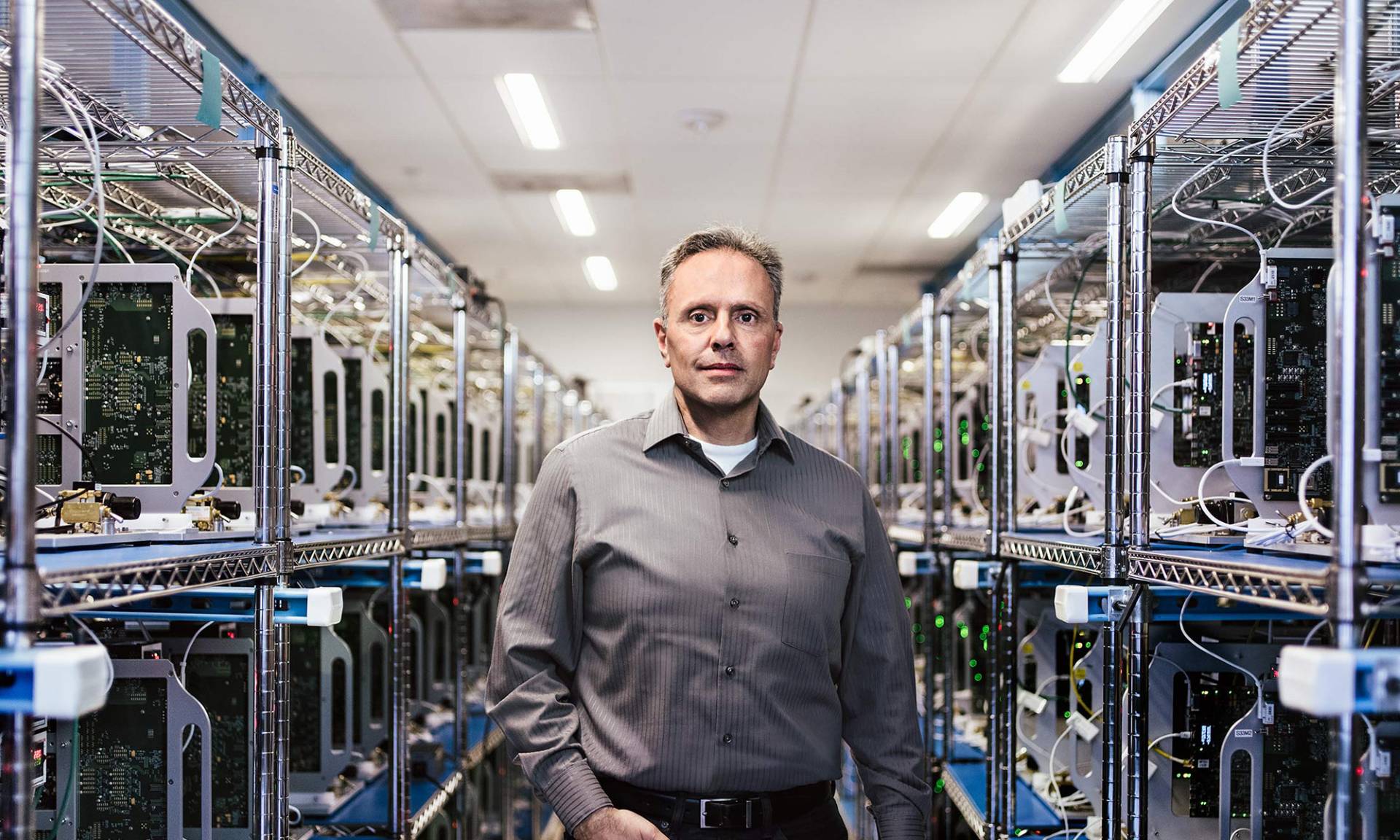
In just a few days, at least four senior Apple executives have announced their departure, feeding a broader narrative that the company’s leadership bench is under pressure. Against that backdrop, hearing that the architect of the M-series processors and Apple’s in-house modem effort has told Tim Cook he is considering leaving has set off alarm bells in Cupertino and on Wall Street alike.
Srouji has reportedly informed the Apple CEO directly that he is thinking about moving on in the near future and has told close colleagues that, if he does leave, it would be to join another company rather than retire quietly. For a firm that has structured huge parts of its product roadmap around his teams, losing him would not simply be a high-profile resignation; it would be a strategic earthquake.
To understand why Apple is fighting so hard to keep him, you have to look at the track record. Under Srouji, Apple shipped the M1 and ignited the Apple Silicon transition in the Mac, breaking its dependence on Intel and surprising the industry with laptop chips that suddenly leapfrogged traditional PC processors in performance per watt. On the iPhone side, his organization pushed Apple far beyond the A-series application processors and into baseband and connectivity silicon that used to be sourced from Qualcomm and others.
In a rare interview, Srouji once pushed back on rumors that Apple had quietly given up on designing its own modem, insisting that cellular silicon was central to the long-term strategy. The product pipeline has borne that out. Apple introduced the C1 baseband chip in the iPhone 16e and followed with the enhanced C1X in the iPhone Air. It then rolled out the N1 wireless chip across the entire iPhone 17 lineup, tightening control over Wi-Fi and Bluetooth behavior in ways that outside suppliers simply cannot match.
Next up is the C2 5G modem, reportedly aimed at the iPhone 18 generation and designed to give Apple more independence on radio technology and power consumption. Longer term, the ambition is even bolder: build a single piece of silicon that unifies application processing, 5G, Wi-Fi and Bluetooth into one tightly integrated package. Pulling off that kind of system-on-chip is not just a matter of shrinking transistors; it demands the sort of deep, cross-disciplinary engineering culture that Srouji has spent years building.
That is exactly why the prospect of his departure is making people nervous. When so much of your competitive moat rests on one leader and their organization, the risk of over-concentration is obvious. Apple has prided itself on not being a “one-man company,” yet insiders and critics alike are now asking whether too much of the silicon roadmap effectively lives in one man’s head. If Srouji walks, the knowledge drain and the hit to morale across Hardware Technologies could take years to fully absorb.
People familiar with the talks say Apple has already put enormous incentives on the table to convince him to stay. We are talking massive compensation packages, expanded responsibilities, and even the possibility of elevating him to a new Chief Technology Officer role that would make him second only to Tim Cook on the technical side of the house. At the same time, those same sources suggest that Srouji is wary of navigating yet another CEO transition and may not want to find himself reporting to a very different style of leader a few years down the line.
Behind the scenes, there is also a broader cultural debate playing out, and it echoes what many employees across Big Tech complain about. As companies scale, they accumulate layers of executives eager to “put their stamp” on every decision. Power clusters form at the top, politics start to matter as much as products, and the people who actually grind out great outcomes can feel squeezed between conflicting agendas. Some observers see the current wave of departures – and Srouji’s apparent restlessness – as a symptom of that creeping toxicity. When hiring is driven by who sounds good in meetings instead of who can ship, you eventually drive out the builders.
For Apple customers, the stakes are deceptively simple: chips define the experience. From battery life and camera processing to on-device AI and cellular reliability, almost everything that makes a modern iPhone, Mac or iPad feel “Apple-like” is encoded in designs that flow through Srouji’s organization. If he stays, the company can keep pushing toward its dream of a unified communications and compute chipset that makes the iPhone 18 and beyond more efficient, more secure and less dependent on outside vendors. If he leaves, Apple will have to prove that its vaunted engineering culture is strong enough to outlast even its most important architects.
Right now, all signals point to Apple pulling every retention lever it has – from money and titles to giving Srouji the freedom to pick the next big project that excites him. Whether that will be enough is an open question, but one thing is clear: in an era when top technical leaders can reshape entire industries, letting the mind behind M1, C1, C1X, N1 and the future C2 walk away would be one of the most expensive mistakes Apple could make.
2 comments
honestly if C1 / C1X / N1 and that future C2 modem all land, they should’ve slapped a CTO badge on him yesterday. if he walks, back to begging qualcomm i guess
working for tim cook or zuck sounds like choosing the nicer boss from hell tbh. i’d grab a stupid amount of cash, stay a year, then bounce and wave them the 👋