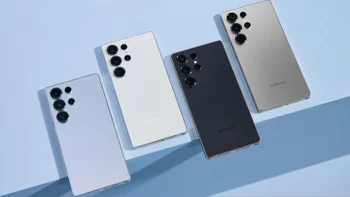
Every December, after the review units are packed away and the benchmarks stop running, we’re left with a single question: which phones actually mattered this year? Not just the ones that shouted the loudest in ads, but the devices people kept asking about in comments, group chats, and late-night which phone should I buy messages. That’s what the 2025 Phone Awards are really about: celebrating the phones that defined the year in the real world.
2025 has been a strange, fascinating season for smartphones. AI went from buzzword to baked-in feature, batteries quietly made huge strides, and foldables finally crossed the line from quirky prototypes to serious daily drivers. At the same time, some launches reminded us that even the biggest brands can completely misread the room. And yes, the familiar pattern continued: whenever we share our rankings, a few readers roll their eyes and say, of course Apple and Samsung are at the top again. The truth? They are, but for very specific, practical reasons, and they’re far from the only brands worth talking about this year.
For these awards, we didn’t just tally specs and crown the highest benchmark scores. We looked at months of testing data, reader feedback, camera comparisons in terrible lighting, battery endurance on the road, and those little annoyances you only notice on day thirty, not day one. Each winner here represents a category where it genuinely pushes the market forward, or nails the basics so well that you simply stop thinking about the phone and just live with it.
Below, you’ll find our picks across key categories: Value, Surprise, Design, Fine Wine for last year’s phone that aged the best, Gaming, Compact, Flip, Fold, Overall Champion, plus two less flattering but very necessary labels: the Most Boring Phone and the Biggest Bust of 2025. Let’s get into it.
Best Value Phone 2025: Samsung Galaxy S25 FE
Value isn’t about being the cheapest phone on the shelf; it’s about delivering the fewest compromises for the money. This year, the device that nailed that balance is the Samsung Galaxy S25 FE.
Samsung took a very no nonsense approach here. Instead of chasing gimmicks, the S25 FE focuses on the everyday stuff that actually matters. You get a big, comfortable display that feels like a proper flagship screen, not the cramped panels that many budget phones still use. Under the hood, there’s a near-flagship chipset that keeps animations smooth, gaming stable, and heavy multitasking painless. Importantly, Samsung didn’t cut corners on the cameras either: you still get a true triple-camera setup with a telephoto lens, something that’s shockingly rare at this price point.
Add to that a 4,900 mAh battery that easily stretches through a full day of use, plus 45 W fast charging that bails you out when you do manage to drain it, and you start to see the picture. The design may not scream luxury, but it’s clean, solid, and more premium-feeling than the price tag suggests. In a year where the Pixel 9a and iPhone 16E both made strong cases in specific areas, the Galaxy S25 FE is the phone we kept recommending to friends and family because it simply does almost everything right. If you’re picking one up, the 256 GB version is the smart move, since 2025 apps and photos fill up storage quicker than ever.
Biggest Positive Surprise: OnePlus 15
OnePlus has long lived in that space between full-on mainstream giant and enthusiast darling, but in 2025 the OnePlus 15 reminded everyone why the brand still matters. The first surprise came with timing: it arrived early, jumping ahead of the Galaxy S26 wave and grabbing attention before the rest of the Android flagships crowded the stage.
The real shock, though, is what OnePlus did with the battery. A 7,300 mAh cell in a phone that doesn’t feel like a brick sounds like science fiction, yet the OnePlus 15 makes it work. In daily use, this isn’t just all day battery, it’s a genuine two-day device for a lot of people. When you finally do need to top up, the signature ultra-fast charging turns a quick coffee break into hours of extra screen time. Combined with excellent thermal management and stability, it’s also one of the most reliable gaming platforms of the year, staying cool under pressure while other phones quietly throttle.
Then there’s the price. At around 900 dollars, the OnePlus 15 slots in below many ultra-premium rivals while feeling every bit as quick and polished. It doesn’t have the brand prestige of Apple or Samsung, but for power users who care about performance per dollar, this was the sleeper hit of 2025, the phone that made a lot of readers comment that maybe they don’t actually need to spend four digits on a flagship after all.
Design of the Year: iPhone Air
We saw a lot of flashy designs in 2025, including some that pushed things too far into gimmick territory. The iPhone Air took a different route: it made thinness and lightness exciting again, but without feeling fragile or toy-like.
Pick it up once and you understand why it wins this category. The phone is impossibly slim, lighter than you expect, and yet surprisingly rigid thanks to its titanium frame. The polished sides catch the light just enough to look luxurious without veering into tacky. It’s the kind of device that makes other phones suddenly feel bulky and old-fashioned the moment you go back to them.
What makes the design commendable is that Apple didn’t just shave off millimetres for a spec sheet flex. The ergonomics are excellent, the weight distribution feels natural, and the phone still manages respectable battery life. You can tell it’s been designed to be lived with, not just stared at in marketing photos. In a year when some accessories, including outrageously priced fashion socks for phones, sparked controversy, the iPhone Air itself stands out as one of Apple’s boldest and most confident hardware statements in years.
Fine Wine Award: Google Pixel 9 Pro
New phones are fun, but not everyone upgrades every year. That’s where the Fine Wine category comes in: it’s for last year’s phone that still feels like a smart buy today. In 2025, that title clearly belongs to the Google Pixel 9 Pro.
Even with the Pixel 10 on shelves, the 9 Pro refuses to feel outdated. Google’s promise of seven years of updates wasn’t just a marketing line; they’ve been shipping day-one Android releases and feature drops that keep the phone fresh. AI-powered tools for photography and productivity have only gotten better, and the experience today is noticeably more capable than it was at launch.
The camera system remains a highlight. A triple 50 megapixel array with a sharp main camera, ultra-wide, and a 5 times telephoto gives the Pixel 9 Pro one of the most versatile shooting kits around, especially in challenging lighting. The colour science and computational photography are still among the best on any phone, making it a favourite for users who want to point, shoot, and trust the phone instead of tweaking settings.
For many readers, that long-term support plus sustained camera excellence makes the Pixel 9 Pro a smarter purchase than some brand-new mid-rangers. It’s the rare phone that genuinely gets better with age, living up to its fine wine nickname.
Best Gaming Phone: RedMagic 11 Pro
If your phone is basically your console, the RedMagic 11 Pro is the device that treated gaming like a first-class citizen in 2025. This isn’t a normal phone that also plays games well. It’s a gaming machine first that just happens to make calls.
The futuristic transparent back shows off an intricate cooling system that’s a real engineering flex. Inside, you get a Snapdragon 8 Elite Gen 5 pushed to its limits with an advanced liquid-cooling loop, a 24,000 rpm fan, a large vapour chamber, and a ceramic nano-pump circulating coolant. Translation: you can play demanding titles for long sessions without watching your frame rate fall off a cliff or feeling the chassis cook your fingers.
The under-display selfie camera keeps the expansive front uninterrupted, so your gaming view isn’t broken by a punch-hole. Paired with a big, fast refresh-rate display and a 7,500 mAh battery, this phone was built for marathon sessions. The optional configuration with 24 GB of RAM and 1 TB of storage still manages to undercut some mainstream flagships in price, which almost feels unfair.
It’s true that the cameras are an afterthought and the software skin won’t be everyone’s favourite. But for players who care more about ping than portrait mode, the RedMagic 11 Pro is the most complete gaming package of the year.
Best Compact Phone: iPhone 17
Small is a relative term in 2025, but the iPhone 17 hits that sweet spot for people who want a phone that actually fits their hand and pockets without giving up horsepower. While the Galaxy S25 may edge it out slightly in size and weight, the iPhone 17 wins this category on overall experience.
Cutting down the footprint doesn’t mean cutting down performance. The iPhone 17 runs the same ultra-fast chip as its bigger siblings, and with a standard 256 GB of storage on the base model, it feels less compromised than many so-called compact phones that still start at 128 GB. Apps open instantly, games run smoothly, and long-term support is practically a given at this point in Apple’s lifecycle strategy.
Then there’s the ecosystem. Seamless AirDrop, tight integration with Apple Watch, instant handoff with MacBooks and iPads, if you live in Apple’s world, the iPhone 17 feels like a natural extension of everything else you use. For readers who asked for a one-hand-friendly phone that doesn’t feel like a downgrade, this was our go-to suggestion in 2025.
Best Flip Phone: Motorola Razr Ultra
Flip-style foldables finally matured in 2025, and at the front of the pack we found the Motorola Razr Ultra. Its original launch price north of a thousand dollars raised eyebrows, but with street prices dropping to around 900, it landed right in the sweet spot of premium but attainable.
The Razr Ultra wins not by throwing the most features at the wall, but by feeling like a flip phone designed for normal people rather than just tech obsessives. The large cover screen stretches almost edge to edge and, crucially, works the way you expect right out of the box. You don’t have to mess with obscure settings or experimental modes to get full app experiences on the outer display; it’s just there and it just works.
Compared to Samsung’s latest Galaxy Flip, Motorola’s choice of a faster processor and quicker charging pays off in daily use. Opening and closing the hinge feels reassuringly smooth, the design is sleek without being fragile, and the overall polish makes it feel like a finished product, not a beta version sold for full price. Among the flip phones we used this year, the Razr Ultra is the one that most successfully combines fun, fashion, and real-life practicality.
Best Foldable Phone: Samsung Galaxy Z Fold 7
Some brands are still experimenting on the sidelines and a few newcomers are making brave attempts, but when it comes to big book-style foldables, 2025 is the year the Samsung Galaxy Z Fold 7 pulled firmly ahead again.
After a few generations that felt more iterative than exciting, Samsung finally addressed some long-standing complaints. The Fold 7 is slimmer, lighter, and far more comfortable to use as a closed phone thanks to a wider, more natural cover screen. Open it up, and you still get that tablet-like canvas that turns reading, multitasking, and productivity into something no flat phone can quite match.
On the software side, One UI 8 refines the foldable experience with better app continuity, smarter multitasking layouts, and polished features such as Samsung DeX for turning the Fold into a mini-computer when connected to a monitor. Battery life is steadier, the crease is less visually distracting, and overall durability has taken a noticeable step forward.
Foldables are still more expensive than traditional slabs, but for users who genuinely want one device to be both phone and tablet, the Galaxy Z Fold 7 is the first model in a while that feels like a no-compromise recommendation.
Best Overall Smartphone 2025: iPhone 17 Pro Max
Every year, there’s one showdown we know will light up the comments section: Apple versus Samsung at the very top. In 2025, the fight for the overall crown came down to the iPhone 17 Pro Max and the Galaxy S25 Ultra, and once again, the margins are razor thin. After months of testing, the iPhone 17 Pro Max takes it.
The reason isn’t a single gimmick, but a pile of practical improvements that add up. The new square-shaped front camera might sound like a small tweak, yet it makes switching between vertical and horizontal selfies surprisingly effortless, especially for creators filming in multiple formats. The 4 times zoom hits a sweet spot for everyday photography, feeling more usable than the ultra-long periscope lenses that sometimes prioritise specs over real-world convenience.
Battery life is another area where the iPhone nudges ahead. In our long-term use, it consistently lasted a bit longer than the S25 Ultra under mixed workloads, and Apple’s once-criticised charging speeds have finally caught up to the point where they’re no longer a weakness. Performance remains top-tier, and Apple’s tight hardware and software integration gives the phone a level of fluidity that’s hard to quantify but easy to feel.
Then there’s the ecosystem gravity. Between iMessage, FaceTime, AirDrop, Continuity, and the expanding universe of Apple services, the iPhone 17 Pro Max doesn’t exist in isolation, it’s the hub for everything else. That’s exactly why some readers jokingly complain that it wouldn’t be a real awards list if Apple and Samsung weren’t at the top. But when you focus on the actual day-to-day experience, it’s hard to argue with the iPhone 17 Pro Max sitting on the throne this year.
Most Boring Phone: iPhone 16E
Not every phone needs to be revolutionary, but some releases feel like they barely woke up for the alarm. Our Most Boring Phone award for 2025 goes to the iPhone 16E, a device that leans heavily on Apple’s reputation while bringing almost nothing fresh to the table.
In practice, it’s essentially a lightly refreshed iPhone 14 with USB C and a few tweaks. There’s no MagSafe, only basic colour options, and a single rear camera that feels particularly limiting in a year when even mid-range Android phones are offering triple-camera arrays with ultra-wide and telephoto lenses. Outdoors, the display can struggle in bright sunlight, which makes that 600 dollar price tag feel harder to swallow.
Is it the cheapest way into iOS in 2025? Yes. Is it an exciting phone to recommend? Not really. For shoppers on a budget, there are simply more inspiring alternatives on both the Android side and within Apple’s own refurbished and previous-generation line-up.
Biggest Bust of 2025: Apple Intelligence
Finally, we have to talk about the year’s biggest disappointment, and this time it’s not a physical phone at all. The Bust of the Year award goes to Apple Intelligence, Apple’s grand AI initiative that was supposed to redefine how we use our devices, and instead mostly fizzled in 2025.
After promising the world in 2024, Apple spent much of this year walking back timelines, narrowing feature sets, and quietly delaying roll-outs. While competitors shipped bold, sometimes chaotic but undeniably ambitious AI features, Apple’s approach felt hesitant and oddly conservative. In some regions and on certain language settings, users are still waiting for key features to even appear.
To be fair, there are reasons for the caution: privacy constraints, on-device processing requirements, and the sheer complexity of integrating AI into core system apps without breaking things. But the end result for everyday users is simple: Apple Intelligence didn’t live up to the hype. Even loyal iPhone fans in our community have called it out as the let-down of the year, joking that Apple seems to have taken 2025 off from the AI race while everyone else sprinted ahead.
There’s always the possibility of a comeback in 2026, perhaps with a long-awaited Siri overhaul that finally makes the assistant feel modern. For now, though, Apple Intelligence stands as a reminder that even the biggest tech giant can stumble when the industry moves faster than its internal comfort zone.
Closing Thoughts: Your Turn to Judge
Those are our picks for the best and worst phones and phone-related moves of 2025. Phones like the Galaxy S25 FE, OnePlus 15, iPhone Air, Pixel 9 Pro, RedMagic 11 Pro, iPhone 17, Razr Ultra, Galaxy Z Fold 7, and iPhone 17 Pro Max show just how diverse the smartphone landscape has become. You can optimise for value, design, camera, gaming, pocketability, or future-proof software support, and there’s a genuinely excellent choice in each lane.
At the same time, the iPhone 16E and Apple Intelligence remind us that even beloved brands can stumble, coast on their reputations, or misjudge what users actually want. And that’s where the smartphone community comes in. Every awards season, our comment sections fill up with passionate disagreements, clever counter-arguments, and nuanced personal experiences that no spec sheet can capture.
Some readers are convinced we lean too hard toward Apple and Samsung; others show up with lists that put niche gaming phones or quirky mid-rangers at the top. Honestly, that tension is part of what makes covering phones fun. There is no single best phone that fits everyone, only the one that fits you best right now. So consider these awards a starting point, not the final word in the debate about 2025’s smartphone champions.
And if you’ve spent the year living with a device that deserves more love, or more criticism, than it gets here, you know exactly where to take that energy: the discussion below.
3 comments
ngl this list is peak phone awards energy, Apple and Samsung fighting for the crown again 😂 but the breakdown is pretty fair imo
Your point of view caught my eye and was very interesting. Thanks. I have a question for you.
OnePlus 15 finally looks like the old OnePlus spirit came back, that crazy battery plus price is wild