After more than a year of leaks, rumors and eager forum speculation, Sony has finally lifted the curtain on the Sony a7 V, the newest generation of its mainstream full-frame mirrorless workhorse. The a7 line has always been the do-it-all series in Sony’s Alpha family, designed to balance resolution, speed and video features without drifting into exotic specialist territory. 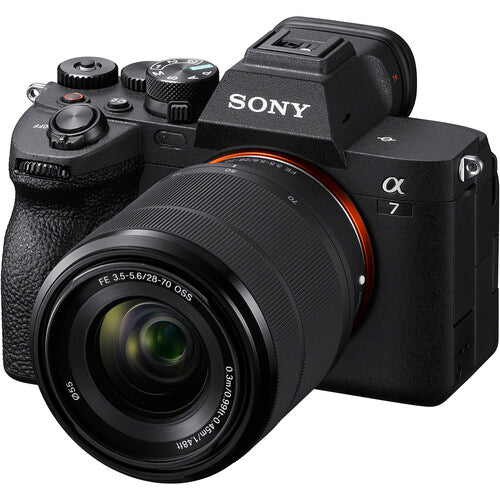
With the a7 V, Sony is not tearing up the formula, but refining it in meaningful ways that will matter to photographers and hybrid creators who push their cameras every day. On paper this body looks like a modest update, yet once you look closer at the new partially stacked sensor, the revamped processor, AI autofocus and video tweaks, it becomes clear that this is one of the most substantial upgrades the base a7 line has seen in years.
At the heart of the a7 V sits a brand-new 33 megapixel partially stacked CMOS sensor, keeping the same resolution as the a7 IV but fundamentally changing how fast it can be read out. Sony claims roughly double the readout speed compared with the previous generation, which translates directly into reduced rolling shutter, cleaner electronic shutter performance and fewer banding artifacts under tricky artificial light. Because the sensor is still 33MP, there is no tradeoff in fine detail; landscape and studio shooters coming from the a7 IV will get the same level of crispness, while those cross-shopping rival bodies in this price range may actually see a small edge in texture and micro-contrast according to Sony’s internal tests. The partially stacked design essentially lets the a7 V behave more like Sony’s premium stacked-sensor cameras in challenging situations, without pushing the price into flagship territory.
Backing up the new sensor is Sony’s latest BIONZ XR2 image processor, now paired with an integrated AI processing unit
. This extra processing muscle allows the a7 V to shoot at up to 30 frames per second with the electronic shutter, completely blackout-free, tripling the 10fps maximum of the a7 IV. Sports and wildlife shooters who rely on burst shooting to capture split-second gestures will immediately feel the difference when they half-press the shutter and the view simply never blinks. The mechanical shutter tops out at a familiar 10fps, so you still have that option when you want classic flash sync or simply prefer the feel of a physical shutter, but the real story here is that the electronic mode is now fast and clean enough to be usable in far more situations.
Perhaps the most headline-grabbing change, though, is the autofocus system. Building on the already capable AF of the a7 IV, the a7 V introduces an AI-driven subject detection engine that can recognize a wider variety of subjects and understand them more intelligently. In addition to humans, animals and birds, the camera can now lock onto airplanes, cars, trains and even insects, automatically prioritizing eyes, heads and bodies depending on what is visible in the frame. For people, the system adds human pose estimation and face memory, so it can track the same person more reliably over time, even when they briefly turn away. Sony says the AF system makes focus and exposure calculations up to 60 times per second, feeding that information into a new pre-capture mode that buffers images before you even press the shutter. With pre-capture enabled, the a7 V can store up to one second of 30fps full-resolution stills ahead of the moment you fully press the button, effectively reaching back in time to save the exact instant when the action peaked.
The body itself looks reassuringly familiar, but plenty has been refined. On the back you now get a 3.2-inch LCD with 2.1-million dots of resolution, offering a sharper view for composing and reviewing shots. The screen uses a clever 4-axis articulation mechanism: it can tilt upward around 90 degrees for low-angle stills work, tilt down by roughly 45 degrees for overhead framing, and also swing out to the side and fully articulate as on recent Alpha models. That flexibility means vloggers, vertical shooters and photographers who often work on a tripod all get the viewing angle they need without compromise. Connectivity gets an upgrade too, with a second, faster USB-C port onboard. In addition to the existing USB 2.0 Type-C rated at 480Mbps, the a7 V adds a USB 3.2 Gen2 Type-C port capable of 10Gbps transfer speeds, opening the door to dual-port workflows such as simultaneous livestreaming and charging, or copying files to a drive over the fast port while keeping the slower one dedicated to power delivery.
Video shooters have not been forgotten. The a7 V can capture 4K footage at up to 60 frames per second using 7K oversampling from the full width of the sensor with no pixel binning, which should deliver detailed, clean footage with solid performance in low light. For slow-motion lovers, the camera now offers 4K recording at up to 120fps, albeit with a 1.5x APS-C crop applied. It is the first time the base a7 line has reached 4K 120p, and while the crop means you will need wider lenses in cramped spaces, the creative possibilities of smooth, high-resolution slow motion are a major win for filmmakers and content creators. Oversampling from 7K for 4K 60p also gives editors more robust footage to work with in post, especially when combined with flexible picture profiles and grading-friendly workflows.
One potential concern with high-spec video modes on compact bodies is heat, and here Sony has clearly listened to feedback from the a7 IV generation. Unlike some competitors such as Panasonic’s Lumix S5 II, the a7 V does not incorporate a visible active cooling fan, keeping the body slim and weather-sealed. Instead, Sony has reworked the internal heat management to significantly extend recording times. The company claims that at 25 degrees Celsius the camera can continuously record around 90 minutes of 4K 60p XAVC S footage at 150 megabits per second in 4:2:0 8-bit, and even in much hotter 40-degree conditions the a7 V should manage close to an hour before reaching its thermal limit. That is a huge step up from the roughly 10 minutes some users experienced with the a7 IV in the same harsh temperatures, and it makes the new body far more dependable for documentary work, weddings and live events.
Powering all of this is Sony’s well-known NP-FZ100 battery, shared with many other Alpha bodies, which is great news for photographers already invested in the system. Thanks to the more efficient BIONZ XR2 processor and overall power optimizations, Sony says the a7 V can squeeze roughly 20 to 30 percent more endurance out of the same cell compared with the a7 IV. In practical terms, that could mean finishing a full wedding day on one or two batteries instead of constantly swapping, or getting through a long day of travel shooting and occasional video clips without anxiously watching the remaining percentage. When combined with USB-C power delivery and the aforementioned thermal improvements, the a7 V looks like a camera designed to stay in the field and keep working long after lesser bodies need a break.
All of these upgrades naturally come at a price, and Sony has positioned the a7 V as a premium step within its mainstream full-frame lineup. The body is available for pre-order at 2,899 US dollars or 2,999 euro, squarely in the territory of serious enthusiasts and working professionals who want high-end performance without jumping all the way to the flagship Alpha bodies. 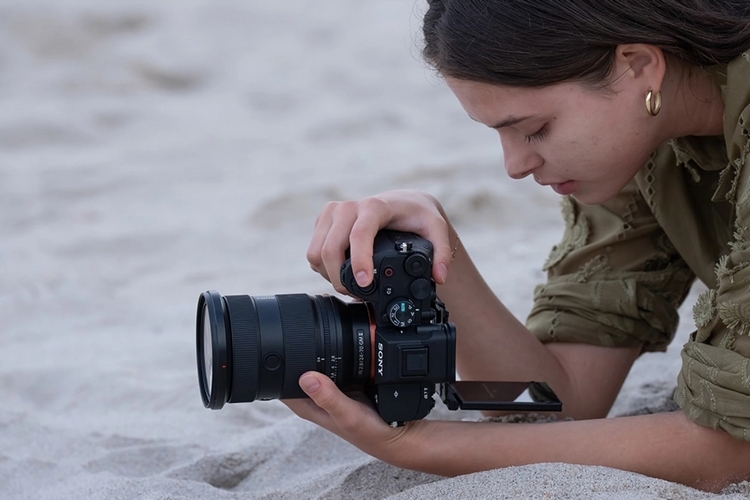
Sales are scheduled to begin on December 19, giving early adopters just enough time to get familiar with the camera before peak shooting season returns. For existing a7 IV owners, the combination of faster readout, dramatically improved autofocus, stronger video specs and better heat management may be convincing reasons to upgrade. For newcomers stepping into full-frame mirrorless for the first time, the Sony a7 V presents itself as a rugged, highly capable all-rounder that can confidently handle portraits, wildlife, travel, commercial work and cinematic video with equal ease.
2 comments
im still shooting on an a7 iii, this is getting real temptin but that price tag is oof
Thank you for your sharing. I am worried that I lack creative ideas. It is your article that makes me full of hope. Thank you. But, I have a question, can you help me?