Tecno used the fifth Tecno Future Lens event to send a clear message: the company no longer wants to play in the shallow end of mobile photography. 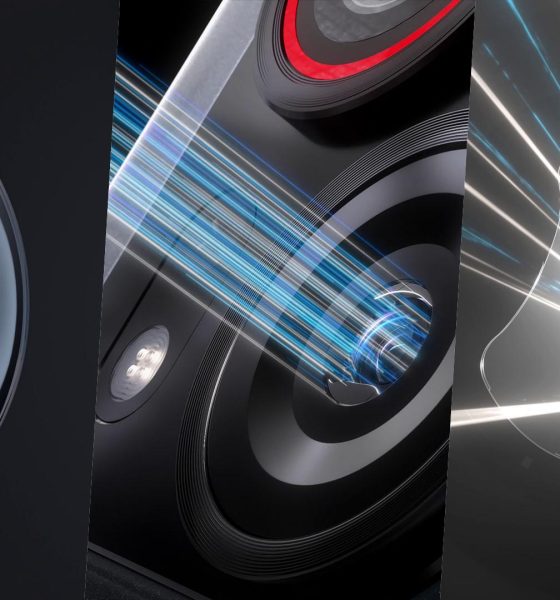
With two ambitious optical concepts, Freeform Continuum Telephoto and Dual-Mirror Reflect Telephoto, Tecno is trying to rethink how zoom and reach should work on a smartphone instead of simply adding more lenses and more megapixels.
One module to replace the classic triple-camera setup
The headline idea is the Freeform Continuum Telephoto module. Rather than the usual cocktail of separate main, 3x and 5x telephoto cameras, Tecno imagines a single periscope unit that can slide smoothly from roughly 1x all the way to 9x. In theory this one module can behave like a standard wide main camera at the short end, then extend through the mid-range into proper tele territory without ever handing off to another lens.
If Tecno can make this work in a real product, it would fix several long-standing headaches. Today's phones often show an obvious jolt when you zoom: the view jumps as the software switches from the main camera to a zoom lens, sometimes with a brief blur or framing shift. Color tuning and HDR are rarely identical between modules either, so you end up with skin tones and contrast that subtly change as you pinch to zoom. By keeping everything on one optical path and one sensor, the Freeform Continuum Telephoto promises consistent color, consistent exposure and sharper detail at all those awkward in-between focal lengths where digital zoom usually falls apart.
The physics problem: sensor size and aperture
Of course, physics does not magically disappear just because marketing uses the word “freeform.” Packing a moving zoom system into a phone that is only a few millimeters thick usually forces compromises on sensor size and aperture. Long-time camera nerds will quickly point out that similar continuous periscope ideas have been tried before in compact devices, and always ran into the same issue: it is hard to keep the lens bright as you zoom in. A module that starts at a fast aperture near 1x can easily end up several stops darker at 8x or 9x, which means higher ISO noise and slower shutter speeds.
Realistically, Tecno will have to lean heavily on computational photography to compensate. Multi-frame stacking, smart denoising and motion prediction can claw back detail that the tiny optics would otherwise sacrifice. The big question is whether the resulting images will actually beat the combination of a large main camera plus a dedicated fixed telephoto, or if the Freeform Continuum Telephoto will remain more of a technical showcase than a mainstream solution.
Dual-Mirror Reflect Telephoto: a tiny phone telescope
The second concept, Dual-Mirror Reflect Telephoto, is easier to ship and Tecno says it is already product-ready. Instead of relying only on glass lenses, this design uses two mirrors inside the module to fold and redirect the light path. That lets Tecno shrink the module volume by around half compared with traditional lens-only telephoto units, which is a big deal when every cubic millimeter inside a smartphone is contested by batteries, speakers and cooling systems.
If you have ever seen so-called mirror lenses for DSLRs or mirrorless cameras, the idea will sound familiar. Those lenses squeeze long focal lengths into surprisingly compact barrels by combining mirrors and lenses, producing a distinctive ring-shaped or donut bokeh in out-of-focus highlights. Tecno is essentially building a miniature catadioptric telescope for your pocket, complete with that polarizing blur pattern that some photographers find quirky and artistic while others absolutely hate.
There is a catch: Tecno admits the Dual-Mirror module loses around one stop of light compared with a conventional design. In daylight this is not a deal-breaker, but in dim scenes that light loss will push the phone harder into high ISO territory and make motion blur more likely. Once again, the company will depend on its image pipeline to clean up the files and turn a clever optical trick into a reliable day-to-day camera.
Samsung, Largan and the road to real devices
Tecno has already named Samsung and Largan as manufacturing partners for these modules, which underlines that the concepts are not just lab experiments. The brand expects the Dual-Mirror Reflect Telephoto to appear in commercial phones as early as next year, assuming consumer testing does not flag any major usability issues. The Freeform Continuum Telephoto, with its more complex mechanics and tighter tolerances, is further out and will likely need at least another year of refinement before it is ready for mass production.
Observers are understandably curious whether Samsung itself will ever use these modules in Galaxy devices, or whether they will mostly power ambitious mid-range and flagship models from Chinese manufacturers who love to experiment with exotic optics. We have already seen Samsung design high-end camera sensors that debut first in phones from other brands, so a similar pattern here would not be surprising.
Tecno Image Matrix: software that wants to understand emotion
Hardware alone no longer wins the camera wars, so Tecno is also pushing its Tecno Image Matrix, or TIM. The company describes TIM as a four-layer, end-to-end imaging stack that runs from lens and sensor selection all the way through ISP tuning and AI algorithms. Instead of just analyzing light levels and edge contrast, Tecno says its system tries to recognize the structure of the scene, the subject's role in it and even the intended mood, then dials in color, tone mapping and detail accordingly.
In plain language, Tecno wants its cameras to understand why you are taking the shot, not just what is in front of them. Portraits should look flattering and emotionally warm, cityscapes should preserve atmosphere without crushing shadows, and low-light snaps should keep a sense of place rather than turning everything into flat, over-bright night mode photos. It is the natural next step in computational photography, where software is not merely fixing hardware limits but actively shaping the creative outcome.
Excitement, skepticism and what real innovation looks like
Reactions from enthusiasts have ranged from wide-eyed excitement to seasoned skepticism. Some users love the idea of finally having a single camera that can glide from wide to serious telephoto without the clunky jumps we see today. Others are quick to remind everyone that continuous periscope zoom is not brand-new and that earlier attempts, like niche zoom-centric phones from years ago, never reached mass adoption. They point to stubborn constraints around sensor size, aperture and module thickness, and to a track record where Tecno and its sibling brands have teased ambitious camera technologies only to ship them in one device and quietly move on.
Still, there is a sense that Tecno is at least pushing in a more meaningful direction than the endless megapixel race. If a future Phantom X3 or similar flagship actually launches with either the Freeform Continuum Telephoto or the Dual-Mirror Reflect Telephoto on board, it could simplify camera islands, reduce the number of half-used sensors on the back of our phones and make zooming feel much more natural. Whether these modules become everyday tools or remain geeky showpieces, they signal a welcome focus on real optical and computational advances rather than just bigger numbers on a spec sheet.
1 comment
samsung building these modules but probably wont even use them in galaxy phones, same story as their own sensors. chinese brands will flex it first again 🙄