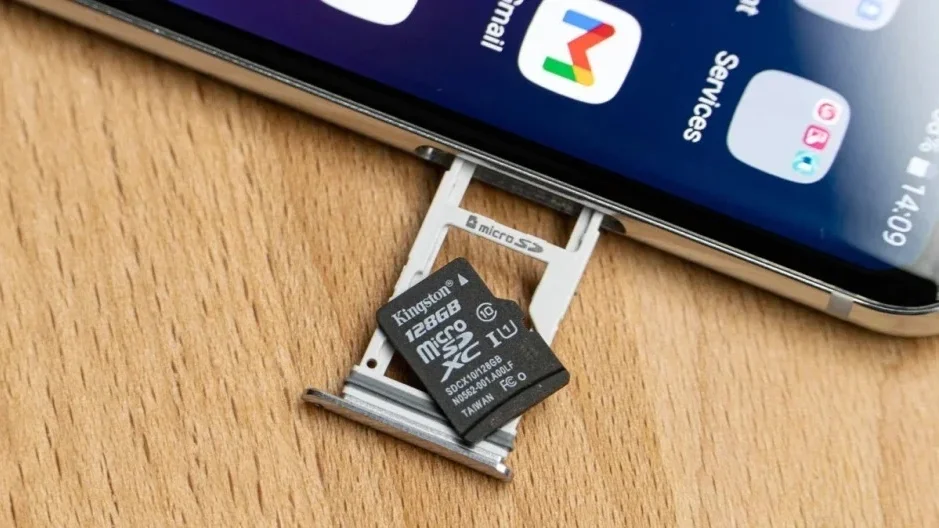
Samsung Galaxy S26 and the microSD comeback the flagship world badly needs
For years, smartphone fans watched one beloved feature quietly disappear from spec sheets: the humble microSD card slot. Some shrugged and moved to cloud storage. Others angrily clung to their last expandable phone. Many of us went through something very similar to the five classic stages of grief. First came denial that the slot was really gone, then anger at brands for removing it, a bit of bargaining with adapters and dongles, reluctant acceptance of higher priced storage tiers and now, finally, something new again: hope.
That hope is focused squarely on Samsung and its future flagship lineup. Few companies are as closely associated with Android power users as the Galaxy S series. Yet it was Samsung that helped normalize killing the microSD card slot in high end phones by dropping it from the Galaxy S21 family and never looking back. Almost five years later, the market is very different, storage technology has evolved dramatically, and the arguments used to justify removing the slot are starting to look outdated.
The upcoming Galaxy S26 series is the perfect opportunity to correct course. With new microSD Express technology, Samsung’s own memory expertise and a growing backlash against artificially expensive storage upsells, bringing the slot back would not be a nostalgic gimmick. It would be a strong, user friendly decision that fits the brand’s history and could set a new trend for the whole industry.
From Galaxy S21 to today: how the microSD card was pushed out of flagships
The turning point came with the Galaxy S21 lineup, the first Galaxy S generation that arrived without a microSD card slot. What felt like a one off design choice quickly became the new normal. Each subsequent flagship generation followed the S21 playbook, and microSD support vanished from Samsung’s most premium devices.
Other manufacturers watched and quietly did the same. If Samsung, the champion of spec sheet enthusiasts, could remove the slot from its top models and still sell millions, why should anyone else bother to keep it. Before long, expandable storage was treated as an old fashioned feature reserved for niche devices, rugged phones and the odd outlier such as Sony’s Xperia line.
Fast forward to today and you will struggle to find a mainstream flagship with a microSD slot. The concept has been pushed to the fringes of the market, even though the need for affordable local storage has only grown, thanks to 4K and 8K video, giant game downloads and increasingly heavy app data.
The official reasons for killing the card slot and why they no longer hold up
Back when Samsung removed the slot from the Galaxy family, several explanations were floated. One was aesthetics: a clean, minimal frame is easier to achieve without additional cutouts and trays. Another was internal space. If you delete the microSD card assembly, you can theoretically make room for a bigger battery, a more advanced camera module or a new antenna design.
There was also a performance story. Traditional microSD cards based on older UHS standards are noticeably slower than modern onboard storage. On paper, that mismatch can introduce bottlenecks when reading and writing large files, especially in high end phones expected to feel instant and fluid. And then came the durability argument: every additional opening in the body supposedly increases the risk of water ingress and makes it harder to deliver a high IP rating.
These points sounded reasonable enough in 2021, but they start to crumble under closer inspection. Many phones that still offer microSD expansion share a combined SIM and card tray and still carry solid IP ratings. The idea that a tiny shared slot is the main obstacle to water resistance simply does not match what we see from real products on the market.
As for internal space, Samsung itself has exposed the weakness of this justification. Several mid range Galaxy A devices manage to fit a microSD slot, a large battery and similar overall layouts without obvious compromise. If it is possible in a slim, affordable mid ranger, it is definitely possible in a thick, ultra premium flagship with far higher margins.
The performance argument is the only one that held meaningful weight at the time, but even that is rapidly being undermined by the latest storage standards.
The A series contradiction: cheaper Galaxies still get a feature the flagships lost
The strangest twist in this story is that Samsung never stopped making phones with microSD slots. The Galaxy A55, for example, arrived with a familiar hybrid SIM tray that accepts microSD cards. It has an IP rating, respectable cameras and a battery that is in some cases larger than what you find in the same year’s Galaxy S flagships.
Newer A series devices, such as the Galaxy A16, continue this pattern. These phones are not thick bricks, nor are they fragile science experiments that had to sacrifice design and water resistance to keep the slot. They look and feel like modern smartphones, because they are. Yet they quietly preserve a feature that power users on the most expensive Galaxy S Ultra models can only dream about.
This contradiction makes it very difficult to argue that the microSD slot is irreconcilable with modern design, high IP ratings or clever internal layouts. What it really highlights is segmentation: Samsung has chosen to draw an artificial line between premium flagships and value oriented models, keeping expandable storage as a perk for some buyers but not others.
Enter microSD Express: the speed argument is running out of road
The most interesting development is happening on the technology side. The microSD Express standard, announced by the SD Association and now finally gathering momentum, changes what we can realistically expect from removable storage. Instead of relying on the older UHS interface, microSD Express cards tap into PCIe lanes and the NVMe protocol, the same foundations used in modern solid state drives.
Samsung’s own P9 microSD Express card, created for the Nintendo Switch 2 portable console, is a good example of the new era. It promises sequential read speeds of up to 800 megabytes per second, which places it in the same ballpark as some laptop grade storage solutions and roughly four times faster than common UHS 1 cards used for years in phones, cameras and handheld consoles.
This particular card uses a PCIe 3.0 x1 interface, but the standard itself supports even more ambitious configurations. In theory, a microSD Express card using PCIe 4.0 could approach 2000 megabytes per second. That is still below the blistering specifications of Samsung’s UFS 4.0 internal storage, which can reach around 4200 megabytes per second for reads and 2800 megabytes per second for writes, but the gap is clearly shrinking to the point where everyday use will not feel painfully limited.
In practical terms, this means that the classic complaint about microSD being too slow for serious flagship use is aging badly. For tasks like 4K or even 8K video recording, capturing RAW photos, moving game files or keeping an offline media collection, a good microSD Express card would easily keep up with what most users need. The performance penalty compared to internal storage would exist on paper but would be negligible for many real world scenarios.
Why Samsung is uniquely positioned to lead a microSD comeback
Samsung is not just a smartphone maker. It is also one of the world’s largest manufacturers of memory chips, from DRAM modules to SSDs to the very microSD cards we are talking about. That gives the company a rare level of control over both sides of the equation: the phones and the storage accessories that plug into them.
Introducing a microSD Express slot on the Galaxy S26 series would therefore not be a logistical headache. Samsung already engineers phones with microSD support in the A lineup, already produces advanced cards like the P9 and already has the supply chain to deliver them at scale. The microSD Express standard is backward compatible, too, so older cards would still work, even if they could not reach the full potential of the new interface.
From a marketing perspective, there is an obvious opportunity. Imagine a Galaxy S26 launch where Samsung not only touts cutting edge cameras and processors but also proudly announces that the series is the first major flagship line to support microSD Express. The company could bundle promotional P9 style cards, sell officially optimized storage packs and reclaim the reputation of being the enthusiast friendly Android brand.
The awkward truth: expandable storage undermines pricey top tiers
If there is a real reason for hesitation, it is not about design or engineering. It is about money. Storage upsells are one of the quiet profit engines of the smartphone industry. A jump from 256 gigabytes to 512 gigabytes or 1 terabyte often adds a hefty premium to the price of a flagship, even though the underlying memory cost to the manufacturer is comparatively modest.
Samsung’s P9 microSD Express cards show how delicate this balance can be. The 256 gigabyte version is priced around 54 dollars, while the 512 gigabyte model sits near 99 dollars. Now imagine a Galaxy S26 Ultra with 256 gigabytes of internal storage and a microSD Express slot. Many buyers would simply grab the cheaper base model and add a fast card for less than the markup that a higher storage variant usually commands.
That is great for consumers but less attractive for any company addicted to storage margins. It helps explain why expandable storage has been quietly restricted to cheaper phones where the upsell potential is lower. Bringing it back to the flagships would be a statement that user flexibility matters more than squeezing every possible dollar out of configuration tiers.
Why the Galaxy S26 is the right moment to do the right thing
Despite the financial temptation, there are powerful reasons for Samsung to rethink its strategy with the Galaxy S26 family. Around the world, people are recording more high resolution video than ever, traveling again and needing reliable offline backups in places where mobile data is expensive or unreliable. Photographers, journalists, gamers and creators want to be able to swap cards, hand off footage, archive seasons of shows or keep entire music libraries without constantly juggling the cloud.
Privacy concerns are also growing. Not everyone is comfortable putting every photo, document and clip in remote servers. Local storage that you can pop out of the phone and lock in a drawer, hand to a colleague or move to another device still has real value in 2025 and beyond.
The Galaxy S26 could address all of this with a simple, user focused choice. A microSD Express capable slot, ideally in a hybrid SIM tray, would barely change the external look of the phone but would dramatically change how long the device feels viable. Instead of being locked into whatever storage tier you could afford on day one, you would be able to grow with your needs year after year.
Samsung could even position the feature strategically. Perhaps the slot appears on the Ultra and Plus models as a differentiator, or it becomes a signature capability of a new "Creator Edition" device. However it is framed, the message would be clear: the company is listening to the people who actually buy and use these phones for demanding work and play, not just the accountants who design pricing ladders.
A small slot with big symbolism
Bringing back the microSD card slot to the Galaxy S26 lineup would not just be about numbers on a spec sheet. It would symbolize a shift away from treating users as captive customers for ever more expensive storage tiers and back toward viewing them as long term fans who deserve choice and flexibility.
With modern microSD Express speeds, Samsung’s own memory expertise and the clear example of its A series devices proving that design, water resistance and expandable storage can coexist, the old excuses no longer stand up. What remains is a simple question of priorities.
Should the most advanced Galaxy phones really do less than their cheaper cousins when it comes to something as fundamental as managing your own files. For many of us, the answer is no. The time has come for Samsung to close that gap and let the Galaxy S26 series proudly rock a microSD card slot again.