In the space of a few days, Horses went from a small but much-hyped indie horror curiosity to the center of a fierce argument over who gets to decide what adults are allowed to play. The game, developed by Italian studio Santa Ragione, has now been banned from distribution on both Steam and the Epic Games Store, including a last minute U-turn from Epic less than twenty four hours before launch. 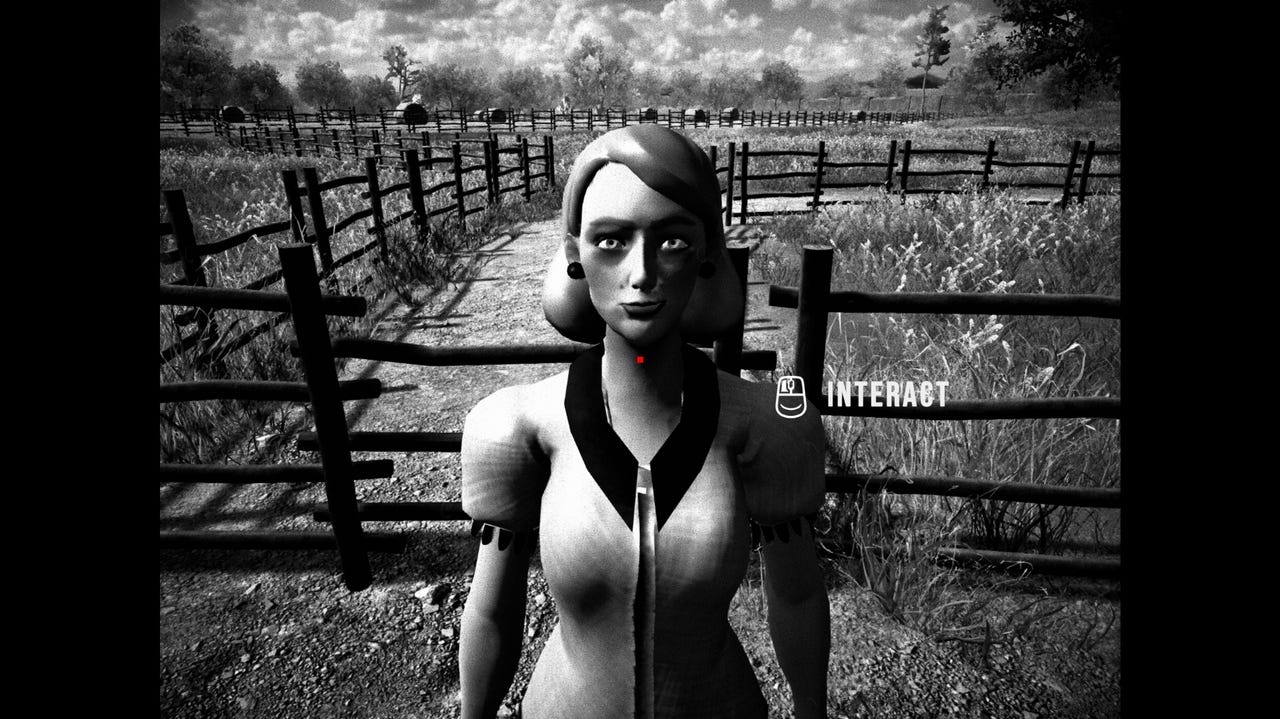
For a title that was already designed to upset and disturb, the biggest shock has turned out to be how suddenly the biggest PC storefronts slammed the doors shut.
Steam’s Ban Sets the Stage
Horses had already run into trouble with Steam. According to Santa Ragione, Valve asked for a playable build of the game long before release purely to create a store page, an unusual requirement that the studio nonetheless complied with. After reviewing that early version, Valve declined to host the game, pointing generally to its onboarding documentation and to a rule that it will not distribute content that in its judgment appears to depict sexual conduct involving a minor. The developer says it was never told exactly what element crossed the line, and that it was not invited to resubmit a revised build.
At the heart of the speculation is a scene from an earlier version of Horses that showed a child sitting on the shoulders of one of the so-called horses, the naked, masked human beings who populate the farm where the game takes place. The scene was meant, the studio says, to underline how normalized the exploitation in this world has become. Critics worried that, in the context of a game where the horses are presented through a lens of cruelty, power and repressed sexuality, the image could be read as sexualized despite the lack of explicit nudity or acts. Santa Ragione responded by replacing the child in that scene with an adult character, and stresses that all characters in the release build are clearly adults in their twenties or older.
Ratings, Guidelines and Epic’s Last Minute Reversal
What makes the double ban even more confusing is that the game was rated M for Mature rather than Adults Only by the IARC questionnaire that digital storefronts rely on for age ratings. In other words, the formal ratings process saw Horses as intense and disturbing, but still within the same category that houses countless violent shooters and explicit horror games. That discrepancy between the rating and the decisions from Steam and Epic has become a core frustration for many players following the story: the institutions charged with assessing risk say one thing, while the stores with all the power to reach customers quietly say another.
Epic’s involvement takes the controversy up another notch. Santa Ragione says that its build of Horses had been approved for release on the Epic Games Store weeks in advance, marketing was set, and the game was publicly listed as coming soon. Only twenty four hours before launch did the studio receive an email saying that Epic would not distribute the game after all, citing violations of its content guidelines without naming any specific scenes or assets. An appeal, the studio claims, was dismissed roughly twelve hours later with no further explanation, even as Epic’s communications team insisted in public statements that the store has clear rules and that Horses had been reviewed extensively.
Opaque Rules and Inconsistent Standards
That opacity is what rankles so many observers. Steam, after all, is home to notorious joke titles like the infamous dad shower simulator that has become a meme, as well as a growing wall of explicit visual novels, fetish experiments and barely disguised adult-only experiences. Epic is quieter on that front, but even it hosts plenty of violent, disturbing or sexually charged games. Players do not understand how a surreal horror game built around exploitation and moral complicity can be ruled beyond the pale while scam-filled gacha games and low-effort cash grabs remain untouched. To many, it looks less like a principled line and more like platforms flinching the moment a game provokes the wrong kind of headlines.
Where to Draw the Line on Horror
That does not mean there is no uncomfortable truth at the center of Horses. Even some horror fans who are curious about the game admit that the original scene involving a child and an exploited adult was crossing a boundary, especially inside a story that clearly flirts with sexualized power dynamics. They argue that the developers knew they were playing with fire, in the same way that an infamous film such as A Serbian Film deliberately presses on every taboo it can find. The difference, critics argue, is that a platform holder is under no obligation to host that kind of provocation, no matter how carefully the creators re-edit it later.
On the other side, a broad coalition of players, critics and developers see the bans as another step down a worrying road. They point out that cinema and literature have explored themes of abuse, dehumanization and complicity for decades without being driven out of mainstream distribution. Pointing to movies that depict child abuse, concentration camps and religious extremism, they argue that interactive works should be allowed to tackle similarly uncomfortable material without being treated as inherently more dangerous. Many of these voices stress that they have no desire to play Horses themselves, but still feel that the medium is healthier when artists are allowed to go as dark and nasty as they dare, so long as they are not actually hurting anyone.
Money, Politics and the History of Censorship
There is also a more pragmatic theory circulating: that the real pressure is coming not from Valve or Epic, but from payment processors and other financial partners. Credit card companies are famously risk averse when it comes to anything that might even brush against accusations of sexual content involving minors, and they have already tightened the screws on adult platforms in recent years. If those companies hint that certain games might trigger extra scrutiny or financial penalties, it is easy to imagine storefronts deciding that one small horror title is not worth the headache, no matter how much the developers insist they have cleaned up the offending content.
The Horses saga lands in an industry that already has a long, messy history with censorship and self-censorship. Older players remember how early releases of survival horror classics edited out school-like environments or child-shaped monsters for particular regions. More recently, a celebrated Taiwanese horror game vanished from most major stores after including a hidden joke about a powerful head of state, a reminder that corporate sensitivities often have less to do with protecting children than with avoiding political or public relations storms. For some, Horses feels like one more example of a medium that keeps proclaiming its maturity while still treating its audience like kids that need to be shielded from difficult ideas.
The Cost for Indie Developers
For Santa Ragione, the consequences are anything but abstract. The studio has been blunt in saying that without access to Steam’s enormous audience, it may simply not survive after Horses. The economics of indie development on PC are already brutal, and when one company owns the store that most players instinctively use, a refusal can easily become a slow-motion death sentence. This is where long running accusations of a de facto monopoly start to sound less like internet hyperbole and more like a practical description of power.
Alternative stores have stepped into the gap. Horses is currently available on itch.io, on Humble and on GOG, which has gone so far as to publicly express support for the game and its creators. GOG in particular has earned praise from horror fans for quietly hosting more confrontational and unconventional titles that might struggle elsewhere. Still, even its most loyal users will admit that no combination of smaller storefronts can yet match the reach that Steam and, increasingly, Epic provide. Discoverability, marketing tools and sheer habit continue to funnel most PC players toward those two launchers.
Why the Horses Case Matters
In practical terms, the Horses ban is unlikely to usher in an immediate wave of removals. Platforms will keep quietly making case by case decisions behind the scenes, and most players will never know which games were turned away before a store page even appeared. But the conversation around Horses is already having a chilling effect, especially on small teams working in horror or erotically charged spaces. When developers see that even a game rated as suitable for mature audiences can be blocked with vague references to guidelines, many will simply steer toward safer, blander territory rather than risk years of work being trapped off the biggest shelves.
That is the real horror story lurking underneath Horses. Whether players personally find its imagery profound, disgusting or somewhere in between, the way it has been treated by the giants of PC distribution exposes just how fragile creative freedom in games can be when it runs into opaque corporate rulebooks. The medium has grown up enough to handle graphic violence, complex politics and uncomfortable moral choices, yet it still struggles to accept that sometimes art is supposed to make us feel sick. Until platforms are willing to explain where their red lines really are, and to apply those lines consistently across genres and cultures, cases like Horses will keep resurfacing, and every time they do, trust in the system erodes a little more.
1 comment
I googled the game out of curiosity and yeah it is nasty as hell, but that is kinda the point of horror. If everything is safe and comfy then what is even the genre anymore