Mia Goth did more than just sign on the dotted line for Marvel’s new Blade. She was flown to Atlanta, stepped onto a soundstage, and stared at herself in the mirror wearing a carefully styled 1920s wig, sewn into a period costume and reading opposite Mahershala Ali. For a fleeting moment, the long-delayed reboot of Marvel’s half-vampire icon looked tangible and imminent, a Jazz Age twist on a cult favorite that was finally about to sink its teeth into cameras.
Then it all came apart. 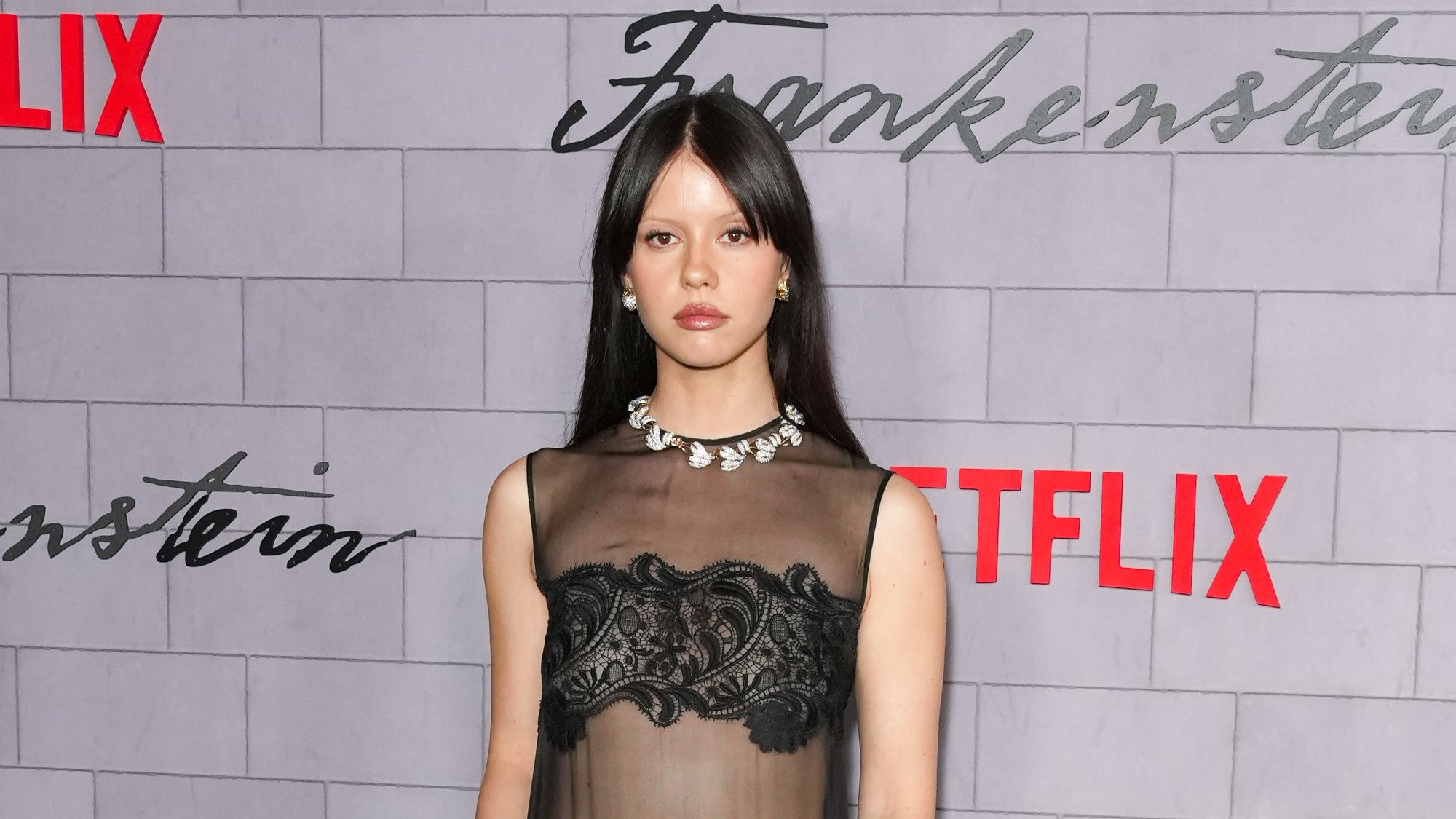
Speaking on Josh Horowitz’s podcast, Goth described how far things had progressed before the project slipped away. She recalled the chemistry test with Ali, the costume sessions, the wig fitting designed to snap her straight into a smoky, prohibition-era world. She was enthusiastic about the creative direction and impressed by Ali’s intense, considered spin on the Daywalker. And yet, after all of that investment, she watched the project simply unravel – not in early development, but at the point where films usually tip into full production.
That detail has fascinated fans because it confirms just how close Marvel came to making a radically different Blade. The abandoned version would have taken place in the 1920s, placing vampires in the age of speakeasies, jazz clubs, bootleggers and gangland bosses. It’s not hard to imagine Blade stalking through cigarette haze and brass, carving through aristocratic bloodsuckers who have turned prohibition into just another form of predation. Some fans loved that idea on paper; others immediately asked why the studio didn’t lean into a gritty 1970s setting more in line with the original comics. Under the debate sat a shared frustration: the core ingredients of Blade feel straightforward, so why is Hollywood struggling to get such a simple, potent formula onto the screen?
The extent of the false start became even clearer when people learned what happened to the wardrobe. Full runs of background costumes had already been created for supporting performers. These weren’t concept sketches or half-finished ideas; they were tailored, tagged, and ready to be worn by hundreds of extras. When Marvel scrapped that version of the film, some of those clothes were eventually sold and bizarrely resurfaced in another period vampire project: Ryan Coogler’s acclaimed Sinners. Blade’s era that never was ended up haunting a completely different story, like a ghost of a movie that almost existed.
All of this turmoil sits on top of a now-familiar timeline. Marvel announced Blade back in 2019, revealing Mahershala Ali as the new incarnation of the character once made iconic by Wesley Snipes. On paper, it was an almost bulletproof move: a beloved cult property, a two-time Oscar winner stepping into the trench coat, and a chance to carve out a darker, horror-flavored corner of the Marvel Cinematic Universe. Instead, the project slipped into development hell. Scripts were written and rewritten, directors cycled through, and by mid-2024 filmmaker Yann Demange quietly exited. Months later, Blade disappeared from Marvel’s release calendar altogether.
Behind the scenes, Marvel Studios boss Kevin Feige has admitted that the script has already gone through several distinct incarnations, including multiple period pieces, before the team decided to shift the story back to the present day. In the past, Marvel often relied on the safety net of its production machine – start with a solid script, then find the final version on set and in the edit. With Blade, Feige has suggested, that approach no longer felt responsible. The character matters too much, and Ali’s casting is too important, to roll the dice on a script that isn’t already firing on all cylinders before the first shot is framed.
In theory, that sounds like a commitment to quality; in practice, many fans hear something closer to uncertainty. Goth herself has been candid that she has no real idea why things are taking this long or when the reboot might regain momentum. She believes Marvel wants to make the movie and understands its importance, but she is as much in the dark about the timetable as everyone else reading the trades. For actors, that limbo is brutal: you emotionally sign on to a version of a story, even try it on in hair and wardrobe, only to watch it melt away while your name stays attached to a title drifting further and further into the future.
The fan conversation around Blade has turned increasingly raw. On the lighter side, people joke that the only thing that unraveled faster than Goth’s 1920s wig was Marvel’s post-Endgame plan. Others treat the whole saga as one big rug pull, marveling at how far along the film got before the plug was yanked. But underneath the gallows humor lies a more serious irritation. Viewers point out that Blade doesn’t need elaborate multiverse gymnastics or timeline shenanigans; it thrives on a sharp anti-hero, rich vampire lore, and a confident blend of horror and action. From that perspective, the idea that the reboot keeps collapsing feels less like perfectionism and more like a studio that no longer trusts its own instincts.
That frustration is amplified by the wider state of the MCU. Since Avengers: Endgame, Marvel has struggled to replicate the clean, escalating roadmap that defined the Infinity Saga. The Multiverse era brought bold swings, scattered gems, and some obvious misfires, but little of the old inevitability. Now the studio is visibly retreating to safer terrain: another pair of Avengers tentpoles, renewed focus on Spider-Man, the long-awaited introduction of the X-Men. In that environment, Blade – a darker, more niche figure – risks being treated as optional, even as the studio insists the character is crucial to its future.
There is also the question of tone. Deadpool & Wolverine proved that Marvel, under Disney, can handle an unapologetic R rating when the character has already been audience-tested to death. Blade is a different kind of risk: a horror-leaning, blood-soaked universe built around a hunter who carves vampires into ash. Many fans suspect the reboot keeps stalling because the studio cannot decide how far it is willing to push things – or whether it is willing to commit to an R-rated vision that doesn’t look like a quippy outlier. Some argue that Marvel keeps talking about creative boldness while repeatedly flinching away from exactly the kind of bold project Blade could be.
Complicating everything is the shadow of Wesley Snipes. His original Blade trilogy arrived before the MCU, before Iron Man, before superhero films were a guaranteed box-office bet. Those movies, particularly the first two, convinced a generation of viewers that comic-book adaptations could be stylish, violent and unapologetically adult. Snipes recently resurfaced in a crowd-pleasing cameo in Deadpool & Wolverine, instantly reigniting the nostalgia that has never really gone away. A vocal segment of the fandom still insists there is only one true Blade and would prefer a Logan-style farewell film over any reboot at all.
And yet Mahershala Ali’s casting remains one of the most tantalizing pieces of Marvel’s current slate. Few actors bring his combination of gravitas, physical presence and quiet menace. In a functioning system, the idea of Ali teaming up with someone like Mia Goth – whose career has flourished in modern horror – to reinvent Blade for a new era would feel like a slam dunk. Instead, the longer the reboot sits in limbo, the more it risks becoming a cautionary tale about overthinking, second-guessing and letting momentum bleed away.
For now, the most vivid image of this lost chapter is still that Atlanta mirror: Mia Goth in a 1920s wig, looking at a future Marvel never quite had the courage or clarity to chase. Somewhere, an expensive wardrobe for a Jazz Age vampire thriller is folded in a box, its moment on the Blade set replaced by a cameo in someone else’s movie. The official plan is a modern-day story that will one day justify all this waiting. Until Marvel finally locks a script, rolls cameras and chooses a tone it actually believes in, however, the Daywalker remains stuck in development daylight – unable to step fully into the shadows where he belongs, even as audiences grow more than ready to watch him hunt again.
1 comment
1920s Blade actually sounded kinda fire tbh, Blade slicing up vamps in smoky speakeasies… and Marvel still managed to fumble it 😂