Amazon has quietly stepped back from one of its boldest and most controversial experiments with artificial intelligence in anime. For a brief moment, Prime Video users who opened the classic series Banana Fish discovered an extra option hiding in the audio languages menu: an English dub marked as an AI beta. What sounded at first like a tech demo quickly turned into a public relations disaster. 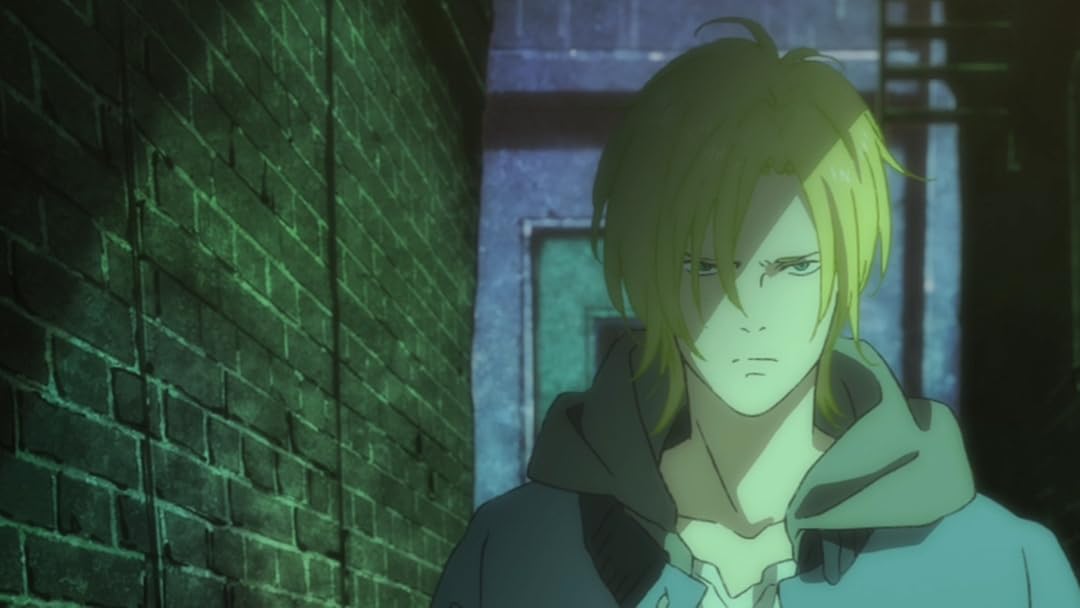
The flat, robotic voices spread across social media, fans roasted the experiment, and the backlash grew loud enough that Amazon has now removed the AI dub entirely.
The clip that went viral captured what many subscribers felt immediately: this did not sound like a performance, it sounded like a text to speech demo pasted over one of the most emotionally intense anime of the last decade. Fans called it impressively bad, an insult to paying customers, to working voice actors, and to the art form itself. For a lot of viewers who normally joke about weak English dubs, this was different. They were not debating sub versus dub anymore. They were watching a company test whether audiences would accept a fully synthetic cast in place of real actors.
After hours of public dragging on social platforms, the AI option vanished from Prime Video. In its place: nothing. There is currently no official English language dub of Banana Fish on the service at all, only subtitles. That sting is especially sharp for longtime fans who were excited at the idea of finally rewatching the series in English. To many of them, Banana Fish is one of the defining anime of the twenty first century, and the fact that the first attempt at an English track was a cheap sounding AI experiment feels like a deliberate downgrade instead of an upgrade.
What pushed people from mild disappointment into fury was not only the quality, but what the move symbolised. Viewers immediately connected this to a wider corporate fantasy: a future where every show in every language can be dubbed by machines with almost no human labor. Fans argued that this experiment is not a quirky one off but a glimpse of an end goal, a world where companies quietly strip the human element out of performances, even in Japan, in the name of efficiency. The idea that studios could press a button and roll out instant multilingual dubs for entire catalogues is obviously tempting to executives. For audiences, it feels like a threat.
Some commenters went further and pointed out that Banana Fish is probably not the only title touched by this strategy. There have already been reports of AI assisted dubs on series where Amazon only licensed the Japanese version, despite the fact that proper human dubs exist elsewhere. That raises messy legal and ethical questions. If a streaming platform does not hold the rights to an existing dub, can it simply generate its own synthetic alternative using AI tools trained on some anonymous pool of voices. Fans suspect that companies will keep pushing this boundary as long as viewers do not notice or do not complain loudly enough.
Underneath the memes and the jokes about AI slop lies a serious concern about labor. Every synthetic voice that replaces an actor is one less paid job for a professional whose craft involves nuance, timing, and emotional intelligence. The fear is not just about losing roles today. It is about the long term accumulation of training data, model cloning, and the possibility that distinctive vocal performances could be mimicked without consent. Anime fans, who have spent years arguing about which performances best capture a character, are now forced to consider a future where authenticity is no longer part of the equation because there is no human performer at all.
All of this is happening while the rest of the industry argues publicly about how, if at all, AI should be used in animation. The upcoming series Sekiro: No Defeat recently became a lightning rod when viewers accused it of leaning on AI generated art. In response, Crunchyroll stepped in to reassure fans that the show, due in 2026, is planned as a fully hand drawn 2D production. The company has also been unusually clear about its stance on synthetic voices. Its leadership has said that they do not intend to rely on AI in the creative pipeline and that they view voice actors as creators in their own right, people who help build story and character rather than interchangeable sound files.
That contrast matters. On one side you have a streamer dipping a toe into AI dubbing with a beloved title and then yanking it away only after public embarrassment. On the other, you have a major anime platform trying to calm fears before they spiral by promising that human creativity remains at the center of its output. Neither company is perfect, and both still live in a tech driven business landscape, but Amazon’s experiment has become a cautionary tale about what happens when innovation is driven entirely by cost cutting rather than by respect for the work.
For many fans, the lesson is simple: collective pushback works. People joked that bullying corporations is the only language they understand, yet there is truth in that cynicism. Viewers clipped the AI dub, mocked it, explained why it felt wrong, and pointed out all the ways this could spiral if it went unchallenged. Within days, the experiment vanished. That does not mean Amazon or any other platform will stop trying. It does prove that audiences are paying attention and that they care deeply about the human talent behind their favourite shows.
Ironically, the situation has left Banana Fish fans right back where they started: still waiting for a proper English dub worthy of the series. Many would have been thrilled to see the announcement of a real cast, recording in a studio, breathing life into Ash, Eiji, and the rest of the characters. Instead, they got a reminder that in the age of AI, protecting performance, craft, and artistic labor is going to be an ongoing fight. The hope now is that streamers look at the reaction to this fiasco, study Crunchyroll’s more cautious approach, and realise that long term loyalty is built on respecting human creativity, not trying to automate it away.
1 comment
Hot take but that sample sounded about as soulless as the most generic human dub, just with extra robot vibes 😅