Week 48 Smartphone Mega Roundup: Poco F8 Duo, Snapdragon 8 Gen 5, Mate 80, Honor 500 and More
Week 48 in the smartphone world was anything but quiet. We saw Poco push hard into the upper flagship tier with the F8 Pro and F8 Ultra, OnePlus tease a full ecosystem refresh, Qualcomm introduce a new almost-flagship Snapdragon 8 Gen 5, and Chinese brands Honor and Huawei roll out battery monsters and display powerhouses. To top it off, camera sensor makers Sony and OmniVision previewed the next wave of mobile photography tech, while buyers hunting deals got fresh options on refurbished iPhones and a new internal battle between the Galaxy S25 FE and S25 Plus.
If you missed the flood of news, this recap walks through every major launch and announcement, explains what actually matters in daily use, and shows where each device slots into the increasingly crowded premium and upper midrange space.
Poco F8 Pro and F8 Ultra: Audio beasts with big batteries
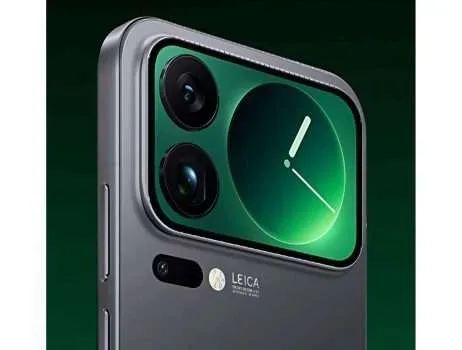
Poco opened the week with a loud statement, literally. The new Poco F8 Pro and Poco F8 Ultra lean heavily into multimedia, with both phones featuring Bose-tuned speaker systems. The Ultra even adds a dedicated subwoofer on the back, a rare feature in phones and clearly aimed at people who watch a lot of video or game without headphones.
Under the hood, the F8 Pro runs on last year’s flagship Snapdragon 8 Elite chipset, which is still more than powerful enough for heavy multitasking and high refresh rate gaming. It pairs this with a sizeable 6,210 mAh battery, so endurance should be one of its headline strengths. On the camera side, the Pro carries a triple rear setup, including a 60 mm f/2.2 telephoto lens for more natural portrait compression and clearer zoomed shots compared to simple digital zoom.
The Poco F8 Ultra takes the formula and cranks it up further. It swaps in the brand-new Snapdragon 8 Elite Gen 5 for cutting-edge CPU, GPU and AI performance, making it one of the first phones to showcase the latest Qualcomm flagship silicon. Battery capacity climbs to 6,500 mAh, giving the Ultra even more breathing room for gaming sessions, 4K recording and long social scrolling. The telephoto lens gets extended too, with a 115 mm f/3.0 close-focusing module that should shine for distant subjects and creative tight framing.
Both phones are already on sale. The Poco F8 Pro starts from €469 / $529 and ships in Black, Blue and Titanium Silver, clearly targeting users who want flagship-grade power and cameras without flagship prices. The F8 Ultra sits higher at €649 / $679 / £549 and comes in Black, White and Denim Blue, going after buyers who want the latest Snapdragon chip, bigger battery and that unusual back subwoofer for a more powerful audio experience.
OnePlus 15R, Pad Go 2 and Watch Lite: ecosystem play on the horizon
OnePlus is gearing up for a three-part launch on December 17, teasing the OnePlus 15R, OnePlus Pad Go 2 and OnePlus Watch Lite. While the full specs are still under wraps, the messaging already hints at where each product is positioned.
The OnePlus 15R is billed as an upcoming ultimate value high quality flagship device. In plain language, this means flagship-level performance with aggressive pricing rather than bleeding-edge extravagance. In China, the phone will appear as the OnePlus Ace 6T, and this model will be one of the first to debut Qualcomm’s new Snapdragon 8 Gen 5 platform.
Alongside the phone, the OnePlus Pad Go 2 is described as the best value mid-range 5G tablet, suggesting a focus on streaming, light productivity and gaming without pushing into ultra-premium territory. Completing the trio, the OnePlus Watch Lite is presented as an accessible high-quality smartwatch aimed at people who want health tracking and notifications without the price or complexity of a top-tier wearable.
The strategy is clear: OnePlus wants you not just to buy a phone, but to settle into an ecosystem of devices that talk to each other and share features like fast pairing, synced notifications and unified design language.
Snapdragon 8 Gen 5: the almost-flagship brain
Qualcomm added a new member to its top-tier lineup with the Snapdragon 8 Gen 5, a flagship-but-not-quite chipset that sits just below the full Snapdragon 8 Elite Gen 5. In performance terms, 8 Gen 5 is roughly on par with last year’s Snapdragon 8 Elite, which means it is still extremely fast, but Qualcomm reserves its highest clocks and best modem for the Elite tier.
Compared to the 8 Elite Gen 5, the Snapdragon 8 Gen 5 drops the CPU frequencies a notch. Its Prime cores run up to 3.8 GHz instead of 4.56 GHz, and the six performance cores top out at 3.32 GHz rather than 3.62 GHz. The Hexagon NPU is also slightly toned down, and the chipset uses last year’s X80 5G modem instead of the newer, faster X85. In practice, this makes the 8 Gen 5 a textbook flagship killer chip: powerful enough for anything you throw at it, but easier for manufacturers to use in phones that target aggressive price points like the OnePlus Ace 6T / 15R.
Honor 500 series: massive batteries and familiar design cues
Honor’s new 500 series landed in China and immediately grabbed attention for three reasons: Snapdragon silicon, huge batteries and styling that clearly nods toward Apple’s design language. The Honor 500 Pro uses the Snapdragon 8 Elite platform, while the regular Honor 500 opts for the Snapdragon 8s Gen 4, giving both devices flagship-grade or near-flagship processing power.
The real headline, though, is battery tech. Both phones pack an enormous 8,000 mAh silicon-carbon battery, far larger than the typical 5,000 mAh units we see in most mainstream flagships. This is paired with 80 W wired charging on both models, so refilling that big pack does not have to take all day. The Honor 500 Pro adds 50 W wireless charging as well, bringing convenience to the mix for users who live on charging pads. On the camera front, the series features 200 MP main sensors, positioning them strongly for detailed daylight photography and high-resolution crops.
The Honor 500 and 500 Pro are already official and available in the company’s domestic market. If Honor decides to bring them globally, they could become the go-to recommendation for users who value multi-day battery life above all else.
Huawei Mate 80 family: ultra-bright displays and Kirin-powered flagships
Huawei continued its steady comeback with the launch of the Mate 80 series, including the Mate 80, Mate 80 Pro, Mate 80 Pro Max and the exclusive Mate 80 RS. These devices push display tech to new extremes, with Huawei claiming peak brightness of up to 8,000 nits. That kind of luminance should ensure excellent outdoor visibility and makes HDR content pop even in difficult lighting.
All four phones run on in-house Kirin chipsets, a major story in itself. The standard Mate 80 is powered by the Kirin 9020, while the Mate 80 Pro and Pro Max step up to the Kirin 9030 Pro, giving them more headroom for performance and AI tasks. The Mate 80 RS keeps the same 9030 Pro base but wraps it in a more exclusive design for buyers who want something rarer and more premium.
Battery and charging specs are tuned differently across the lineup. The Mate 80 and Mate 80 Pro share a 5,750 mAh battery and support 66 W wired plus 50 W wireless charging. The Mate 80 Pro Max ups the capacity to 6,000 mAh and pairs it with 100 W wired and 80 W wireless charging, making it a true endurance monster. The Pro Max and RS variants also stand out with dual telephoto camera setups, giving photographers more flexibility across different focal lengths.
Next-gen camera sensors: Sony LYTIA 901 and OmniVision OVB0D
Looking a bit further ahead, Sony and OmniVision both revealed new 200 MP camera sensors aimed at future flagship phones. Sony’s LYTIA 901 is a 1/1.12-inch unit scheduled to appear in top-tier smartphones around 2026. Its large physical size allows for more light capture, improving low-light stills and video while giving manufacturers more flexibility with cropping and in-sensor zoom.
Not long after Sony’s reveal, OmniVision introduced the OVB0D, which offers a very similar set of headline specs. The message from both companies is clear: high-resolution sensors are here to stay, but the focus is shifting from raw megapixel counts to better dynamic range, smarter pixel binning and more advanced autofocus, all of which should translate to noticeable gains in real-world photography.
Refurbished iPhones and Galaxy S25 in-house competition
While Android brands were busy launching new hardware, the deals segment saw a spotlight on refurbished iPhones. The iPhone 16 Pro Max, iPhone 15 Pro Max and iPhone 15 Pro all appeared in notable Black Friday offers, with prices significantly lower than their original launch tags. Even the 1 TB storage options, which are notoriously expensive at launch, became far more approachable in the refurbished market. For buyers who want Apple’s ecosystem and top-tier camera performance without paying full retail, these refreshed units remain one of the smartest ways to get in.
On the Android side, Samsung’s Galaxy S25 family generated internal competition of its own. The Galaxy S25 FE and the Galaxy S25 Plus are shaping up as a more nuanced choice than simply “cheaper vs more expensive”. The FE line typically prioritizes value, trimming a few premium extras while keeping a strong core experience, whereas the Plus model tends to bundle in nicer materials, extra camera refinements and, sometimes, better charging or storage options. For many users, the decision is likely to come down to regional pricing and which specific compromises matter least to them.
The shape of the flagship market after Week 48
Week 48 made one thing crystal clear: the line between flagship and flagship killer is getting thinner. Poco’s F8 Pro and F8 Ultra offer high-end audio, big batteries and serious telephoto hardware at prices below many traditional flagships. OnePlus is preparing to hit a similar sweet spot with the 15R and Snapdragon 8 Gen 5, while Honor and Huawei are experimenting with huge batteries, ultra-bright screens and in-house chipsets.
Add in next-generation 200 MP sensors and more affordable access to recent iPhones through the refurbished channel, and buyers going into the next wave of sales have more meaningful choice than ever. Whether you care most about audio, battery life, display brightness or camera versatility, Week 48 probably brought at least one device that feels like it was built with you in mind.
1 comment
ngl that Poco F8 Ultra with a subwoofer on the back sounds kinda insane 😂