China’s domestic chip ecosystem has just taken a bold step into the heart of PC gaming. During a recent major eSports tournament in China, local brand Thunderobot quietly rolled out a new line of gaming desktops powered not by Intel or AMD, but by homegrown Hygon C86 processors. 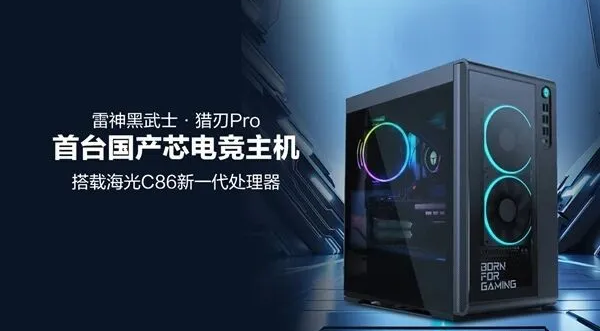
The move signals more than just another product launch; it is a statement that Chinese built x86 chips are ready to compete in the mainstream gaming space.
The flagship configuration is built around the Hygon C86-4G, a 16 core, 32 thread processor paired with modern gaming hardware. On paper, the chip looks surprisingly ambitious: up to 16 cores, 32 MB of L3 cache, support for fast DDR5 memory, and PCIe 5.0 connectivity for the latest graphics cards and SSDs. In other words, Thunderobot’s new rigs are not experimental dev boxes, but fully fledged consumer gaming PCs that you could drop into an eSports arena or a demanding home setup.
While the core count mirrors current high end offerings from AMD and Intel, it would be a mistake to assume identical performance. The Hygon C86 uses a chiplet based design featuring two eight core clusters, each with 16 MB of L3 cache, and is tuned with different priorities in mind than the big Western brands. In independent style benchmarking, the C86 reportedly lands between Intel’s Core i7-13700 and Core i7-14700 in workloads such as SPEC CPU 2006 and V Ray rendering. That level of output places it comfortably in the upper mid range enthusiast tier rather than at the absolute bleeding edge, but that is exactly the sweet spot for competitive gaming PCs.
Thunderobot demonstrated exactly that use case at the tournament by showcasing one of the Hygon powered systems running Black Myth: Wukong, one of the most demanding and visually rich modern action RPGs, at a clearly playable frame rate. Although the company did not disclose which graphics card was paired with the processor, the demo served its purpose: to prove that the C86 can handle both popular eSports titles and big budget AAA releases, not just lightweight competitive shooters.
Compatibility is another crucial point in Hygon’s favor. Unlike many alternative architectures, the C86 family is fully x86 compatible, so it can boot standard Windows builds and run the same games and applications that PC gamers already own. That means no special ports, no experimental operating systems, and no need to rebuild software libraries from scratch; the transition from Intel or AMD silicon to a Hygon powered box should be almost invisible to the end user.
What Thunderobot did not share is pricing. However, given the positioning of these systems and the broader push for so called China First procurement in both the public and private sectors, it is reasonable to expect aggressive price to performance ratios. Domestic silicon lets Chinese OEMs reduce their exposure to export controls and supply chain shocks while keeping more of the value creation inside the country. For gamers, that could translate into rigs that undercut comparable Core i7 builds while still delivering smooth 1080p and 1440p performance in today’s most popular titles.
Looking ahead, the appearance of Hygon C86 chips inside branded gaming PCs feels like the start of a longer trend rather than a one off experiment. If Thunderobot’s launch proves successful, it is likely that other Chinese OEMs will follow, offering desktops and eventually laptops built around locally designed x86 processors. For multinational chipmakers, that means a new kind of competition in one of the world’s biggest PC markets. For players in China, it means more choice and the first real taste of a gaming ecosystem that is increasingly powered by homegrown silicon.