Huawei’s Mate 80 series marks another bold step forward for a company that continues to innovate despite global trade restrictions. With the official unveiling of the Huawei Mate 80 and Mate 80 Pro, the brand reinforces its determination to stay relevant in a world dominated by Snapdragon and Tensor chips. While both models look almost identical, they subtly diverge in power and camera prowess, offering a refined experience for different users.
The two devices share a stunning 6.75-inch LTPO OLED display boasting a 1–120Hz adaptive refresh rate, a sharp 1280×2832px resolution, and support for 1.07 billion colors with full P3 color gamut coverage. 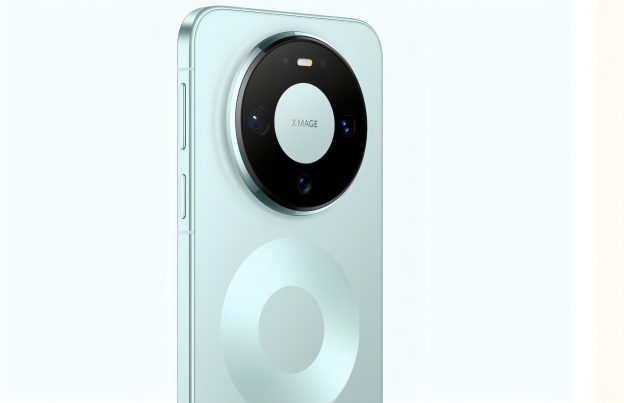
Huawei’s claim of up to 8,000 nits peak brightness sounds almost unbelievable, setting a new benchmark for outdoor visibility. On top of that sits the second-generation Kunlun Glass, promising improved durability against drops and scratches. Complementing this are 1440Hz PWM dimming for eye comfort and a 300Hz touch sampling rate for ultra-responsive gaming and scrolling.
Both phones feature Huawei’s 3D ToF face scanning system alongside a side-mounted fingerprint reader – a design choice that has divided fans. Some users appreciate its practicality, arguing that it avoids screen smudges and makes repairs cheaper, while others find it dated for a flagship of this caliber. Still, Huawei seems confident in prioritizing function over fashion.
Under the hood, the Mate 80 Pro runs on the Kirin 9030, while the regular Mate 80 houses the slightly less powerful Kirin 9020. Huawei says the 9030 is 35% faster than its predecessor, and the 9030 Pro – found exclusively in the Mate 80 Pro Max – pushes that edge even further. Though these chips may not rival Qualcomm’s latest Snapdragon 8 Elite Gen 5, they demonstrate impressive engineering within Huawei’s restricted production environment. Memory options range from 12 GB to 16 GB of RAM, depending on the configuration.
Battery performance is another highlight. Both handsets carry a 5,750mAh cell, though the Pro variant supports a blazing 100W wired and 80W wireless charging, making it one of the fastest-charging phones on the market. The standard Mate 80 still impresses with 66W wired and 50W wireless charging. Even though some fans point out that the Mate 70 Air offered a slightly larger battery, efficiency improvements in the Kirin lineup and HarmonyOS 6 likely offset this difference.
Speaking of software, HarmonyOS 6 brings a refreshed design language with more AI-driven features. Huawei has been leaning into its AI capabilities, enhancing real-time image processing, battery optimization, and voice interaction. For users in China and select regions, the inclusion of satellite communication remains a unique safety feature unmatched by most global competitors.
The camera setup continues Huawei’s legacy of excellence. Both devices feature a 50MP main camera with a variable f/1.4–f/4.0 aperture and a large 1/1.28-inch RYYB sensor for superior low-light shots. The 40MP ultrawide unit remains consistent across models, but the Pro version upgrades the telephoto system to a 48MP sensor with a 92.5mm f/2.1 lens for brighter and sharper zoomed photos. Huawei’s Red Maple imaging chip ensures natural color rendering and detailed textures that rival – and in some cases surpass – flagship offerings from Apple and Samsung. A 13MP front camera with autofocus completes the setup.
Pricing remains competitive, with the Mate 80 starting at CNY 4,699 (€573) for the 12/256GB variant, and the Mate 80 Pro at CNY 5,999 (€730) for the same memory tier. While the top-end Mate 80 Pro Max can reach up to CNY 7,999 (€970), early impressions suggest Huawei has struck an admirable balance between performance, photography, and durability – all wrapped in a sleek yet functional design.
In short, the Mate 80 series demonstrates that Huawei refuses to bow to global challenges. The brand continues to refine its ecosystem, blending hardware innovation with software sophistication. It’s not just catching up; it’s redefining what a Huawei flagship stands for.