Samsung is quietly preparing for another round in the premium gaming monitor arms race, and this time the spotlight is firmly on OLED. According to fresh industry chatter, the company is lining up an aggressive new batch of displays for early 2026 that mixes its own QD-OLED panels with white OLED technology sourced from long–time rival LG Display. 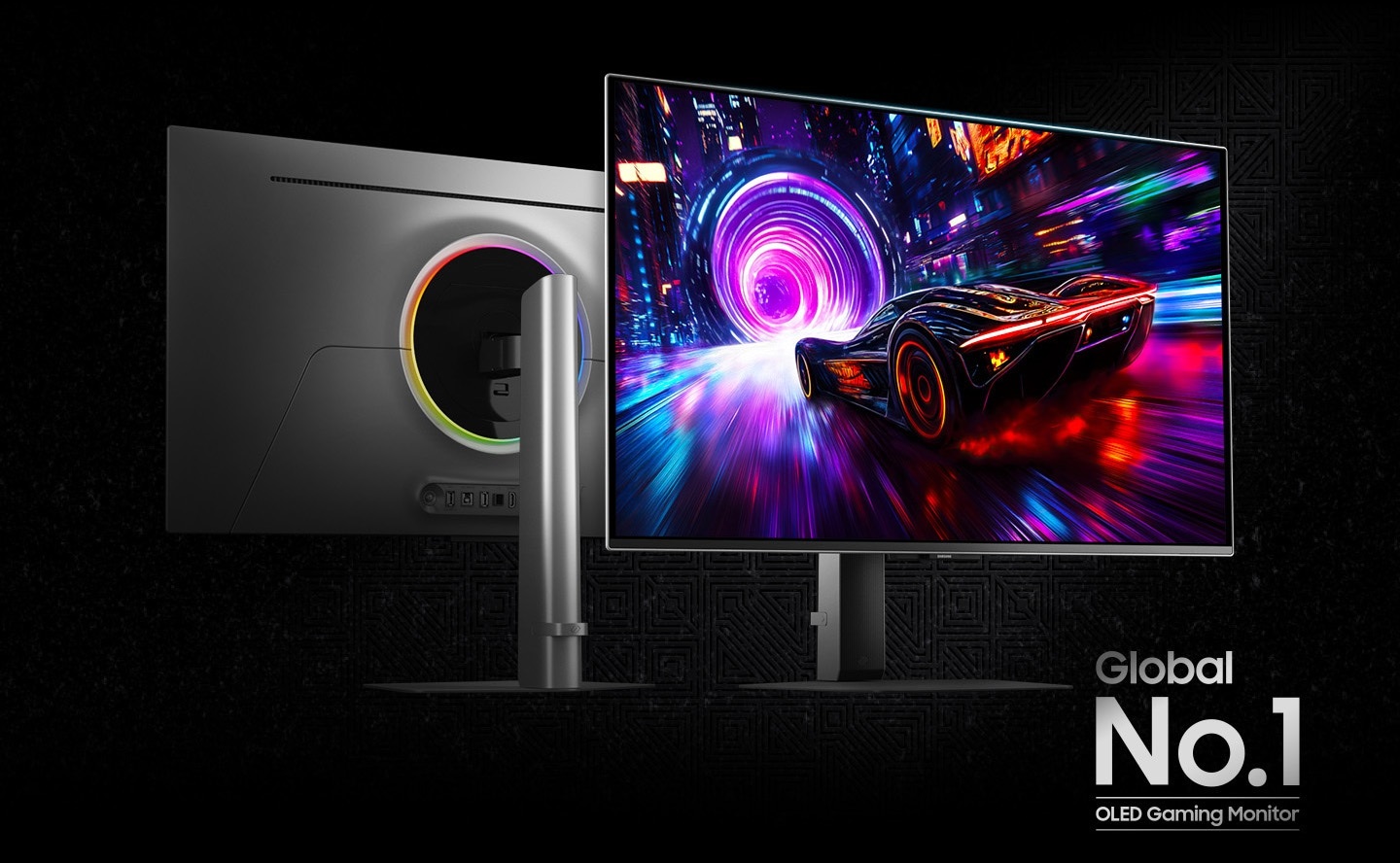
If the leaks prove accurate, PC gamers could be looking at everything from 2K 500 Hz esports weapons to a dual-mode 4K monitor that can also push 330 Hz at Full HD, all wearing a Samsung badge.
Because this roadmap is not yet official, it is still firmly in the realm of rumor rather than confirmed product announcement. Based on the information available, the scenario feels plausible rather than guaranteed: the sources are well plugged into the supply chain, but corroboration elsewhere is still thin. In other words, this is the kind of leak that deserves attention from enthusiasts, but it should be treated as an informed preview of Samsung’s thinking rather than a locked-in launch calendar.
What makes the story so interesting is that Samsung is already the dominant force in OLED for monitors, shipping over a million QD-OLED panels last year and powering many of the most coveted gaming displays from brands such as ASUS, MSI and Gigabyte. Its latest generation of QD-OLED technology has quickly become the go-to choice for high-end 2K and 4K gaming monitors thanks to its combination of deep blacks, strong brightness and punchy colors. Yet even a giant like Samsung cannot ignore cost and capacity constraints, and for white OLED it is currently cheaper and more efficient to buy panels from LG than to ramp its own production.
On paper, QD-OLED and LG’s WOLED approach solve the same problem in different ways. QD-OLED uses blue OLED emitters with quantum dots to generate red and green subpixels, while WOLED relies on a white subpixel stack filtered into colors, often with an additional white subpixel to boost brightness. For gamers the important takeaway is not the physics, but the practical trade-offs: QD-OLED tends to win on color volume and contrast at a given brightness level, whereas WOLED can be cost-effective, scale well to different sizes and has a mature production ecosystem. Offering both technologies in the same monitor lineup lets Samsung tailor each model to workload, price bracket and target audience.
The leaked schedule points to a staggered rollout in the first half of 2026, starting with the most extreme performance showcase. In the very first week of the year, Samsung is reportedly planning a new 27-inch QD-OLED monitor with 2K resolution and a blazing 500 Hz refresh rate, listed under the model code S27FG604SC. It is described as a derivative of the existing Odyssey G60SF family, with only minor hardware changes such as one fewer USB connection. The message is clear: this is a refinement aimed squarely at competitive players who want response time and motion clarity prioritised above all else.
A few weeks later, around week six, attention shifts to a more grounded but still premium 27-inch QD-OLED option. The S27HG612SC is said to stick with 2K resolution but run at 240 Hz, a sweet spot for fast gaming that is easier to drive with today’s graphics cards than 500 Hz. To help bring the price down, this model reportedly drops the fully ergonomic stand found on earlier G61 series units, sacrificing height adjustment and rotation while keeping the core panel experience intact. For many players who mount their displays on an arm or are happy to live without elaborate adjustments, that trade-off will be perfectly acceptable.
From there the roadmap moves up to 4K territory. Around week seventeen, Samsung is rumored to introduce two new QD-OLED monitors targeting enthusiasts who want both ultra-sharp resolution and high refresh rates: the 27-inch S27HG802SC and the 32-inch S32HG802SC. Both are tipped to deliver 4K at 240 Hz, effectively replacing or upgrading the current Odyssey G80 generation. Crucially, these models are also said to modernise the connectivity story by adding DisplayPort 2.1 and beefing up the USB-C port to support up to 90 watts of power delivery, meaning a gaming laptop could be charged and driven through a single cable.
Those connectivity upgrades may sound like check-box features, but they matter in practice. DisplayPort 2.1 opens the door to cleaner support for very high refresh rates at 4K without leaning so heavily on compression, while a robust USB-C implementation turns the display into a central dock for work and play. Creators who bounce between a powerful desktop and a portable workstation could plug in one cable and immediately light up the panel, USB peripherals and network, all while the laptop battery quietly refills.
The most intriguing piece of the puzzle, however, is the model believed to land around week twenty. Under the code S27HG702WC, Samsung is allegedly preparing its first gaming monitor that uses an LG-made WOLED panel rather than one of its own QD-OLED modules. This 27-inch screen is described as a dual-mode design: in its flagship configuration it runs at 4K with a 165 Hz refresh rate, but it can also switch to Full HD and crank the refresh up to a blistering 330 Hz. That flexibility makes it a kind of hybrid between an image-quality showcase and a pure esports tool.
The dual-mode concept is likely to appeal to players who split their time between cinematic single-player titles and competitive shooters. At 4K and 165 Hz, games that emphasise atmosphere and visual fidelity will really lean on the strengths of OLED: perfect blacks, near-instant pixel response and strong HDR performance. Flick over to Full HD at 330 Hz, and the same display turns into a razor-sharp motion machine optimised for tracking targets, flick shots and fast camera pans. Instead of buying a separate smaller esports monitor, you simply change modes.
Strategically, leaning on LG Display for WOLED panels gives Samsung several advantages. It allows the company to diversify panel sourcing without rushing its own WOLED manufacturing lines, it reduces risk if yields fluctuate on either side, and it gives Samsung the option to quickly tap into larger or niche panel sizes that LG already produces. In return, LG fills more of its fabs with premium orders at a time when the TV market alone may not fully absorb capacity. The two companies still compete fiercely at the product level, but at the panel layer this kind of cooperation is pragmatic business.
For consumers, the rumored 2026 lineup suggests that Samsung wants its OLED portfolio to cover nearly every corner of the high-end gaming market. There are ultra-high-refresh 1440p panels for esports-minded players, 4K 240 Hz options for those who want the best of both resolution and speed, and a dual-mode WOLED experiment that blurs the boundary between all-rounder and specialist tool. If pricing lands correctly, buyers should see more choice at different budgets rather than a single ultra-expensive flagship soaking up all the innovation.
It is also a sign that the OLED monitor segment as a whole is maturing. Early adopters had to live with limited sizes, inconsistent features and steep prices. By 2026, the conversation is shifting toward nuanced trade-offs: which panel type best fits a given use case, which models have the connectivity to match next-generation GPUs and consoles, and how much refresh rate is genuinely useful for the kind of games you actually play. More competition between panel technologies and suppliers generally leads to faster improvement.
Until Samsung formally announces these monitors, the details will remain subject to change. Model codes can shift, dates may slip by a few weeks, and some specifications could be tweaked in response to component availability or marketing priorities. Still, as a snapshot of where Samsung appears to be heading, this leaked roadmap fits neatly with the company’s recent moves in OLED and its willingness to quietly buy panels from a rival when it makes financial and strategic sense. If the rumors hold, 2026 is shaping up to be a very big year for anyone dreaming of a high-end OLED gaming setup.