For years, smartphone makers have sold us on cameras, displays and chipsets, while the part that actually decides whether your phone is alive by dinnertime – the battery – has mostly crept forward in tiny steps. That is about to change in a big way. 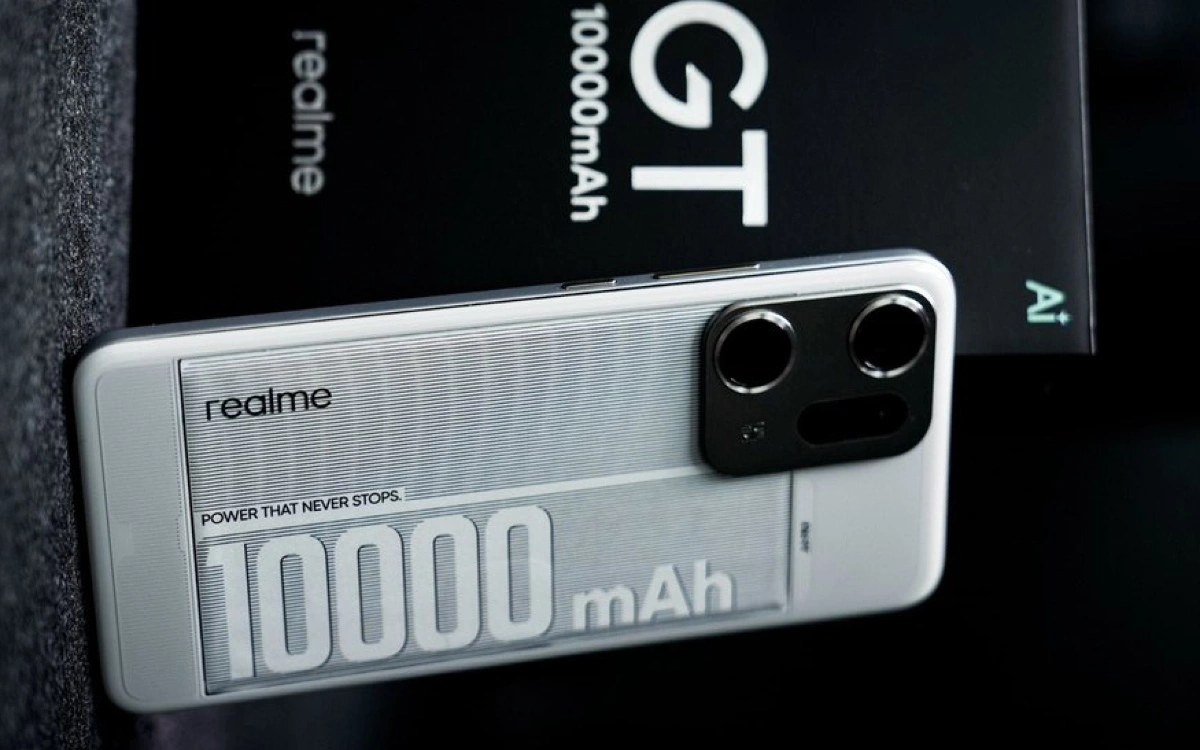
Thanks to new silicon carbon battery tech and aggressive experimentation from Chinese brands, Android phones with power packs close to or even above 10,000mAh are moving from wild concept to very real product, and not just in brick sized rugged devices.
On paper, we are already halfway there. Mainstream flagships like the Xiaomi 17 Pro Max ship with a 7,500mAh battery, and the OnePlus 15 carries a 7,300mAh cell, yet they still look and feel like regular phones rather than mini tablets. That is the power of higher energy density cells and smarter internal layouts. The next step is obvious: push that capacity further without turning the device into a literal brick, and give people something that can genuinely last several days of heavy use.
Reliable leaker Digital Chat Station has been teasing exactly that future. According to their information, Xiaomi is developing a phone with a 10,000mAh battery paired with 100W wired charging. Put simply, that would be a pack roughly twice the size of what you get in a premium model like the Galaxy S25 Ultra, yet able to go from empty to full in about an hour. That is laptop class endurance in a pocketable slab, and it completely changes how you think about charging habits and battery anxiety.
Xiaomi is not alone in chasing that magic number. OnePlus is said to be experimenting with designs that pack a 9,900mAh or full 10,000mAh capacity, and Realme is reportedly looking at similar upgrades. Honor has also been mentioned in the rumor mill as testing giant batteries for upcoming models. Behind the scenes, at least one unnamed manufacturer is said to be playing with prototypes at 12,000mAh and even an outrageous 15,000mAh, just to probe the limits of what is physically possible in a phone form factor.
And here is the twist that often gets lost in the hype: these devices are not some distant sci fi prospect. In specialist niches and certain markets, massive battery phones are already here. Rugged handsets aimed at field workers, campers and people who live far from power outlets routinely ship with 12,000mAh or more. The difference now is that brands want to bring something close to that endurance into sleek, glass and metal flagships that normal users would actually want to carry every day.
Why chase such absurd sounding numbers in the first place? Because once you experience that kind of freedom, it is brutal going back. A phone that comfortably lasts two or three days of real world use does more than save you from carrying a power bank; it changes your relationship with the device. You stop micromanaging brightness, disabling features or hunting for sockets in airports and cafes. Many people already had this moment with charging speeds and display refresh rates: going from slow 10W bricks to 80W or 100W fast charging, or from a 60Hz panel to a 120Hz one. Before you try it, you might shrug and say you do not need it; after you live with it for a week, 60Hz feels janky and old, and 15W charging feels like watching paint dry.
Big batteries are the same story. If you are used to 4,500mAh or 5,000mAh and topping up every evening, a phone that shrugs off a full day and still has 50 percent left feels almost unfair. For power users, mobile gamers, commuters, travelers or simply people who hate being tethered to a wall, a 10,000mAh device is not a gimmick, it is quality of life. Some users will happily accept a slightly heavier chassis or a few extra millimetres of thickness if that means they no longer have to baby sit a percentage indicator all day.
Of course, there are reasons why you do not already see every flagship shipping with a monster single cell battery, and they are not just about design taste. One major hurdle is regulation. In markets like the United States, lithium ion cells above roughly 20Wh are treated as a higher risk category for transport and safety, which corresponds to around 5,300mAh at typical smartphone voltages. Similar restrictions apply in parts of the European Union. That is one reason why so many global models settle around the 5,000mAh mark, even when the same series sold in China or other regions quietly gets a larger pack.
To get around those limits, many manufacturers already split the battery inside the phone into two cells connected in parallel or series. Your spec sheet still says 5,000mAh or 6,000mAh total, but behind the scenes the energy is divided into smaller chunks that are easier to certify and ship. When leaks talk about 10,000mAh phones from Xiaomi, OnePlus or Realme, the interesting question is whether they will use a single huge cell or a multi cell configuration. A single cell design can be simpler and potentially more space efficient, but it also runs right into those regulatory caps in the US and EU, which might force brands to limit such models to markets with more flexible rules.
There are also practical engineering headaches. More capacity means more stored energy, which can make thermal management trickier under heavy gaming or fast charging. Silicon carbon chemistry helps by raising energy density and improving cycle life, but it is not magic; designers still have to worry about heat dissipation, swelling, physical durability and long term ageing. Then there is the question of weight and balance. Even with better chemistry, a 10,000mAh pack is heavier than a 5,000mAh one, and nobody wants a phone that feels like a power tool in the pocket. Balancing these compromises is why we are seeing cautious step ups from 7,000mAh, to 7,500mAh, and now to these 10,000mAh experiments.
Some people push back against this whole direction, arguing that current batteries and charging are good enough, and that chasing massive cells is pointless. In a way, this mirrors the old arguments over higher refresh rate screens. For years, many users insisted that 60Hz was fine and that anything more was a gimmick. Once 90Hz and 120Hz panels arrived and became common, the tone flipped; suddenly 60Hz felt like a downgrade. The same thing is likely to happen with battery life. If you are happy with your daily charging routine, nothing forces you to upgrade, but calling longer endurance unnecessary mostly means you have not lived with the alternative yet.
From a user perspective, the motivation is simple. This tech is fundamentally for the benefit of the people holding the phone. It is not about spec sheet flexing; it is about freeing you from chargers, cables and anxious glances at the status bar. Some observers love to oppose new features just because they are content with what they have, but that is not how progress works. The industry will keep iterating, and those who want all day, multi day battery confidence will have options, whether in a rugged monster or a sleek flagship that quietly hides a 10,000mAh heart.
Looking ahead, the most likely scenario is that we will first see 10,000mAh class silicon carbon batteries in Chinese market flagships and enthusiast models, possibly gaming focused devices where weight is already a secondary concern. Global versions may ship with slightly smaller or multi cell configurations to satisfy regulators, while still offering noticeably better endurance than current 5,000mAh phones. But the direction of travel is clear. Giant batteries are no longer a fringe experiment; they are the next big competitive frontier, and once everyday users taste that freedom, there will be no going back.
1 comment
Tbh they are not closer, they are already here if you look at some Chinese models and those chunky rugged phones. The next step is making that kind of battery life normal in slim flagships