Microsoft is quietly turning Xbox Cloud Gaming into the heart of its gaming business, and the latest expansion shows just how serious that strategy has become. Earlier this month the service officially launched in India, currently the world’s fastest-growing gaming market with more than 500 million players, and it now covers 29 countries across the Americas, Europe, Asia and Oceania.
Alongside India, Xbox Cloud Gaming is live in Argentina, Australia, Austria, Belgium, Brazil, Canada, the Czech Republic, Denmark, Finland, France, Germany, Hungary, Ireland, Italy, Japan, Mexico, the Netherlands, New Zealand, Norway, Poland, Portugal, Slovakia, South Korea, Spain, Sweden, Switzerland, the United Kingdom and the United States. 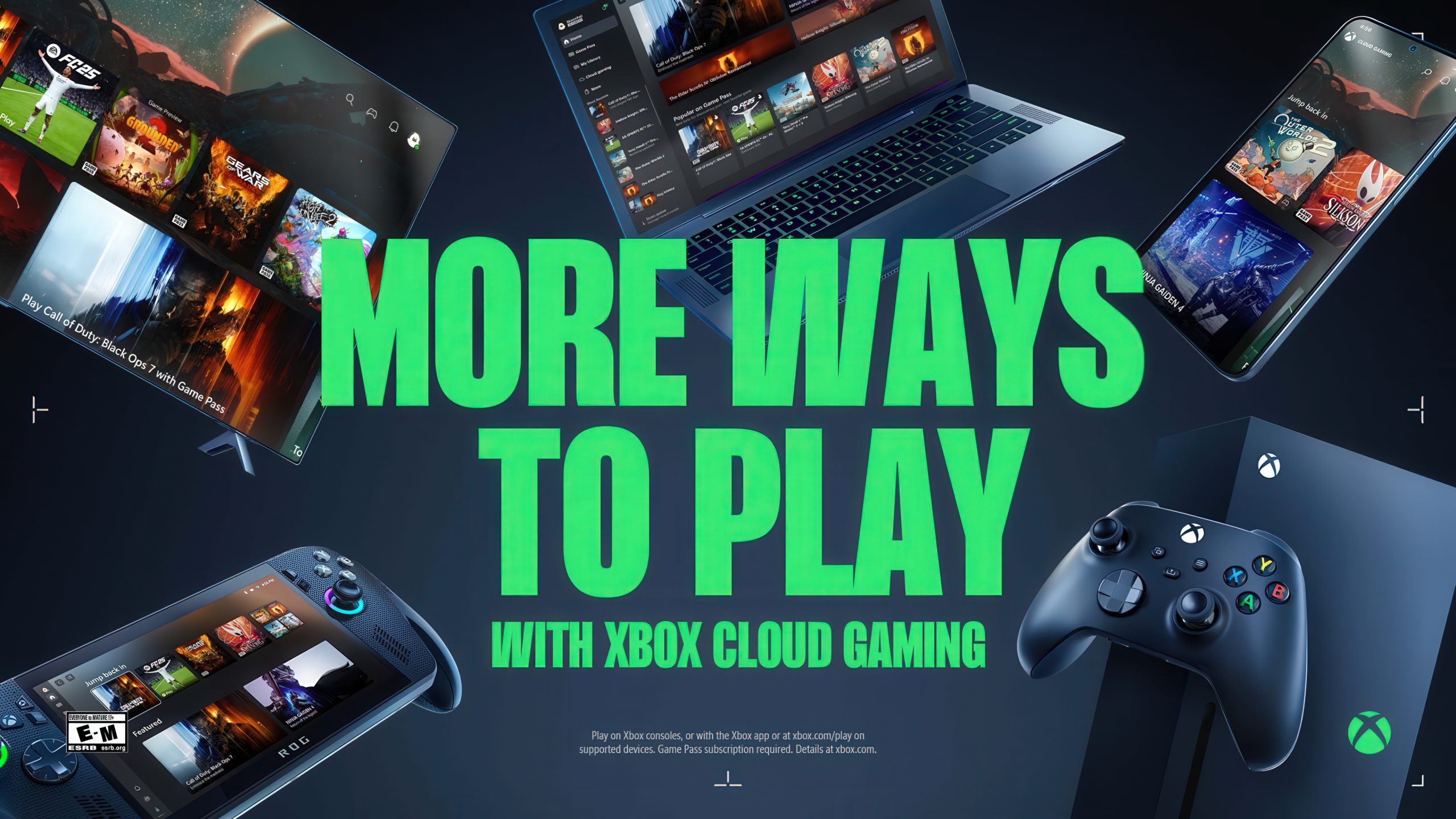
In other words, a huge slice of the global gaming audience can already jump into Xbox titles without owning a console or gaming PC, needing only a decent internet connection and a compatible screen.
Microsoft has also been tuning the experience behind the scenes. In Latin America, server capacity was recently increased in Argentina and Brazil after a surge of new users, with double-digit growth in both play time and active players. That extra capacity translates into shorter queues, more stable sessions and fewer interruptions at peak hours, which is critical for regions where many people are sampling cloud gaming for the first time.
The usage numbers suggest this is not just a regional experiment. According to Microsoft, Game Pass subscribers worldwide spent around 45% more hours playing via the cloud than they did a year ago. Traditional console owners are leaning into that flexibility too, streaming 45% more on their consoles and 24% more on other devices such as laptops, tablets and phones. Cloud is increasingly becoming the way players test new releases, continue long RPG campaigns while away from home or simply avoid massive downloads.
Part of that growth comes from the sheer number of ways to access the service. Beyond Xbox consoles and Windows PCs, players can stream games through the Xbox app on select LG smart TVs and Amazon Fire TV sticks, on Android and iOS smartphones and tablets, and even on VR headsets like Meta Quest. Microsoft has already demoed Xbox Cloud Gaming in cars as well, a niche use case but a clear sign that the company wants Xbox to feel as ubiquitous as Netflix or Spotify.
The business model around cloud access is evolving just as quickly. Previously, Xbox Cloud Gaming sat behind the most expensive Game Pass Ultimate tier. Today, several subscription options can unlock cloud streaming, making it less of a premium perk and more of a standard part of the Xbox ecosystem. For Microsoft this is the endgame: a service-first platform where your library follows you everywhere and dedicated hardware becomes optional rather than mandatory.
That vision also explains why Microsoft is pushing toward its own mobile game store to compete with Apple and Google. The idea is simple: if cloud games can be tuned to run smoothly on phones and low-cost TV boxes, then Game Pass starts to look a lot like Apple Arcade or Google Play Pass, only tied into the much larger Xbox catalogue. Regulatory roadblocks and platform rules have slowed that launch, and Apple in particular has delayed the debut of Microsoft’s mobile storefront, but industry insiders still expect it to arrive within the next year.
On the content side, the catalog keeps expanding. Hundreds of titles in Xbox Game Pass are ready to stream instantly, from indies to big budget blockbusters, and more than a thousand additional games can be played through the ‘stream your own game’ feature if you already own them digitally. New entries are added on a regular basis, turning cloud into a fast way to sample genres you would never normally buy or to hop into co-op sessions with friends without waiting for installs and patches.
The technology itself is not perfect. Microsoft’s underlying xCloud stack has improved with updates like 1440p support in select games, but in pure streaming quality and latency many players still rate NVIDIA’s GeForce NOW ahead of it. That gap matters for competitive shooters and fighting games where every millisecond counts, though it is much less noticeable in slower single-player adventures, strategy titles or turn-based RPGs that make up a large chunk of the Game Pass library.
Looking forward, Microsoft is reportedly exploring an ad-supported tier that would let people play in the cloud for free in exchange for viewing adverts. If that rumor becomes reality, it could put Xbox Cloud Gaming in front of millions of additional players who might never pay for a subscription at all, especially in mobile-first markets like India and parts of Latin America. Coupled with the expanding country list, broader Game Pass access and the looming launch of a Microsoft mobile store, it is clear that the company is betting on a future where the question is no longer which box sits under your TV, but which cloud you log into.
1 comment
Cloud is cool but xCloud still feels kinda mushy compared to GeForce Now for shooters. Great for RPGs though, latency doesnt matter that much there