GeForce RTX 5090 buyers were told that the cable nightmare was over. The new 12V 2×6 power standard, fresh connectors, and strict installation guidelines were supposed to end the melted plastic memes that haunted the previous generation. Yet here we are again. 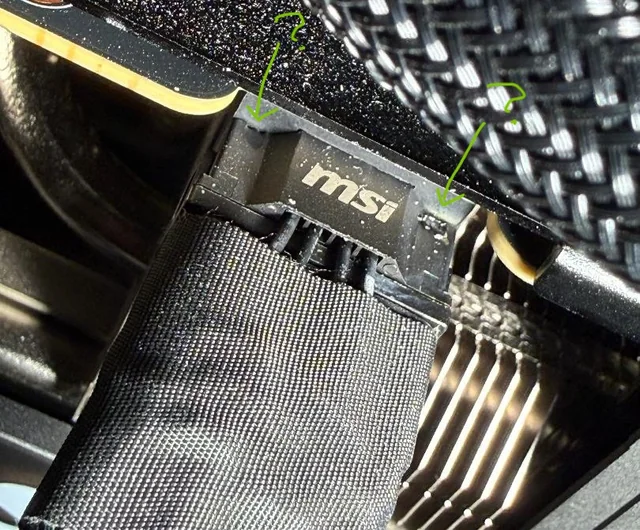
One MSI GeForce RTX 5090 owner has reported a case where the bundled power adapter did not just overheat; it appears to have melted and fused directly onto the GPU power socket, turning a four digit flagship into a very expensive, very nervous science experiment.
According to the account shared on Reddit, the failure did not happen during an overclocking binge or hours of heavy ray traced gaming. The user was simply running normal Windows workloads when the operating system suddenly stopped detecting the graphics card. Only after opening the case did the real problem show itself. The MSI stock 12V 2×6 style adapter shows deep burn marks, and the plastic around the connector on the RTX 5090 is visibly charred and warped. The owner says the plug will not come off at all, even when applying steady controlled force, as if the adapter and socket have partially welded together.
What makes the story sting even more is that this is the second bad experience the same person has had with Nvidias new halo card. Their first RTX 5090 reportedly developed heavy visual artefacts and had to be returned. For the replacement, they played it safe. No cheap splitter cables, no octopus style third party adapters, just the included MSI cable and a quality power supply. In other words, the build looks a lot like what Nvidia and board partners showcase in marketing shots, which makes the end result feel less like wild modding gone wrong and more like a worrying edge case in a very expensive mainstream product.
The situation has reopened an old wound in the PC hardware community. Ever since the launch of the RTX 4090, the combination of enormous power draw and compact high density connectors has been controversial. The original 12VHPWR plug was linked to a string of melted adapters and scorched sockets. The revised 12V 2×6 design shortened the sensitive sense pins and tightened tolerances in an attempt to make partial insertion harder and reduce stress on the contact area. On paper it was marketed as the most robust solution so far. In practice, rare but dramatic failures like this one still leak through.
As usual, the comment threads are split into two loud camps. On one side are users who insist that every melted connector comes down to human error. They argue that builders do not fully seat the plug, bend the cable sharply against the side panel, or run high end GPUs on borderline power supplies. On the other side are those who look at the growing gallery of burned RTX 4090 and RTX 5090 photos and see a systemic problem. Pushing well over three hundred watts through a cluster of tiny pins leaves very little margin for dust, tiny alignment issues, or ageing plastics, and when something goes wrong the failure mode can be catastrophic rather than graceful.
In this case there is also the simple question of what the owner is supposed to do next. Other Reddit users have begged them not to try to pry the connector loose, since any twisting or levering could rip pads off the board or crack solder joints. The only realistic option is to contact MSI support, document the damage carefully, and request an RMA so that technicians can deal with the fused plug in a controlled environment. Even then, there is understandable anxiety about whether a vendor will treat a melted adapter as a manufacturing defect or try to push responsibility back onto installation and the power supply.
The incident has also emboldened people who argue that the arms race for ever larger power budgets simply is not worth it. A growing number of enthusiasts now suggest avoiding Nvidia cards above roughly three hundred watts of total board power, on the grounds that the extra frames per second are not worth the extra heat, noise, and electrical stress. Others are still happy to buy an RTX 5090, but only under strict conditions: a quality power supply with native 12V 2×6 outputs rather than dongles, at least a couple of hundred watts of headroom above the minimum recommendation, and a careful, almost surgical approach to seating the connector.
For builders who are already running or seriously considering a GeForce RTX 5090, the practical checklist is getting longer. Use the shortest possible cable runs and avoid stacking cheap adapters together. Keep the area around the connector clear so the cable can travel in a gentle curve rather than a sharp kink. Make sure the plug clicks firmly into place and that no metal contacts are visible. After the first long gaming session, check the cable and adapter area with the back of your hand to gauge temperatures, and do not ignore any unusual electrical or hot plastic smell coming from the case.
What this story underlines most clearly is not that every RTX 5090 is a ticking time bomb, but that trust in the high power connector ecosystem is still fragile. Statistically, most cards will live out their lives without drama. Yet every photo of a melted adapter stuck to a four slot flagship card spreads quickly across social media, reinforcing the perception that something is fundamentally off with the way these watt hungry GPUs are powered. The burden is now on Nvidia, board partners, and power supply makers to prove, with clear data and transparent policies, that they understand the root causes and are prepared to stand behind affected customers.
Until that happens, each new failure will continue to fuel a cycle of memes and genuine concern. Jokes about 5090 fireworks and complimentary sparklers are funny only until you are the one staring at a charred connector fused to a card that cost more than an entire mid range gaming rig. For now, the safest position for enthusiasts is cautious optimism mixed with healthy scepticism: treat high end GPUs with the same respect you would give to any serious electrical appliance, build carefully, leave yourself plenty of safety margin, and be ready to walk away from a particular design if the smoke signals keep appearing.