CyberPowerPC has become the latest major gaming PC builder to warn customers that the era of cheap memory and storage is over, at least for now. The company has confirmed that it will soon raise prices on its prebuilt gaming systems, citing an aggressive surge in the cost of DDR5 RAM and modern SSDs. 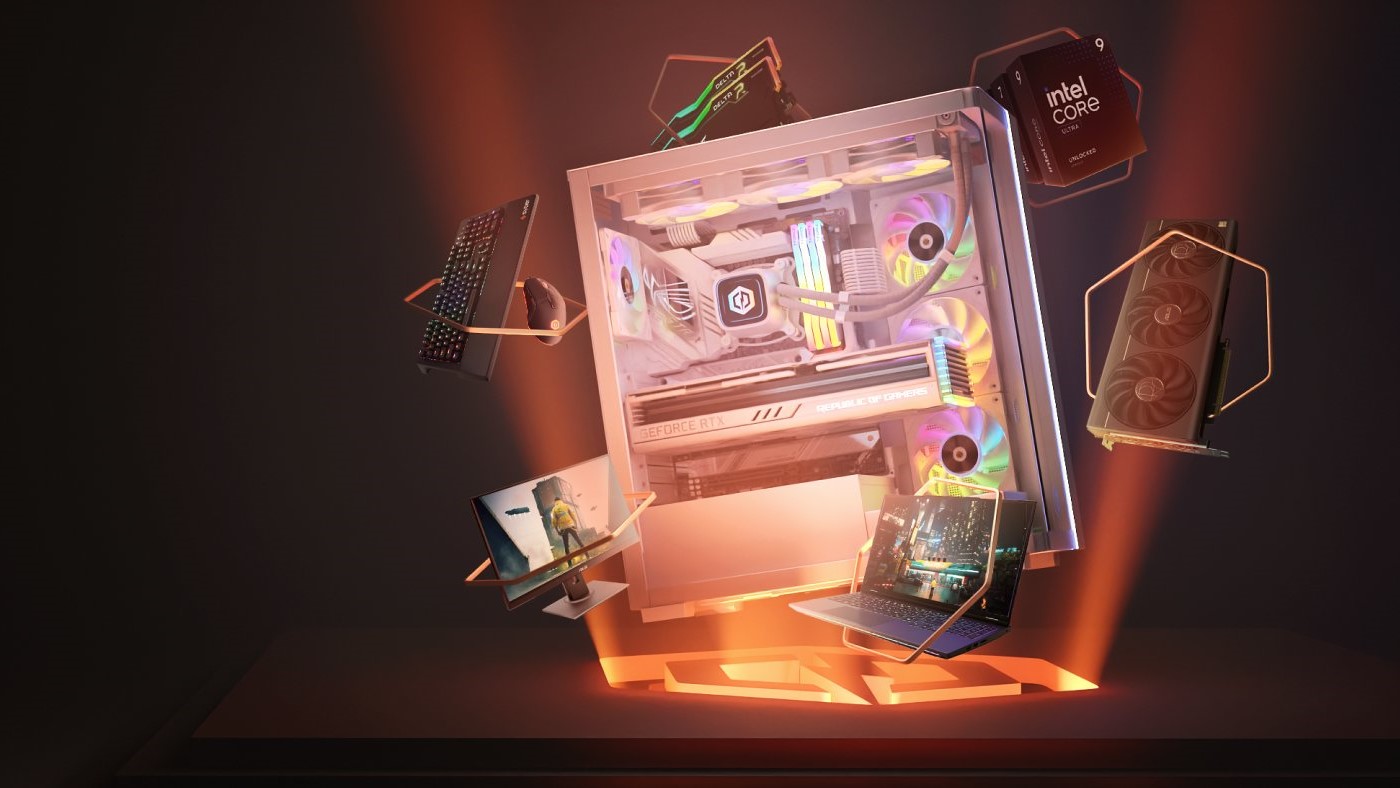
What used to be a quiet part of a PC configuration now sits at the center of a new pricing storm, and anyone thinking about ordering a ready-made rig in the coming days will be staring at a noticeably higher bill.
The warning does not come out of nowhere. Since October, DRAM pricing has shot up at a pace that many enthusiasts have not seen in years. Industry tracking shows DDR5 modules in many regions doubling or even quadrupling compared to their early-autumn levels. CyberPowerPC goes even further in its internal calculations, saying that, on some of the capacity options it relies on, effective RAM costs have risen by around 500% – essentially six times what they used to pay. Consumers are not seeing every kit at 6× the old price, thankfully, but the effects are very real: high-capacity DDR5 kits that once hovered in a reasonably premium range are now hitting eyebrow-raising numbers.
One of the clearest examples is 64 GB DDR5 kits, a capacity that has quietly become the sweet spot for power users, creators, and high-end gamers juggling heavy multitasking. Not long ago, many 64 GB kits sat in a comfortable bracket; now there are listings well above the 800-dollar mark, roughly four times what comparable kits could be found for earlier this year. When a single component eats that much of a system budget, builders like CyberPowerPC have little room to absorb the shock. Those extra hundreds roll directly into the price of the complete machine.
The pain does not stop at RAM. NAND flash, the memory used inside SSDs, has also climbed sharply in price, which means any prebuilt relying on fast PCIe 4.0 or PCIe 5.0 drives is getting more expensive at the component level. System integrators and mini PC makers across the market have already started quietly adjusting their prices or trimming storage capacities to stay profitable. CyberPowerPC has decided to go the transparent route, openly stating that it will revise the cost of its entire catalog of systems to reflect the new reality of SSD and RAM pricing rather than silently cutting corners in configurations.
According to the company, the official price adjustments will kick in starting December 7, 2025. That gives buyers a very short window – about twelve days – before the new pricing structure lands. CyberPowerPC indicates that even its more affordable, entry-level gaming desktops are likely to see an extra 100 to 200 dollars added to their final checkout price. For higher-tier builds using 64 GB of RAM or larger SSDs, the increase can be noticeably higher, because the price shock is multiplied across each high-capacity component. In other words, the more memory and storage you want, the harder the upcoming hike will hit your wallet.
The timing feels especially frustrating for gamers. This is traditionally the part of the year when PC hardware trends downward in price thanks to Black Friday promotions, end-of-year clearance sales, and aggressive bundle deals designed to move inventory. Instead of enjoying an ideal moment to upgrade, millions of players watching the market now face a scenario where discounts on graphics cards or CPUs may be partly or completely canceled out by rising RAM and SSD costs inside prebuilt machines. A rig that looks like a good deal on the surface may quietly be priced higher than an equivalent system just a few weeks earlier.
Behind this surge lies a familiar story: booming demand from the AI and data center segments. Modern AI training and inference workloads are incredibly memory-hungry, not only in terms of cutting-edge HBM stacks on accelerators but also in conventional DRAM and NAND deployed in servers. Large cloud providers and AI infrastructure companies are buying up memory at a massive scale, and manufacturers are shifting more of their production and strategic focus toward these higher-margin, non-gaming markets. When factories prioritize server and AI clients, the consumer PC segment ends up with tighter supply and, inevitably, higher prices.
For DRAM makers, the math is simple. The non-gaming segments – cloud platforms, enterprise servers, AI clusters, and high-performance computing – bring in steadier, bigger revenue streams than individual gaming PCs. As long as AI remains the hottest growth story in tech, producers have every incentive to cater to that demand first. The spillover effect means that desktop users who just want a capable rig for esports, AAA gaming, or content creation suddenly find themselves competing with deep-pocketed corporate buyers for the same underlying memory technology.
Right now there is no clear timeline for when things might normalize. Memory markets are cyclical, and historically, periods of shortage and high prices have eventually been followed by oversupply and steep discounts. But we are clearly at the early stages of the current upswing, not the end of it. With CyberPowerPC openly preparing its customers for more expensive prebuilts and other integrators already following suit, it is safe to assume that the age of rock-bottom DDR5 kits and bargain SSDs is on pause.
For gamers and everyday users considering a new prebuilt system, this puts the next couple of weeks in sharp focus. Ordering before December 7, 2025 may be the last chance, at least in the short term, to lock in a configuration before the next wave of price increases hits. On the other hand, buyers who decide to wait for future deals should be realistic: even generous discounts on CPUs or graphics cards may not fully offset the structural jump in RAM and SSD costs. Whether you decide to buy now or wait, one thing is certain – memory, not just the GPU, has become a major driver of gaming PC prices, and CyberPowerPC’s announcement is likely just the beginning of a broader trend.
1 comment
Guess I’m sticking with 32GB and a smaller SSD, prices are way too wild right now