Intel’s next wave of high-end desktop and workstation hardware is coming into focus, and the leaked details around the W890 platform paint a clear picture of where Granite Rapids Workstation is heading. 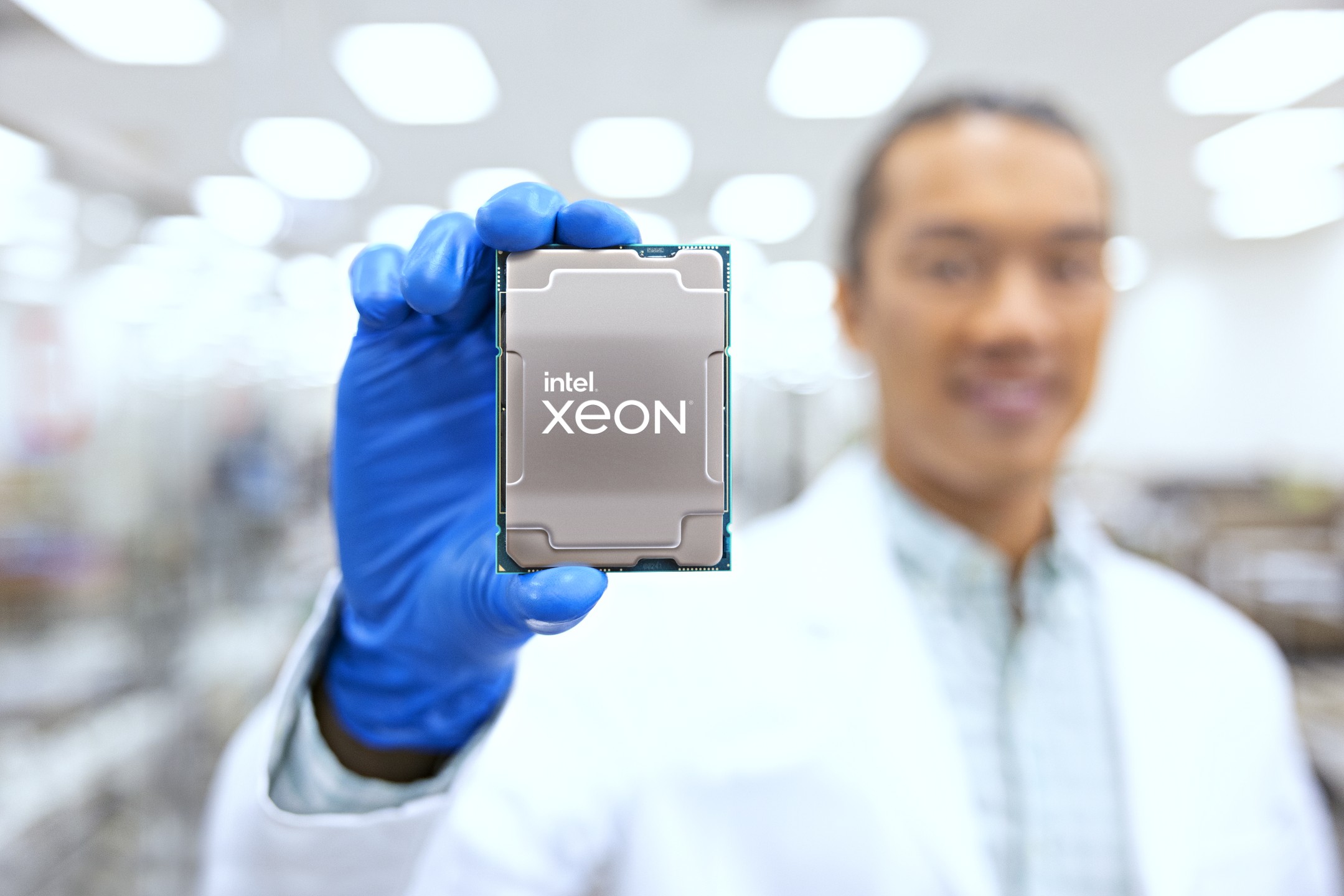
Built for the company’s upcoming Xeon-WS chips, W890 is designed to replace today’s W790 ecosystem and re-establish Intel as a serious rival to AMD’s Threadripper 9000 series in both performance and connectivity. What we are looking at is not a minor refresh, but a new foundation for multi-core workstations, content creation rigs, and small studio servers.
At the heart of the platform is support for Granite Rapids Workstation CPUs with up to 86 cores and 172 threads, targeting professionals who live inside heavily threaded workloads: 3D rendering, VFX, scientific simulations, complex software builds, and massive virtual machine farms. Intel is capping the official TDP at 350 W, matching the envelope of modern Threadripper parts and opening the door for sustained high all-core clocks, assuming cooling and power delivery are up to the task.
New E2 Socket, Same Platform for Expert and Mainstream
The W890 platform revolves around a new E2 socket, formally known as LGA 4710. This socket will underpin both Expert and Mainstream Granite Rapids Workstation boards rather than splitting the lineup across different sockets, a move that should simplify choices for system integrators and DIY builders. Despite sharing the same physical interface, Intel is carving the platform into two tiers that differ mainly in expansion capabilities and target price: Expert boards for high-lane, multi-GPU, multi-SSD monsters, and Mainstream boards for more balanced, cost-conscious builds.
While Intel’s biggest Granite Rapids-WS chip tops out at 16 performance cores on this particular platform configuration, the architecture under the hood is a major step forward in IPC, memory support, and efficiency compared to older Xeon and Core X generations. The company is still chasing AMD’s core-count crown; even at 86 cores, Intel falls slightly short of Threadripper 9000’s 96-core flagship, leaving AMD with roughly 12 percent more raw cores on paper. The battlefield, therefore, shifts toward per-core performance, platform features, and total system value.
Up to 2 TB of DDR5 Memory in Quad-Channel Mode
One of the headline features of W890 is its flexible memory subsystem. Granite Rapids Workstation CPUs on this platform will accept both standard unbuffered DDR5 DIMMs and registered DDR5 RDIMMs. For workstation buyers this matters a lot: RDIMMs unlock much higher capacity and better reliability for memory-heavy workflows such as large databases, in-memory analytics, or multi-terabyte content libraries.
With RDIMMs, Intel is targeting data rates up to 5200 MT/s and total capacities of up to 2 TB of DDR5 in a quad-channel configuration using a 2DPC (two DIMMs per channel) layout. That mix of bandwidth and sheer capacity means creators can keep giant 8K timelines, photogrammetry datasets, or sprawling machine-learning models resident in memory instead of constantly shuttling data from disk. Mainstream users can still populate more affordable standard DDR5 DIMMs, while power users and studios can step up to RDIMMs when budgets and workloads demand it.
PCIe Gen5 Connectivity for GPUs and Storage
On the expansion side, Intel is pushing W890 firmly into the PCIe Gen5 era. Expert-class Granite Rapids Workstation CPUs will expose a total of 112 PCIe lanes, 96 of which are PCIe 5.0 and 16 of which operate at PCIe 4.0 speeds. That is enough bandwidth to feed multiple high-end GPUs, several Gen5 NVMe SSDs, and additional specialty accelerators or high-speed network cards without immediately hitting lane limits.
The Mainstream flavor of the platform trims that down to 80 PCIe 5.0 lanes and drops PCIe 4.0 entirely, but 80 Gen5 lanes is still a serious amount of connectivity for single-GPU professional workstations or compact render nodes. In both tiers, the CPU connects downstream to the W890 chipset using an eight-lane PCIe 4.0 DMI link, ensuring that chipset-connected storage and peripherals are not starved for bandwidth.
Feature-Rich W890 Chipset and I/O
The W890 PCH is not just a glorified hub; it carries its own rich suite of connectivity aimed at modern studios and labs. Networking is handled by an integrated Intel Ethernet Controller I226-V offering 2.5 GbE as standard, with board vendors free to add 10 GbE or faster controllers via PCIe if needed. USB support includes up to nine USB 2.0/1.1 links for legacy devices and ten USB 3.2 links for modern high-speed peripherals, audio interfaces, and external drives.
For storage, W890 boards can be wired with up to eight SATA III ports for bulk HDD or SATA SSD arrays and two SlimSAS headers, each capable of carrying a PCIe 4.0 x4 link for high-speed U.2/U.3 SSDs or breakout connections. On the management side, Intel is leaning into server-grade tooling by pairing the platform with an ASPEED AST2600 BMC for remote management and a Nuvoton NCT6126D controller for monitoring and legacy I/O, making W890 especially attractive for rack-mounted workstations and small studio servers that need lights-out administration.
Power Delivery and Thermal Headroom
Feeding a 350 W-class workstation CPU is no small task, and the W890 reference design reflects that. The boards draw primary power from a standard 24-pin ATX connector, but they supplement it with up to four 8-pin EPS connectors dedicated to the CPU VRMs. That configuration gives motherboard designers the headroom to support heavy all-core loads over long sessions without brushing up against connector limits, especially when overbuilt with premium components and aggressive cooling.
For system builders, this means Granite Rapids Workstation rigs will demand serious power supplies and high-end cooling solutions – think large dual-tower air coolers or 360 mm and larger liquid loops – particularly if Intel’s turbo behavior targets high, sustained clocks. In return, professionals get predictable performance under render or compile loads that can chew through hours of wall time.
Going Toe to Toe with AMD Threadripper 9000
AMD’s latest Threadripper 9000 family sets a high bar: up to 96 Zen 5 cores, as many as 80–128 PCIe Gen5 lanes depending on SKU, massive cache pools reaching 384 MB, and similarly aggressive 350 W TDP envelopes. On paper, Intel gives up a few cores and some cache but responds with a highly competitive platform, strong single-thread performance, and a mature software ecosystem that still favors Intel in certain professional tools and compilers.
The real battle will hinge on how efficiently Granite Rapids can convert that 350 W TDP into usable performance across real-world workloads. Zen 5 is widely regarded as an efficiency champ, so Intel will need every bit of its architectural refinements, scheduler tweaks, and memory subsystem improvements to stay in the fight. For buyers, the upside is clear: competition at this level typically translates into sharper pricing, richer feature sets, and faster updates from both vendors.
Part of a Long Intel HEDT Legacy
W890 and Granite Rapids Workstation also stand on the shoulders of more than a decade of Intel high-end desktop and workstation platforms. From the early days of Sandy Bridge-E and Ivy Bridge-E on the X79 chipset, through Haswell-E and Broadwell-E on X99, to the Core X-series and Xeon W parts on X299 and more recent W790 boards, each generation has nudged core counts, memory bandwidth, and I/O forward for enthusiasts and professionals alike.
What sets W890 apart is how thoroughly it modernizes that legacy: moving from DDR3 and DDR4 to high-speed DDR5, scaling PCIe from Gen2 and Gen3 all the way to Gen5, and pairing workstation-grade CPUs with features – like BMC-based remote management – that used to be reserved for full-blown servers. For users still running aging eight- or ten-core HEDT chips, W890 represents not just an upgrade, but an architectural leap.
Launch Window and Who Should Care
Intel is expected to bring the Granite Rapids Workstation lineup and W890 motherboards to market in 2025, with a high-profile reveal widely rumored for CES 2026. That timeline gives motherboard vendors and system integrators ample room to refine their designs, validate power delivery for 350 W CPUs, and build workstation configurations tailored to specific verticals like VFX, CAD, scientific computing, and software development.
If you are planning a next-generation workstation build and are weighing AMD’s Threadripper 9000 against whatever Intel brings with Granite Rapids, W890 is the platform to watch. With up to 2 TB of DDR5, abundant PCIe Gen5 connectivity, server-grade management, and a renewed focus on value versus raw specs, Intel finally has a workstation story that can compete head-on in the ultra-high-end space – exactly where professionals need it most.