For years the global chip industry has revolved around one quiet giant: Taiwan Semiconductor Manufacturing Company, better known as TSMC. From the iPhone in your pocket to the AI servers powering today’s hottest chatbots, there is a good chance the brain of that device rolled off a TSMC production line. Now the company’s own chief executive, C.C. Wei, is sounding the alarm about a problem that is both enviable and dangerous at the same time: demand for its chips is far outstripping what its factories can realistically supply, especially at the most advanced process nodes. That strain is creating a rare opening for its long struggling rival, Samsung Foundry.
To understand why this matters, it helps to remember how the modern semiconductor business is split. 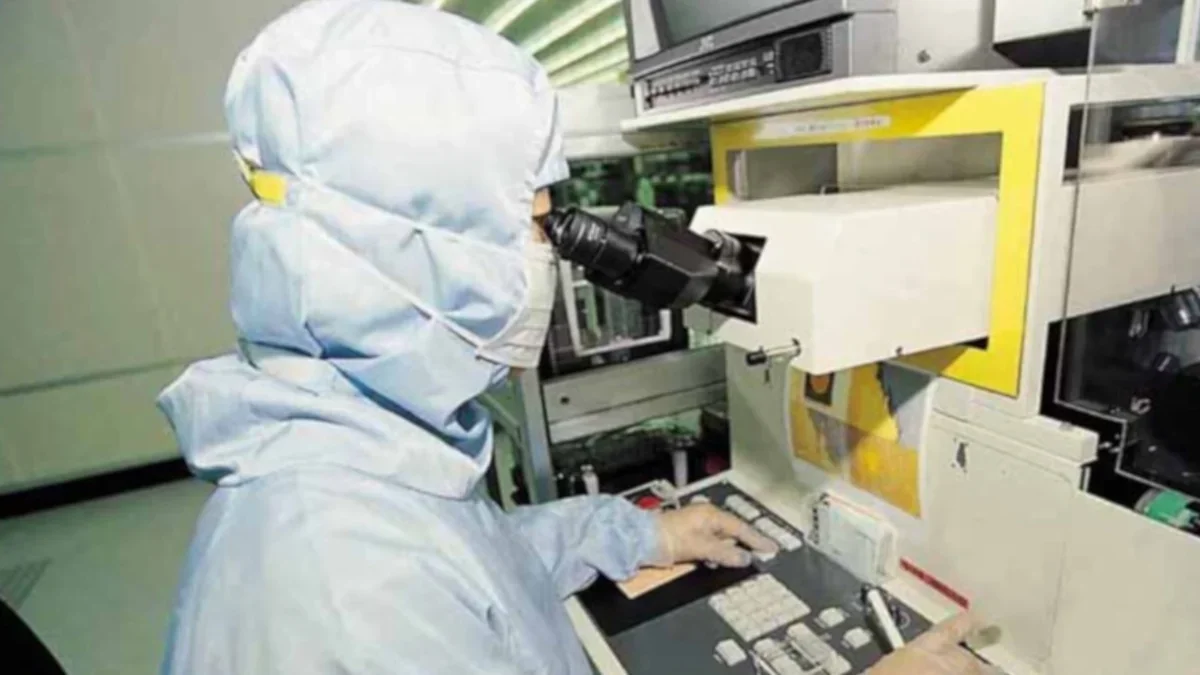
A relatively small number of companies, such as TSMC, Samsung Foundry and China’s SMIC, operate giant fabrication facilities called fabs. These fabs are unimaginably expensive, packed with extreme ultraviolet lithography machines and ultra-clean rooms. The firms that design the chips, meanwhile, are often "fabless": they focus entirely on architecture, performance and software, and then rent manufacturing capacity from these foundries. Apple, Qualcomm, Nvidia, AMD, MediaTek and Broadcom are all part of this fabless elite and they depend heavily on TSMC.
TSMC, for its part, is not short of customers or cash. In the third quarter of 2025 the company booked revenue of 33.1 billion dollars, the kind of number that confirms its fabs are running close to full tilt. Yet Wei says that even this is nowhere near enough. Internal projections show that total customer demand is currently running at roughly three times the manufacturing capacity TSMC can offer. In practical terms, that means the slightest disruption, from a tool malfunction to an unexpected surge in orders, could trigger severe bottlenecks and ripple through consumer electronics, data centers and automotive production worldwide.
The crunch is most acute at the cutting edge. Nodes such as 5 nanometer, 3 nanometer and the upcoming 2 nanometer generations are the processes used for the fastest, most efficient chips: flagship smartphone processors, cutting edge graphics cards, AI accelerators and premium laptop chips. According to Wei, supply at these nodes is "massively insufficient" compared with demand. Long term strategic partners such as Apple or Nvidia, which have locked in capacity through multi year agreements and huge upfront commitments, are relatively shielded. Smaller chip designers that hoped to jump to advanced nodes without such contracts, however, may find themselves waiting in a long queue with no guaranteed start date for production.
This imbalance is happening while TSMC already towers over the rest of the pure play foundry market. In the second quarter of this year, the company held around 70.2 percent of the global contract foundry share, according to industry trackers. Samsung Foundry trailed far behind at about 7.3 percent, and SMIC was third with 5.1 percent. On paper that dominance tells you why so many firms fight to secure a slot on TSMC’s production lines. In reality it also means that when TSMC runs out of room, there are very few alternatives capable of handling advanced process designs at scale.
One of the few candidates, of course, is Samsung Foundry. Yet its foundry division has long been haunted by talk of inconsistent yields. Yield refers to the share of usable, fully functional chips that can be cut from a single silicon wafer. If yields are low, costs explode and customers see more defects, lower performance or both. A stark example came with Qualcomm’s Snapdragon 8 Gen 1 mobile processor. That chip initially rolled off Samsung Foundry lines, but troublesome yields pushed Qualcomm to quickly shift the upgraded Snapdragon 8+ Gen 1 to TSMC instead. Since then, Qualcomm has stayed loyal to TSMC for its flagship phone silicon.
Samsung’s own mobile business has also felt the pain of weak yields on its cutting edge nodes. The company’s in house Exynos line of application processors is meant to showcase its technology in Galaxy devices. However, low 3 nanometer yields reportedly forced Samsung last year to spend roughly 400 million dollars on extra Snapdragon 8 Elite processors. Those chips were needed to fill the gap left when not enough Exynos 2500 parts could be manufactured in time for the 2025 Galaxy S25 series. For a firm that sells itself as both chip designer and foundry powerhouse, having to buy so many rival chips was a deeply embarrassing signal.
The narrative in 2025 is starting to look different. Samsung executives say yields at the newest nodes are improving, and the upcoming deca core Exynos 2600 is widely expected to feature in the Galaxy S26 and Galaxy S26 Plus in selected markets. If that chip ships on time and performs well, it will be more than just a win for Samsung’s smartphone unit. It will also serve as a public proof point that Samsung Foundry can finally deliver competitive silicon at advanced geometries.
That is where TSMC’s capacity crunch becomes strategically important. With demand for AI accelerators, data center chips and cutting edge phone silicon exploding, many chip designers are feeling squeezed. Nvidia, for instance, is soaking up a huge chunk of TSMC’s advanced node capacity for its AI GPUs. Other firms building custom accelerators, automotive systems on chips or high performance processors are discovering that TSMC has very little slack left for customers that lack deep, long standing contracts. For those firms, the choice is increasingly stark: stay in line at TSMC and risk missing key product windows, or roll the dice on an alternative like Samsung Foundry.
From a risk management perspective, the second option is suddenly less unthinkable than it would have been a few years ago. If Samsung can demonstrate stable yields, solid power efficiency and consistent performance with chips like the Exynos 2600, some fabless designers may judge that diversifying away from a single supplier is worth the engineering effort. They may start by sending secondary products or regional variants to Samsung, then gradually expand their orders if results are positive. Over time, that kind of incremental shift could chip away at TSMC’s overwhelming market share advantage.
Nevertheless, no one should underestimate how hard it is for any foundry to close the gap with TSMC at the leading edge. Building a new 2 nanometer capable fab is estimated to cost around 28 billion dollars, and the construction plus tooling and ramp up period can easily stretch from three to five years. That means TSMC cannot simply flip a switch to erase the current shortage, but it also means rivals like Samsung face similar timelines and capital burdens if they want to meaningfully increase their own capacity.
In the interim, the market is likely to experience a prolonged period of tight supply, especially for the most advanced process nodes. Device makers may have to redesign products more frequently around whatever chips they can actually secure. Some smartphone brands could stagger launches across regions depending on the availability of specific processors. AI startups might delay deployments or rely on less efficient chips because they cannot obtain enough state of the art hardware in time. Every one of those decisions becomes part of the broader story of how a single company’s bottlenecks can reshape the entire technology landscape.
For TSMC, the challenge is to expand judiciously without compromising the quality and reliability that made it the default choice for the world’s most demanding chip designers. For Samsung Foundry, the moment resembles a second chance. If it really has solved its yield headaches, this capacity crunch could be the catalyst that finally pushes risk averse customers to give it another try. Whether that opportunity turns into a lasting turning point will depend on what happens over the next several product cycles, as the industry marches toward widespread 3 nanometer and 2 nanometer adoption.
What is clear already is that the era of effortless access to leading edge manufacturing capacity is over. In a world where demand for silicon intelligence is still accelerating, being able to actually build the chips may matter just as much as designing them. That reality is forcing every player, from TSMC and Samsung to the tiniest fabless startup, to rethink how they plan, partner and compete.
1 comment
qualcomm must be so happy they bailed on samsung the first time around 😂