MSI is quietly reshaping its AM5 lineup with a new wave of 800 series motherboards that ship with larger 64 MB BIOS chips and a clear message on the box: ready for next level CPUs. The highlight of this refresh is the MAG B850M Mortar Max WiFi, joined by three X870E Max models that aim to future proof high end builds for upcoming Ryzen generations, including the still distant Zen 6 family. On paper these boards look like minor revisions, but the decision to double BIOS capacity says a lot about how long AMD and its partners expect AM5 to stay relevant.
AM5 has already survived two major processor waves, from the original Ryzen 7000 series to the more recent Zen 5 based Ryzen 9000 desktop chips, with Ryzen 9000G APUs still on the horizon. 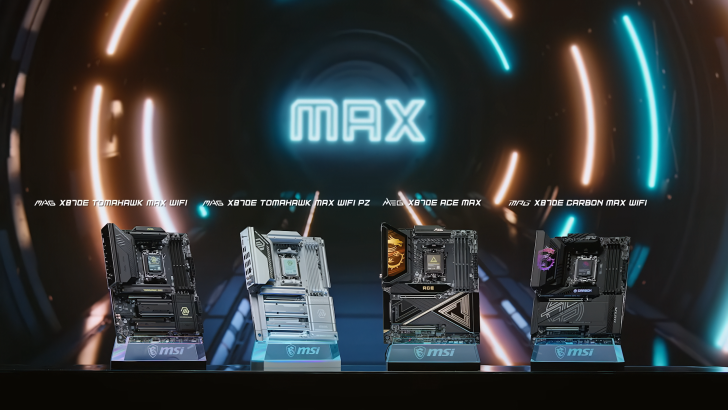
AMD has repeatedly framed AM5 as a multiyear platform, and Zen 6 is widely expected to land on the same socket. That long life is fantastic for upgraders, but it puts pressure on motherboard vendors: every new CPU generation means more microcode, more AGESA modules and more compatibility logic that all has to fit inside the BIOS chip.
Most current AM5 motherboards are built around a 32 MB BIOS, which is technically enough to handle several generations of CPUs plus a modern graphical UEFI interface. We have already seen vendors trimming language packs, cutting older CPU support or simplifying interfaces to make everything fit. By jumping to 64 MB on selected models, MSI is essentially buying itself headroom. It can keep support for older Zen 4 and Zen 5 processors, add Zen 6 and future APUs, and still leave room for advanced features, troubleshooting tools and a friendlier UI that does not need to be ruthlessly pruned.
At the more affordable end of this new batch sits the MSI MAG B850M Mortar Max WiFi. This micro ATX board is positioned as the entry point into the 64 MB BIOS club, giving mainstream builders an upgrade path that should stretch well beyond the current CPU generation. Compared with the existing MAG B850M Mortar WiFi, the Max version keeps a very similar layout and rear I O, but sneaks in an extra M.2 slot to make better use of the B850 chipset and modern storage demands. For anyone building compact gaming PCs packed with NVMe drives, that one extra slot is a practical quality of life upgrade.
The Mortar Max and its X870E siblings also introduce MSI s OC Engine, a feature that the company touts as a cleaner way to push boost clocks and memory speeds without forcing users deep into obscure voltage menus. It is not some magical overclocking button, but it does aim to package sensible auto tuning presets, better power delivery behavior and more predictable performance scaling for everyday builds. Paired with the 64 MB BIOS, the idea is that these boards will handle future microcode updates and new boosting algorithms without having to drop older processors or cut features.
Above the B850M Mortar Max WiFi sit three X870E Max models: the MAG X870E Tomahawk Max WiFi, the MPG X870E Edge Ti Max WiFi and the MPG X870E Carbon Max WiFi. The Tomahawk traditionally targets gamers who want strong power delivery and cooling without paying flagship prices, while the Edge Ti and Carbon push deeper into premium territory with beefier aesthetics, richer lighting and more connectivity aimed at high end builds and custom loops. All three boards keep PCIe 5.0 support for graphics and storage, generous M.2 provisioning and high speed USB and networking that match or exceed their non Max predecessors.
Visually, these X870E Max boards are almost indistinguishable from the original versions. Heatsinks, slot layouts and general design language are effectively the same, which is why many enthusiasts initially dismissed them as minor rebrands. The real difference lies under the hood: a 64 MB BIOS chip, OC Engine integration and MSI s EZ DIY touches such as friendlier M.2 screwless mounts and debug indicators. For builders who only look at spec sheets, that may not sound exciting, but if you plan to keep the same motherboard while cycling through several generations of Ryzen, the comfort of a roomy BIOS can matter more than yet another cosmetic refresh.
Some readers have understandably asked why a BIOS upgrade is needed at all when we are only on the second and third CPU generations for AM5. In theory even the Ryzen 9000G APUs, built on the Zen 5 architecture, should slot comfortably into today s 32 MB designs. The truth is that vendors often run into hard trade offs once a platform matures. To support new chips, they might have to quietly drop older early engineering stepping support, cut recovery tools or strip down the interface. Moving to 64 MB lets MSI avoid those compromises and still keep space for potential future features such as more advanced fan control, built in stress tests or recovery images.
Of course, not everyone in the community is clapping. Some users point out that promised models seem to live in press slides for months before hitting real stores, joking that certain B850 variants might never see the light of day after half a year of waiting. Others throw shade at MSI as a brand for kids and noobs, arguing that serious overclockers should look elsewhere or that BIOS polish has not always matched the marketing. Those criticisms reflect real frustration, especially in regions where availability is slow and prices creep up by the time a product actually arrives.
The reality as usual sits somewhere in the middle. MSI has produced both excellent and flawed boards over the years, and the same is true of every major vendor in the AM5 space. What these Max models represent is not a revolution but a subtle shift toward longer term thinking: build once, upgrade multiple times, and avoid forced motherboard swaps just to catch the next Ryzen wave. If MSI delivers frequent BIOS updates and resists the temptation to cut support lists, the 64 MB chips could turn into a quiet advantage a couple of years from now when Zen 6 and whatever comes after it all need to coexist.
For anyone building a PC today, the takeaway is simple. A well designed 32 MB AM5 motherboard will almost certainly handle Zen 6 without drama, and you do not need to panic buy a Max board. But if you are planning a high end system that you want to keep and upgrade through multiple CPU generations, or you are eyeing heavyweight Zen 6 SKUs and future APUs, these 64 MB BIOS models are worth shortlisting once they actually land on shelves. They hint at a longer life for the platform and offer a bit of extra insurance that your next next CPU will still have a home on the board you buy now.
1 comment
Extra M.2 slot on the B850M Mortar Max is the real win here, my current board ran out of NVMe space in like 3 months lol