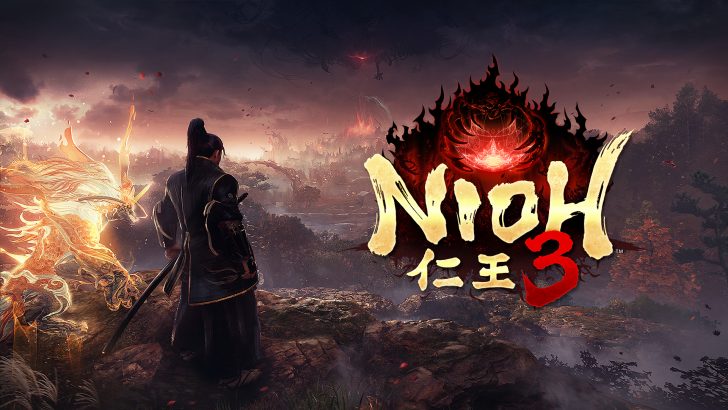
Nioh 3 Preview – Why Team Ninja’s Next Masocore Epic Could Be Its Best Game Yet
The Nioh series has always occupied a curious space in the broader Soulslike landscape. It borrows the unforgiving difficulty, careful stamina management and aggressive enemy designs that fans associate with FromSoftware’s work, yet wraps all of that inside a hyper-technical action system closer to classic character action games than traditional RPGs. With Nioh and Nioh 2, Team Ninja built a reputation for dense mechanics, wild loot and a combat sandbox that rewarded obsessive experimentation.
With Nioh 3, that formula is not just being refined – it is being rewritten. This new entry is positioning itself as the definitive expression of Team Ninja’s samurai fantasy, a game that pulls together lessons from every one of the studio’s recent ‘masocore’ projects while daring to rethink one of Nioh’s most fundamental pillars: how players actually move through the world. Rather than a simple mission select screen, Nioh 3 introduces open-field regions, layered exploration systems and new combat tools that dramatically change how fights unfold – and why you seek them out.
From Mission Select Maps to Open-Field Regions
Previous Nioh games structured their campaigns around self-contained missions chosen from a stylized world map. It was efficient, readable and very much in line with how older action games used to present their levels. You picked a mission, dove into a focused gauntlet of enemies and traps, then bounced back to the map to respec, sort loot and prepare for the next ordeal. It worked brilliantly for players who cared most about combat, but it also created a kind of hard separation between battling and exploring.
Nioh 3 deliberately breaks that divide. Instead of a string of isolated missions, each region now takes the form of a larger open-field map – a contiguous space with multiple routes, hidden pockets of danger and layered objectives woven into the same environment. It is very important to stress that this does not turn Nioh 3 into an open-world game in the modern sense: these fields are not gigantic sandboxes filled with procedural distractions and checklist activities. They are still tightly authored spaces, just expanded and interconnected in ways that invite you to roam, scout and probe for advantage.
During a hands-on session set in a Bakumatsu-era region (roughly 1853–1867), that new structure quickly proved itself. Instead of loading into a single mission and clearing it in a straight line, the entire area unfolded piece by piece as I explored. Main objectives, side missions and high-risk challenges existed within the same geography, meaning that every detour, every ridge and back alley could lead to either an ambush, a shortcut or a rare reward.
Exploration Level: Turning Curiosity into Power
To support this new structure, Nioh 3 layers an explicit progression system on top of exploration itself. As you comb through a region, your actions feed into a global Exploration Level specific to that area. Every time you clear an Enemy Base, complete a Myth side quest for an NPC, slay a roaming Crucible Wraith or uncover a hidden cache, that level ticks upward.
The higher your Exploration Level climbs, the more the region opens up – both literally and mechanically. You earn permanent buffs that can range from simple stat boosts to more specialized advantages tailored to the threats in that zone. The in-game map also evolves: at low levels, it only sketches the rough outline of the land; as you push deeper, it fills in with detailed topography, icons for points of interest and markers for collectibles or optional encounters you might have missed.
This is where Team Ninja’s love of loot and systems really kicks in. Almost every activity tied to exploration showers you with gear, materials and currencies. You gain skill points that can be invested into numerous weapon-specific and general skill trees, opening new combos, passive perks and utility moves. You encounter friendly Yokai who offer temporary or long-term blessings. You discover Jizo Statues that provide unique boons, gently nudging you to adapt your build to both the environment and your preferred fighting style.
The result is that wandering off the main path rarely feels like busywork. In earlier Nioh titles, exploration often existed primarily to hide Kodama, shortcut doors and a few optional fights. In Nioh 3, exploring becomes its own loop: push into dangerous territory, tackle a challenge that spikes your Exploration Level, return with a deeper understanding of the map and a slightly stronger, more specialized character. Combat remains the heart of the experience, but the connective tissue between fights is now richer, more rewarding and much more deliberate.
Crucible Levels and the Return of Claustrophobic Challenge
Open-field regions do not mean that Nioh 3 has abandoned the tight, labyrinthine missions that defined the earlier games. Each area also contains Crucible levels – self-contained sections that evoke the old Nioh structure while introducing new twists.
Enter a Crucible and the atmosphere changes immediately. The layout becomes more compact and intricate, packed with elevated walkways, cramped rooms and dead ends that funnel you into ambushes. These pockets of concentrated danger culminate in powerful boss encounters, but even reaching the boss feels like a test of stamina and resource management.
The key mechanic inside these zones is Life Corrosion, a sinister effect that temporarily reduces your maximum health while you remain within the Crucible. It is reminiscent of the way certain areas in earlier Nioh games imposed environmental penalties, but here it is much more central. With your health bar shrinking, every mistake hits harder – yet the game quietly hands you a tool to fight back: your Amrita Gauge fills far faster than usual.
This accelerated Amrita generation gives you more frequent access to the returning Living Artifact form, a powerful transformation that turns the tide of battle if timed well. Because you are simultaneously more fragile and more capable of surging into this empowered state, Crucible encounters feel like an intense rhythm of risk and release. Survive long enough, pick your moment well, and the Living Artifact form lets you erupt into a flurry of devastating blows that can erase dangerous Yokai before Life Corrosion grinds you down.
Verticality, Jumping and Spirit Veins
One of the more immediately noticeable changes in Nioh 3 is movement. Inspired in part by the studio’s own Wo-Long: Fallen Dynasty, the game now features a dedicated jump, and levels are built to take advantage of it. Where earlier Nioh maps relied mostly on ladders, ramps and slopes, Nioh 3’s regions are stitched together with vertical layers, platforms, ledges and multi-tiered arenas.
This increased verticality is reinforced by Spirit Veins, special paths or nodes that respond to specific Guardian Spirits. Align the right spirit with the right vein and you can access hidden vantage points, shortcuts or entirely new sub-areas. It is a subtle but powerful way of tying build choices to navigation: your selection of Guardian Spirit doesn’t just influence your stats and abilities, it can literally change how you move through a level.
The cumulative effect of these changes is subtle at first but quickly becomes second nature. You start to read arenas three-dimensionally, scanning for elevated sniping spots, plunge-attack opportunities or alternate corridors that let you flank a heavily defended base. Combat is still grounded in stance switching and tight hitbox management, but the field on which those fights occur is now far more dynamic.
Ninja vs Samurai: Two Fighting Styles, One Brutal Dance
Nioh’s combat has always been about stances, Ki (stamina) management and ruthless enemy behavior. Nioh 3 keeps that core intact while layering in a new dialect of violence: the Ninja fighting style. At first glance it might sound like a complication for the sake of complexity, but in practice it opens up a radically different way of approaching encounters.
The Ninja style emphasizes agility, trickery and fluid weapon usage. You are able to equip two weapons per style, for a total of four, and swap between the Ninja and Samurai styles as situations evolve. Classic ‘tricky’ weapons such as the tonfa and kusarigama shine here, with their rapid strings, wide coverage and utility-heavy moves that dart you in and out of danger. Crucially, the Ninja style also loosens the grip on Ninjutsu, letting you lean much more heavily on tools, traps, bombs and throwing weapons without feeling like you are simply dipping into a limited resource pool.
The more traditional Samurai fighting style returns as the anchor for players coming from Nioh and Nioh 2. It still revolves around three stances – high, mid and low – and heavily features big, satisfying weapons such as hammers and the odachi. Yet veterans will feel a shift the moment they swing. High stance attacks are now a touch slower and obviously riskier, forcing you to choose your commitments carefully rather than defaulting to all-out aggression. The intent seems clear: make high stance the devastating, high-risk, high-reward option it was always meant to be.
On top of that, Team Ninja has given more prominence to deflection, a mechanic that rewards perfectly timed blocks. Visual feedback has been enhanced so that a successful deflection is crystal clear, encouraging players to lean into a reactive style. Instead of dodging everything, you can square up against enemies, catch their blows at the perfect moment and swing the momentum back in your favor. It is a small change in presentation, but it transforms how confident you feel about relying on your guard in the thick of combat.
Martial Arts and the Arts Gauge: Combo Fantasy Unleashed
The most dramatic combat addition in Nioh 3 is the new Martial Arts system. Previous entries already featured special techniques triggered by directional inputs, stance-specific commands or the end of certain combo strings. Now, those moves are pulled into a new meta-layer built around the Arts Gauge and the concept of Arts Proficiency.
As you fight, land hits and use special abilities, the Arts Gauge fills. Once it reaches a threshold, you can trigger Arts Proficiency, temporarily entering a state in which Martial Arts can be chained together with far more freedom. Instead of dropping a single flashy move and resetting to neutral, you can string multiple arts in a row, weaving them into your standard combos and stance swaps. This opens the door to elaborate, almost balletic sequences that let you stunlock even tough enemies – including bosses – if you read their patterns correctly and keep your Ki under control.
There is a strong echo here of Stranger of Paradise: Final Fantasy Origin, another Team Ninja title that encouraged explosive combo expression. The key difference is that in Nioh 3, Martial Arts still draw from your Ki, and mismanaging that resource will snap your fantasy combo in half and leave you exposed. It is not a ‘press this to win’ mechanic; it is an amplifier for your knowledge of the combat engine. Beginners will enjoy the spectacle of longer strings and easier access to powerful techniques, while veterans will immediately start theorycrafting devastating routes that push enemy AI to its limits.
For returning players who spent hundreds of hours in Nioh 2 discovering obscure tech, this system feels like a public invitation from Team Ninja: the kind of high-skill combo play you posted in clips and highlight reels is now baked into the design, not just a fringe possibility.
Muscle Memory vs Innovation: Adapting to the New Combat Flow
One of the fascinating parts of jumping from Nioh 2 into this new build was confronting my own muscle memory. On paper, the move sets for many weapons look familiar. In practice, the timing windows, risk profiles and animation priorities have all been nudged. High stance swings being slower, deflections playing a bigger role, Martial Arts demanding specific cancels – all of this forced me to unlearn habits and rebuild my instincts around Nioh 3’s expectations.
For the first hour or so, that friction is very real. You roll when you should block, you whiff when you should delay, you burn Ki on an over-ambitious chain and get punished for it. But once the new systems click, the flow of combat becomes even more engaging than before. Ninja and Samurai styles complement rather than compete with each other. Martial Arts chains start to feel like natural extensions of your normal combos. Deflections and well-timed stance shifts give fights a satisfying back-and-forth cadence that keeps even common encounters feeling tense.
By the time the build’s final boss appeared, the Nioh 3 combat language felt genuinely fresh – related to, but not overshadowed by, its predecessors.
Facing Takasugi Shinsaku: History, Firearms and Ferocity
The capstone of the preview session was a showdown with Takasugi Shinsaku, a real historical samurai associated with the events leading to the Meiji Restoration. Historical purists might raise an eyebrow at his loadout – his use of a firearm is not exactly a strict history lesson – but in mechanical terms it makes for a distinctive fight that stands out even within the Nioh series’ long roster of memorable bosses.
Takasugi wields his gun less like a simple ranged tool and more like a rhythm disruptor. Quick shots interrupt greedy combos, force you to respect distance and punish lazy approaches. Up close, he blends sword strikes with firearm usage in ways that demand constant adaptation. You cannot simply memorize a handful of canned strings; you must watch his stance, read the telltale motions of his gun and decide in a split second whether to dash in, deflect or bait out a whiffed attack.
It is also a fight that invites you to fully embrace Nioh 3’s new mechanics. Martial Arts chains let you punish overextensions with brutal efficiency. Ninja tricks offer ways to control space, deny his mobility or create openings. Deflections give you windows to turn his aggression against him. The battle is difficult in true series tradition, but once you learn his rhythm and lean into the new tools, victory feels earned rather than lucky – even if, in my case, a bit of luck certainly helped on the final attempt.
A Convergence of Team Ninja’s Masocore Experiments
Stepping back from the details, what makes Nioh 3 so exciting is how clearly it builds on – and refines – years of Team Ninja’s work across multiple games. The demanding, frame-tight combat and deep loot systems come straight from Nioh and Nioh 2. The jump, aerial options and more expressive traversal echo Wo-Long: Fallen Dynasty. The Arts Gauge and Martial Arts chains carry the DNA of Stranger of Paradise: Final Fantasy Origin. Even the broader emphasis on interconnected fields and layered objectives feels loosely aligned with the studio’s experimentation in Rise of the Ronin.
Instead of feeling like a collage, however, Nioh 3 presents these ideas as a coherent, focused package. Exploration is there to feed combat, not to distract from it. New mechanics expand your options instead of overwhelming you with needless complexity. The game still looks unapologetically dense – this is a Team Ninja action RPG, after all – but the density feels more purposeful, more carefully structured around the fantasy of mastering a lethal combat system in a hostile world.
The big question, of course, is whether the exploration loop will maintain its pull over dozens of hours. Will Enemy Bases, Crucible Wraiths and Myths quests continue to surprise, or will they settle into too-familiar patterns? Will the rewards tied to Exploration Level remain meaningful deep into the endgame? Those answers will only come with a full playthrough, but the early signs are promising. The preview region never felt like it was stretching limited ideas across too much real estate; instead, it came across as a compact but rich playground that constantly tempted me with just one more detour.
Nioh 3’s Future: A New Benchmark for the Series?
From this early look, Nioh 3 feels less like a simple sequel and more like a culmination – a game that wants to honor what long-time fans loved about Nioh while also modernizing the structure and smoothing some of the rough edges for newcomers. The familiar mission-based format has been reimagined through open-field regions that reward curiosity. Exploration has real mechanical weight thanks to Exploration Levels and persistent buffs. Combat has been pushed even further into expressive territory with dual fighting styles, deflection-focused tweaks and the devastating Martial Arts chain system.
If the rest of the campaign can maintain the quality and intensity of this Bakumatsu-era slice, Nioh 3 has every chance of standing not only as the best entry in its own series, but also as one of the standout ‘masocore’ action RPGs of its generation. It is shaping up to be a dense, demanding and deeply satisfying experience for players who crave systems to master and enemies that punish complacency.
Nioh 3 is set to launch on PC and PlayStation 5 on February 6, 2026, and it already looks like the kind of game that will ignite build discussions, combo breakdowns and boss strategy debates for a long time. For fans of punishing action RPGs, the wait until release may feel almost as brutal as a mis-timed dodge in high stance.
Travel and accommodation for the Paris preview event were provided by the publisher.
2 comments
ok wow, this actually made me wanna replay nioh 2 before 3 drops 😂
honestly this reads like nioh 3 is the ‘greatest hits’ of every team ninja game lately, i’m so in