The iPhone 17 Pro and iPhone 17 Pro Max are, on paper, almost twins. Same Apple A19 Pro chip, same triple-48 MP camera system, same aluminum unibody, same storage options up to 1 TB – and nearly identical software features driven by the new 16-core Neural Engine and Apple Intelligence. 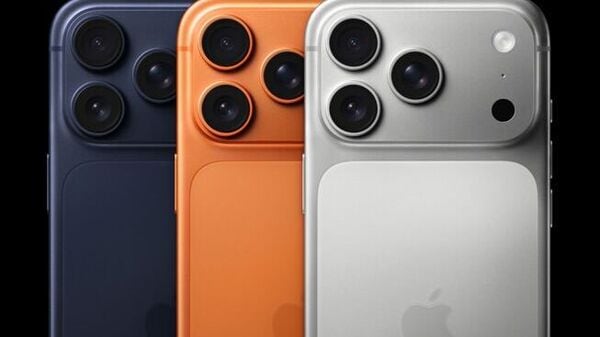
Yet anyone who has actually lived with a big Pro Max and a smaller Pro knows that these phones feel very different in the hand, in the pocket, and over a long day of use.
Every year you hear the same chorus: “All iPhones look the same, Apple is boring now.” And in a sense, this generation doesn’t try to shock with radical experiments. Instead, the iPhone 17 Pro lineup refines the formula, especially around ergonomics, battery life, and displays. The big question is no longer “which one is more powerful” but “which size of the same flagship experience actually suits your life, your pockets, and your habits”.
This detailed comparison of the iPhone 17 Pro vs iPhone 17 Pro Max looks beyond the marketing slides. We’ll break down design, display, performance, battery, charging, speakers, and cameras, and then translate all of that into real-world scenarios. Whether you’re a power user juggling work and content creation, a gamer pairing an iPhone with a dedicated Android gaming phone, or simply someone tired of carrying around a brick, the choice between these two matters more than it seems at first glance.
Design, size and everyday comfort
If there’s one reason most people pick one of these over the other, it’s not benchmark scores – it’s size. The iPhone 17 Pro measures roughly 150.0 x 71.9 x 8.8 mm and weighs in at 206 g. The iPhone 17 Pro Max stretches that out to about 163.4 x 78.0 x 8.8 mm and a substantial 233 g. Those numbers don’t just live on a spec sheet; you feel them every single time you sit down, pull your phone out of your jeans, or try to use it one-handed on the subway.
The 17 Pro is as close as Apple gets to a compact Pro flagship in 2025. With its curved-edge back and refined aluminum unibody, it looks sleeker and smaller than it really is, especially in the hand. The curvature and relatively narrow width make one-hand use surprisingly manageable, even for people with average-sized hands. It’s not a small phone in absolute terms, but next to the Pro Max it almost feels nimble.
The iPhone 17 Pro Max, on the other hand, feels unapologetically big. The same curved back helps it sit better in the palm, but physics is physics: at 233 g it never disappears in a pocket. Add a protective case – which most people will – and you’re firmly in “mini tablet” territory. For many users, the Pro Max is less a pocket phone and more something that lives in a bag or a purse. It’s the kind of device you notice if you put it in the front pocket of skinnier jeans.
Both models share the same aluminum unibody construction, the same three colorways, and the same IP68 water- and dust-resistance rating. There are no differences in materials, finish, or general build quality – Apple clearly wants both sizes to feel equally premium. The days when the smaller Pro felt like a slightly compromised little brother are gone; at least in design and materials, they’re equals.
It’s worth responding to that typical forum complaint that “these two phones are basically identical, why even write a long comparison?” In practice, the way a device fits your lifestyle is more important than one or two percent differences in performance. The fact that Apple now gives you the full Pro experience in two truly equivalent bodies means the physical form factor becomes the single biggest decision. If you’ve ever wished Samsung would shrink its Ultra camera system into a smaller S-series body, the iPhone 17 Pro is basically Apple’s version of that dream.
Display: two excellent OLEDs, two very different experiences
The dimension difference maps directly to the screens. The iPhone 17 Pro uses a 6.3-inch LTPO OLED panel, while the iPhone 17 Pro Max steps up to 6.9 inches. Both panels run at up to 120 Hz with Apple’s adaptive ProMotion refresh rate, both support Dolby Vision HDR, and both offer the same sharp 460 ppi pixel density – 1206 x 2622 pixels on the Pro and 1320 x 2868 pixels on the Pro Max.
In other words, you are not sacrificing display quality by going smaller. Text is equally crisp, photos and UI elements look equally sharp, and color calibration is consistent across both. They also share the same brightness behavior: around 800 nits in manual mode, about 1000 nits in bright ambient conditions when we lit up 75% of the screen white, and much higher peaks – around 2700 nits – when only a small 10% area is bright. Outdoor visibility is excellent on both.
Where they diverge is the sheer amount of real estate. That 20% or so extra area on the Pro Max changes how the phone feels if you spend a lot of time watching video, scrolling social feeds, reading long articles or editing photos. A YouTube video fills more of your vision, subtitles are easier to read, timelines in editing apps feel less cramped, and you simply see more of a web page or a spreadsheet before you need to scroll.
On the iPhone 17 Pro, the smaller panel feels more intimate and less fatiguing to hold up for long periods. If you often use your phone one-handed – replying to messages while you walk, shooting off quick emails, doomscrolling with one thumb – the 6.3-inch size hits a sweet spot. It’s big enough to feel modern and premium, but not so large that you need two hands for everything.
Gamers will probably favor the Pro Max, especially for titles with complex on-screen controls. A larger view of the game world and more breathing room for thumb input simply feels better. That said, quite a few users now treat the iPhone as their “work and camera” phone and pair it with a separate Android gaming device like a Poco F9 Ultra. In that scenario, you might find the smaller, lighter Pro a better complement while leaving heavy gaming to a dedicated device.
Battery life: familiar Pro Max advantage, solid Pro endurance
Under the hood, the two phones pack different battery capacities to match their size. The iPhone 17 Pro carries a 3998 mAh cell, while the iPhone 17 Pro Max steps up to 4832 mAh. Apple never advertises capacities directly, but these figures translate neatly into real-world endurance.
In testing, the Pro Max reliably stretches a charge further. We measured roughly three hours more video playback and around three extra hours of web browsing compared to the smaller Pro. In gaming, where sustained performance and display size really matter, the Pro Max pulled ahead by about two hours. This matches the experience of long-time Pro Max owners: if you’re constantly streaming, scrolling, hopping between social apps and shooting video, the bigger phone simply refuses to die before bedtime.
The iPhone 17 Pro should not be dismissed, though. It easily handles a long working day with mixed use for most people – messages, social media, some camera use, a bit of navigation, and some light gaming. Heavy power users or folks who live on 5G might run closer to the red by late evening, but overall, the smaller battery is well managed by the 3 nm A19 Pro chip and the LTPO panel’s adaptive refresh rate.
This is also where some cross-platform perspective helps. On forums, you’ll find Android fans joking that their seven-year-old Huawei Mate 20 Pro still manages comparable or even better endurance. There is a grain of truth in that: some older Android flagships paired very efficient chips with conservative displays and big batteries, and they still age surprisingly well. At the same time, the iPhone 17 Pro series is pushing far higher sustained performance, brighter screens, and aggressive background processing for on-device intelligence. You’re trading raw battery hours for a more powerful, responsive ecosystem. Whether that trade-off is worth it is a personal call.
Charging speed: a welcome generational bump, still not class-leading
Apple quietly accelerated wired charging this year. On the box, the iPhone 17 Pro is rated for up to 35 W and the iPhone 17 Pro Max for up to 42 W. Using quality third-party USB-C PD chargers, we saw the 17 Pro hit around 40% in 15 minutes and around 70% in 30 minutes. The Pro Max landed at about 38% in 15 minutes and about 65% in 30 minutes, but then pulled slightly ahead to reach 100% a few minutes faster, finishing a full charge in roughly 72 minutes versus about 78 minutes for the smaller phone.
These results are without Apple’s newer 40 W / 60 W adapter, which wasn’t yet widely available in the EU at the time of testing. Even so, the takeaway is clear: both 17 Pros charge noticeably faster than last year’s models, making quick top-ups more practical. In day-to-day terms, 20–30 minutes on a charger while you shower or have dinner is enough to push you comfortably through the rest of the evening.
Are they the fastest on the market? No – there are mid-range Android phones that can charge from empty to full while you barely finish reading an article like this. But Apple is prioritizing battery health and temperature control over headline-grabbing numbers. Combined with the new vapor chamber cooling and smarter charging algorithms, the 17 Pro lineup should age well, even if it doesn’t win every charging speed chart.
Wireless charging remains part of the story too. The experience is essentially identical between the two: same MagSafe convenience, same alignment magnets, same behavior on compatible stands and pucks. The decision between Pro and Pro Max is not about features here – it’s about whether you want a bigger battery that charges slightly faster to 100%, or a lighter phone that is a bit easier to top up on the go.
Speakers and audio: Pro Max sounds bigger, Pro is still excellent
Both iPhone 17 Pros use a familiar stereo setup: a main bottom-firing speaker teamed up with the earpiece. Compared with the previous generation, the drivers themselves are slightly smaller, and in our loudness tests both phones came in a touch quieter than their predecessors. The difference is not dramatic, but it’s measurable.
Between the two, the Pro Max has the edge. It sits a notch louder in measured volume and, more importantly, sounds more expansive and dynamic. There’s a bit more separation, a slightly fuller low-end, and a larger sense of space when watching movies or gaming. It’s still a smartphone, not a Bluetooth speaker, but the extra physical volume inside the Max clearly helps.
The iPhone 17 Pro’s speakers are still very good. Vocals are clear, highs are crisp without being harsh, and stereo separation is respectable in landscape mode. If you value a more compact device and often use headphones anyway – be it wired via USB-C or wireless – the difference in speaker performance alone isn’t enough to push you towards the Pro Max. But if you routinely watch long videos on the bare phone or use it as your main music box around the house, the Pro Max is the nicer listening companion.
Performance, thermals and storage: A19 Pro in two bodies
Inside both phones beats the same heart: the Apple A19 Pro built on a 3 nm process. It combines a 6-core CPU (two performance cores up to 4.26 GHz and four efficiency cores up to 2.6 GHz) with a 6-core GPU and a 16-core Neural Engine tuned for Apple Intelligence and on-device machine learning tasks. The chips are paired with 12 GB of LPDDR5X 8533 RAM – a jump from 8 GB on the previous Pro generation – and fast NVMe storage starting at 256 GB.
In benchmarks, the differences between the two sizes are small enough to ignore. The iPhone 17 Pro scored around 1,024,305 in AnTuTu, 9,923 in Geekbench, and 5,868 in 3DMark Wild Life, while the Pro Max landed around 1,026,005, 10,118 and 6,010 respectively. The margins are tiny and mostly come from the bigger body of the Pro Max allowing the chip to maintain peak clocks slightly longer before thermally throttling.
Translated into real use, both phones feel blisteringly fast. Apps open instantly, multitasking is smooth, and games run at high frame rates with consistent visuals. The new vapor chamber cooling system, combined with the aluminum frame acting as a heat spreader, helps both models sustain performance better than their predecessors, especially in graphics-intensive titles and during prolonged 4K video recording.
Storage options are identical up to a point: 256 GB, 512 GB, and 1 TB variants exist for both Pro and Pro Max. If you want to go all the way up to 2 TB – perhaps because you shoot a lot of ProRes footage or download massive offline game libraries – that configuration is reserved for the iPhone 17 Pro Max. This is one of the few hard feature differences between the two; for absolute storage hoarders, the Max is non-negotiable.
For everyone else, 256 GB is a sensible base in 2025. With Apple Intelligence features, higher-resolution photos, and heavier apps, starting at 128 GB would feel cramped. Apple’s decision to bump the base storage while also including more RAM is one of the quiet but important upgrades this generation brings, regardless of which size you pick.
Cameras: no more big-phone advantage
For years, the Pro Max had a subtle but real edge in camera hardware, especially in telephoto reach. That era is over. Starting with the iPhone 16 generation and continuing here, the iPhone 17 Pro and 17 Pro Max share the exact same camera system front and back.
On the rear, both phones carry three 48 MP sensors: a main wide camera with a 1/1.28-inch sensor, an ultrawide with a smaller 1/2.55-inch sensor, and a new 4x telephoto equipped with its own 48 MP sensor. The tele module gives you true optical 4x zoom, while smart cropping and multi-frame processing help maintain very good quality at 2x and even 8x in good light.
Up front, the selfie camera is an 18 MP unit with a 20 mm equivalent focal length and a multi-aspect sensor. It’s shared across the entire iPhone 17 family, so you’re not missing out on any tricks by choosing the smaller Pro. In fact, that wide field of view is arguably a bit more useful on the Pro Max, where rotating the large phone for landscape selfies is slightly more cumbersome; but in practice, the experience is the same.
Because the hardware and processing pipelines are identical, image quality is effectively indistinguishable between the two. In daylight, the main camera delivers detailed, contrasty photos with Apple’s familiar, slightly restrained color science – punchier than a few years ago, but still less saturated than some Android rivals. Dynamic range is excellent, with good highlight control and very solid shadow recovery.
At 2x, this generation shows a noticeable improvement over the older Pros. Apple is leaning harder into the 48 MP main sensor, using higher-resolution crops and better fusion algorithms to generate images that look almost as good as native telephoto shots under good light. It’s a versatile focal length for portraits and everyday snaps, and both 17 Pros benefit equally from the upgrade.
The 4x telephoto is where opinions may split. Compared to last year’s 3x modules, you gain extra reach for tighter portraits and distant subjects, but you also lean more heavily on computational photography at intermediate zoom steps. At 4x, detail is very good; at 8x, results are still usable in bright conditions but softer and noisier. Once again, though, this behavior is the same on the Pro and Pro Max – you don’t pick one or the other for better optics.
The ultrawide camera preserves Apple’s characteristic look, with consistent color and exposure relative to the main sensor. It’s not the sharpest ultrawide in the industry, but it holds up well for landscapes, architecture and cramped interiors. Distortion is well controlled, and night-mode ultrawide shots are usable, though not spectacular.
Low-light performance overall is excellent. Night Mode kicks in seamlessly on both phones, producing bright, detailed images with balanced exposure and controlled noise. The main camera is the star here, followed by the telephoto, while the ultrawide sits in third place but still offers respectable results. Once again, there is no meaningful difference between Pro and Pro Max; we’re down to pixel-peeping to see any variance, and even then it’s extremely subtle.
Selfies are sharp, with pleasing skin tones and reliable focusing. The wider field of view makes group shots easier, and the multi-aspect sensor lets Apple frame different crops without compromising too much on detail. Whether you are using the phone for casual selfies or more serious front-camera vlogging, both models deliver the same output.
Video: some of the best in the business, regardless of size
Video has long been Apple’s comfort zone, and the iPhone 17 Pro duo keeps that tradition alive. Both phones capture video with the same modes at the same quality levels, and their clips are visually indistinguishable. Stabilization is excellent at all focal lengths, autofocus is fast and confident, and dynamic range is among the best you can get from any phone.
In daylight, footage from both devices is crisp and stable from 0.5x through 4x. Colors are natural but vivid, with good handling of skin tones and skies. Low-light video is similarly strong: noise is controlled, detail remains high, and white balance stays relatively stable as you move between different light sources. Whether you are shooting short clips for social media or more serious projects, the smaller Pro doesn’t compromise on video at all.
This parity is actually one of the most important points of the entire comparison. In previous years, you could argue that serious photographers and videographers should default to the larger model. With the iPhone 17 generation, that’s no longer true. You can pick the form factor that works best for your hands and lifestyle and still get the full Pro imaging experience.
Price, value and who should buy which
Pricing naturally varies by region, but broadly speaking, the iPhone 17 Pro starts at around €1,258 / £1,029 for the 256 GB model, with the 512 GB variant climbing higher. The iPhone 17 Pro Max starts at roughly €1,447 / £1,199 for 256 GB, again with a notable step up to 512 GB. In other words, you pay a clear premium for the bigger display, larger battery, slightly better speakers and optional 2 TB storage tier.
For many buyers, the question becomes simple: is that extra outlay worth the comfort and portability you give up? If you’ve ever gotten tired of carrying huge phones – or if you’ve looked at the Android world and wished someone would make a truly small flagship with full-fat cameras – the iPhone 17 Pro hits a sweet spot. It is genuinely easier to pocket, nicer to hold for long periods, and less tiring to use one-handed.
On the other hand, if your phone is effectively your main computer – your primary screen for Netflix, games, documents, and photo editing – the Pro Max pays you back every day with that expansive 6.9-inch canvas and bigger battery. many users even run a “two-phone setup”: a Pro Max or similarly large flagship as their main device, and a cheaper Android like a Poco F-series as a gaming or experimentation phone. In that scenario, the Pro Max makes perfect sense as the workhorse.
Verdict: two true Pros, one big decision
Strip away the marketing and forum drama and the conclusion is surprisingly straightforward. The iPhone 17 Pro and iPhone 17 Pro Max share the same core strengths: top-tier performance from the A19 Pro, a cohesive and powerful camera system, some of the best video quality on any smartphone, refined OLED displays with 120 Hz ProMotion, and a more generous combination of RAM and storage than the previous Pro generation.
The differences that remain are all about physics and priorities:
- Choose the iPhone 17 Pro if you want the full Pro feature set in a body that’s easier to live with. It’s lighter, more pocket-friendly, and better suited to one-hand use. You’re not giving up camera quality or performance, and you save some money in the process.
- Choose the iPhone 17 Pro Max if you live on your phone – watching a lot of video, gaming extensively, reading or working for hours on the screen. The larger display, longer battery life, slightly louder and fuller speakers, and the option for 2 TB of storage all tilt the scales in its favor.
There’s no wrong choice here, and that’s the real achievement of the 17 Pro generation. Apple has finally delivered two sizes of the same flagship, instead of a “best one” and a “smaller compromise”. Ignore the noise about year-to-year excitement levels and focus on how you actually use your phone. Do that honestly, and the right iPhone 17 Pro for you will become obvious – whether it’s the compact-ish powerhouse or the big-screen, big-battery Max.