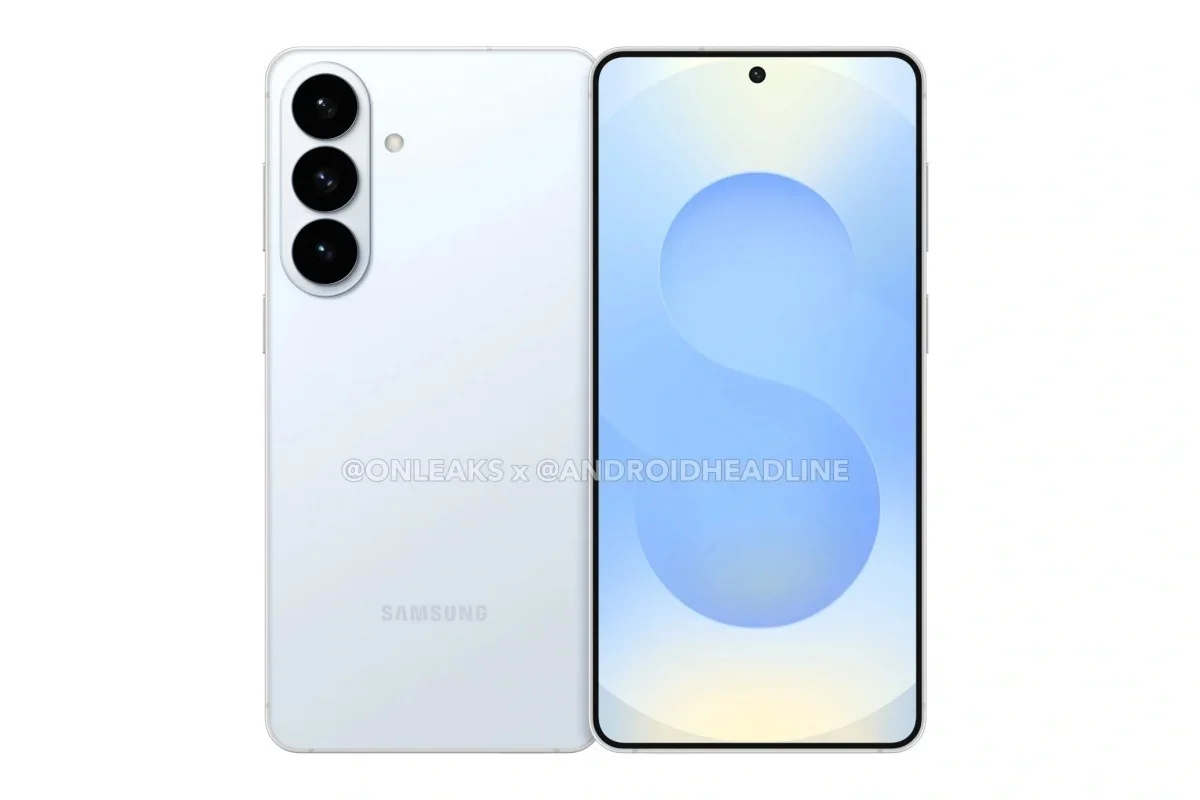
Galaxy S26: too cool to ignore, too flawed to fully recommend
Black Friday banners are everywhere, discount codes are flying around, and yet the most interesting conversation in the elevator is not about this years deals. It is about a phone that does not even exist yet in stores: the Samsung Galaxy S26. Instead of racing to the bargain bin, many tech fans are already fast forwarding to the next big flagship and wondering whether Samsungs upcoming hero device will be worth the inevitable premium price tag. Early leaks are painting a picture that is as fascinating as it is frustrating, and right now the Galaxy S26 feels like a phone that demands attention but struggles to deserve a blind preorder.
Based on the current wave of rumors, the Galaxy S26 looks less like a bold reinvention and more like a careful, slightly timid iteration. On paper, it will almost certainly be powerful, polished, and packed with Samsungs usual strengths in display quality, software support, and ecosystem perks. Yet the details tell a more complicated story. When you zoom in on charging speeds, camera hardware, and value next to rivals and even Samsungs own mid range lineup, the S26 starts to resemble a flagship that plays it a bit too safe for the price bracket it aims to dominate.
Charging: when the mid ranger embarrasses the flagship
The most eyebrow raising rumor so far is about charging. Reports suggest that the Galaxy S26 may once again be limited to 25 watt wired charging, while a much cheaper Samsung mid ranger, the Galaxy A57, is expected to support up to 45 watt charging. On a spec sheet that difference can look small, but in everyday life it is anything but trivial. If you have ever moved from 25 watt to 45 watt charging, you know it feels almost like discovering a secret fast forward button for your battery bar. Going from nearly empty to comfortable in a brief coffee break becomes normal instead of a nervous wait.
Now imagine paying around 800 dollars, or possibly even 850 or 900, for a Galaxy S26 that charges more slowly than a 500 dollar Galaxy A57 from the same company. That is not just a minor compromise, it is a narrative problem. Flagships are supposed to showcase what a brand can do, not highlight what the cheaper models are allowed to enjoy. In an era when many Chinese manufacturers are pushing 80 watt, 100 watt, and beyond, seeing a halo product locked to 25 watt speeds feels like a conscious decision to hold it back. The mid ranger looks like the one that respects your time, while the flagship quietly expects you to live with slower top ups in exchange for the prestige of the S series name.
Cameras that feel stuck in last year
Charging would be easier to forgive if the Galaxy S26 was shaping up to be a camera revolution, but leaks suggest a more conservative approach there too. The base S26 model is widely rumored to reuse the main and ultra wide sensors from its predecessor, both on the rear and at the front. The only potential upgrade mentioned so far is a modest bump to a 12 megapixel telephoto camera instead of the existing 10 megapixel shooter, and even that improvement has not been firmly confirmed. Incremental upgrades are not inherently bad, yet they feel underwhelming when you pair them with a flagship price and a generational name change.
Meanwhile, the competition is experimenting in more visible ways. The iPhone 17 is reported to debut a new front camera trick that allows landscape style selfies while you hold the phone vertically, giving content creators and casual users more flexibility without needing to twist their hands. It is a small but memorable flourish, and it shows where Apple thinks it can still surprise people. Samsung, on the other hand, appears content to stick with essentially the same selfie experience on the Galaxy S26. For a device that will inevitably be marketed with a lot of talk about capturing your life, reusing camera hardware too many years in a row risks making the new phone feel like a polished rerun rather than a must have upgrade.
Slimmer and lighter, but does it really matter
To its credit, the Galaxy S26 is rumored to be an impressively sleek piece of hardware. Early numbers suggest a profile of around 6 point 9 millimeters and a weight of roughly 164 grams, which would make it both slimmer and lighter than the iPhone 17. Apples standard model reportedly tips the scales at 177 grams with a noticeably thicker body. On paper that sounds like something Samsung will highlight endlessly in marketing materials. Shaving off grams and millimeters has long been a prestige game in the flagship world, because it makes devices feel more elegant in the hand and easier to live with in pockets and small bags.
But recent history tells a cautionary tale. In 2025, both Apple and Samsung experimented with ultra slim premium models, the iPhone Air and the Galaxy S25 Edge, and neither of them set sales charts on fire. Many users ended up calling them flops because the thinness seemed to come with trade offs: more fragile feeling frames, anxiety about battery life, and fewer practical gains than expected. The internet quickly moved on. So if the Galaxy S26 launches as another wasp waisted flagship, one full millimeter thinner than the iPhone 17, the real question is not how impressive that number looks in a table. It is whether you actually feel any meaningful benefit compared to a slightly thicker phone that maybe accommodates a larger battery or better cooling.
When your own mid ranger looks more tempting
The Galaxy A57 looming in the background is a big part of why the S26 rumors feel so awkward. If that mid range phone ships with 45 watt charging, a solid main camera, and the usual Samsung software polish, it will instantly become the sensible choice for a lot of buyers who do not care about owning the very top tier processor or the prestige badge. Paying hundreds less for a device that charges faster and still handles social media, streaming, messaging, and casual photography just fine is not only rational, it is pretty hard to argue against.
Flagships always offer extras that mid rangers cannot fully match: top end displays, better haptic feedback, wireless charging, longer update promises, and sometimes more advanced camera systems. Yet those perks have to feel like a coherent step up, not a scattered list of minor improvements. When one of the most tangible quality of life features, charging speed, tilts in favor of the cheaper model, the value equation becomes uncomfortable. Suddenly the Galaxy S26 risks turning into the phone you buy because you really want an S series device, not because it clearly dominates everything else at its price.
OnePlus 15: the obvious 800 dollar alternative
If you look beyond Samsung, the OnePlus 15 already looks like a strong candidate for people eyeing that 800 to 900 dollar price window. The phone leans heavily into the idea of practical speed: a big battery paired with extremely fast wired charging, the kind of combo that makes you stop thinking about battery anxiety altogether. OnePlus does not always deliver the most distinctive hardware design, and some will find the exterior of the OnePlus 15 a bit generic compared to Samsungs slick glass and metal language on the Galaxy S26. Still, for many users, the ability to plug in for a few minutes and get hours of extra use trumps a slightly more iconic silhouette.
Pricing makes things even more interesting. In the United States, the OnePlus 15 is expected to start around 900 dollars, but grey market or global firmware variants sourced from China based retailers often dip to roughly 630 dollars. That kind of gap changes the conversation entirely for buyers who are comfortable importing. You accept a less famous logo on the back, in exchange for flagship grade performance, ultra fast charging, and a very competitive camera array for significantly less money. If Samsung does push the Galaxy S26 starting price up to 850 or 900 dollars, it will find itself squeezed between its own Galaxy A57 from below and the value driven OnePlus 15 from the side.
A confusing strategy from Samsung
All of this raises a simple question: what exactly is Samsung trying to achieve with the base Galaxy S26 If the goal is to protect the even more expensive S26 Plus and S26 Ultra, keeping the entry level S model on slower charging might make sense internally. It creates artificial distance within the lineup. However, from the outside, the move just looks like the company is willing to handicap a phone that otherwise deserves to shine. Fans can see that the technology for faster charging exists inside the same brand. They can see that rivals offer it too. Persisting with 25 watt speeds feels less like a technical limitation and more like a strategic restraint.
There is a saying that the biggest threat is often the one you do not notice until it is too late. For Samsung, that threat might not be an exotic brand from across the globe, but its own mid range devices quietly becoming good enough for most people. If the Galaxy S26 launches with recycled cameras and slow charging while the Galaxy A57 and iPhone 17 both charge faster, the perception hit could be real. It risks sending a message that the S badge is now about prestige first and user experience second. For a company that built its reputation on delivering some of the most balanced and complete phones in the world, that would be a strange and risky pivot.
Could the story still change
The good news is that everything discussed so far is based on leaks, analyst notes, and early supply chain whispers. None of it is final until Samsung steps on stage and reveals the Galaxy S26 in full. It is entirely possible that later information will point to 45 watt charging after all, or to a slightly more ambitious camera update, or to a more aggressive starting price that softens the blow of the compromises. Sometimes last minute tweaks do happen, especially when public sentiment starts to congeal around the idea that a new flagship feels underwhelming.
Until that day comes, the Galaxy S26 occupies a strange place in the imagination of tech fans. It sounds like a beautifully built, impressively light phone that will be a joy to hold and a pleasure to look at, yet it also appears to lag behind in two of the areas that matter most to real world users: charging convenience and camera novelty. If Samsung can still flip the script on at least one of those fronts, the S26 might shift from a cautious maybe to a confident yes. If not, it may end up as the textbook example of a device that is simply too cool to ignore, yet just a bit too flawed to wholeheartedly recommend.
2 comments
Midranger with better charging than flagship, samsung what r u doing
25W on a 2026 flagship is just sad tbh 😂