Nintendo’s long-rumored Switch 2 has been discussed for months in terms of its NVIDIA-powered hardware and support for modern graphics features, but Kirby Air Riders is the first Nintendo-published game that truly shows what all that tech can do. This new Kirby racing spin-off is quietly making history as the company’s first real experiment with ray-traced global illumination on the system, and the results are already turning heads among players and tech enthusiasts alike.
The clue surfaced in an unexpected place. 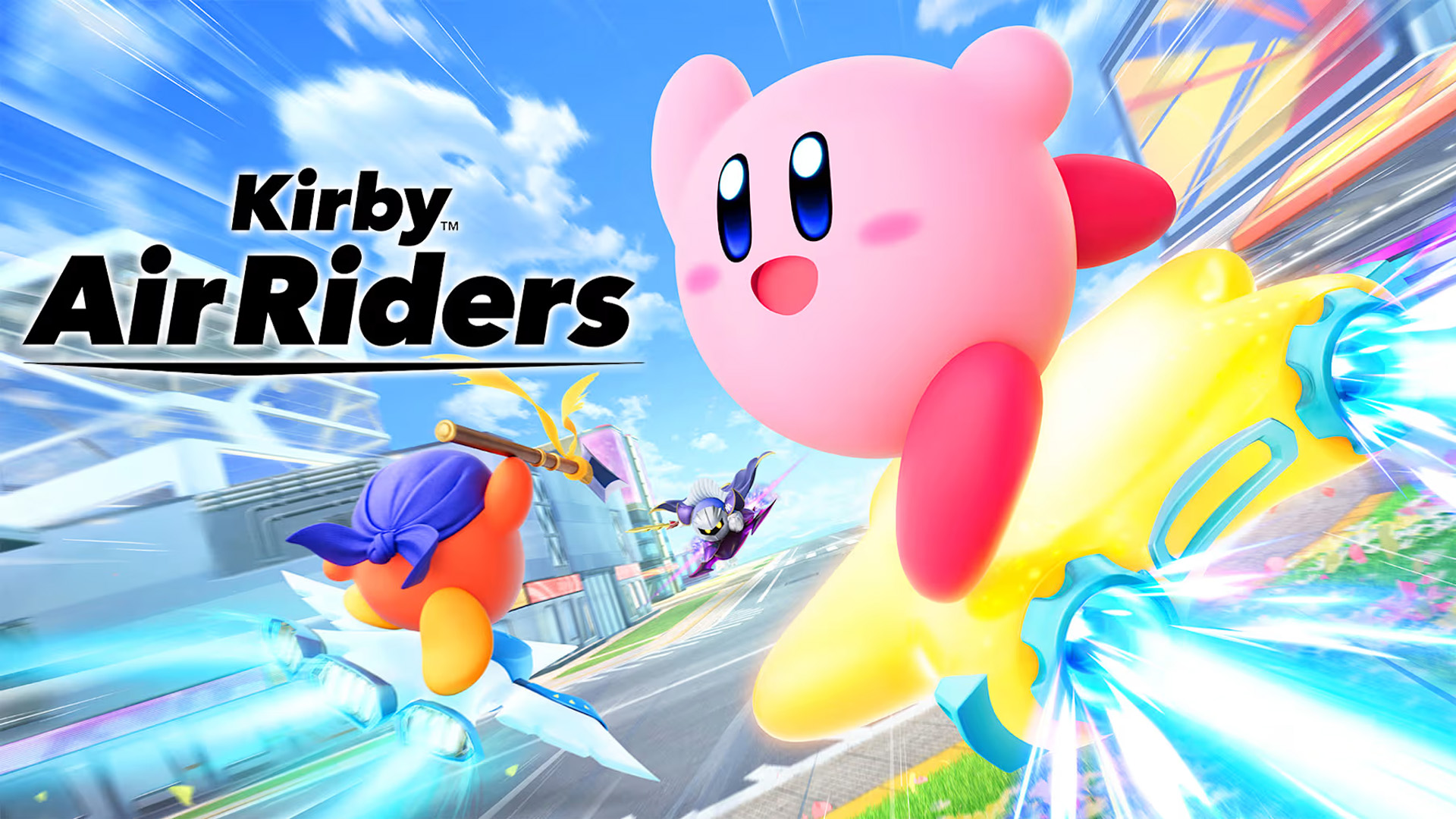
Fans exploring the Nintendo Switch 2 system menus found the game’s license readme and spotted a clear reference to the RTXGI SDK, NVIDIA’s ray-traced global illumination solution. In practice, RTXGI lets developers simulate how light actually behaves in the real world: how it bounces off surfaces, picks up subtle colors, bleeds into shadows and reacts dynamically when objects or light sources move. Instead of relying solely on pre-baked lighting data, scenes can respond in real time, which is a huge step up for a bright, fast-paced Kirby racer. Seeing RTXGI explicitly named strongly suggests that at least part of Kirby Air Riders’ lighting is driven by ray-traced global illumination.
That alone would be noteworthy, but what makes this discovery even more impressive is how smoothly the game reportedly runs. Early impressions describe tracks packed with swirling particle effects, dense crowds, high-speed action and plenty of on-screen chaos, all while maintaining a rock-solid 60 FPS. For a hybrid handheld console that has to juggle performance, heat and battery life, hitting that frame rate while also pushing ray-traced lighting is a big technical achievement.
Exactly how HAL Laboratory and Nintendo’s internal tech teams are balancing all of this is still something of a mystery, and that is part of what makes Kirby Air Riders so fascinating. One very strong possibility is that the studio is leaning on NVIDIA DLSS upscaling. DLSS works by rendering the game internally at a lower resolution, then using AI-driven reconstruction to output a sharper final image. The GPU time saved on raw resolution can be redirected to more demanding effects, such as ray-traced global illumination, better particle systems or richer materials. Whether Kirby Air Riders is using DLSS in a performance-oriented mode, a higher-quality setting, or some custom Switch 2 profile has not yet been confirmed, but the game’s crisp image quality and stable performance strongly point toward some kind of upsccaling magic under the hood.
Equally important is what this milestone represents for Nintendo’s broader first-party lineup. Up to now, most of the talk about ray tracing on Switch 2 has centered on big-budget third-party games. Ubisoft’s Star Wars Outlaws, for instance, is already known to make extensive use of ray tracing for reflections and lighting on the platform, and future releases like Resident Evil Requiem are widely expected to incorporate ray-traced effects based on the trailers and early footage shown so far. Kirby Air Riders, however, is different: this is Nintendo itself embracing cutting-edge rendering in a colorful, family-friendly racer rather than leaving high-end graphics entirely to external partners.
If Kirby’s airborne adventure proves successful both technically and commercially, it could set the tone for how Nintendo approaches visuals on Switch 2 in the coming years. It is easy to imagine a future Mario Kart installment where ray-traced lighting dances across wet asphalt and neon signs, or a new 3D Mario game where sunlight realistically filters through leaves, bounces off Peach’s Castle walls and subtly shifts as the time of day changes. Nintendo has long prioritized distinctive art direction and responsive gameplay over chasing buzzwords, but RTXGI support in a flagship first-party title shows that strong aesthetics and advanced rendering can comfortably coexist.
For now, Kirby Air Riders stands as an intriguing proof of concept: a fast, chaotic racer that reportedly looks gorgeous, taps into NVIDIA’s RTX toolset, and still hits that coveted 60 FPS target. As more developers, both internal Nintendo teams and third-party studios, get comfortable with the Switch 2 hardware and experiment with ray tracing, DLSS and other RTX features, players can likely look forward to a wave of visually ambitious games that do not have to sacrifice smooth performance to achieve striking, modern graphics.
1 comment
Nintendo finally using modern GPU tricks and they pick Kirby to lead the charge, I respect it