Valve is stepping back into the living room with Steam Machine, a compact PC that looks like a console but is very unlikely to be priced like one. Ever since the reveal, one unanswered question has dominated debates among PC and console players alike: how much this little box will actually cost. If you are hoping for a neat, round 500 dollar price tag, the way we still talk about traditional console launches, you should probably start adjusting your expectations now.
Steam Machine is built around a Ryzen 5 7600 class CPU and a Radeon RX 7600 class GPU, wrapped in a dense cube style chassis and running SteamOS. On paper that makes it a mid range gaming rig repackaged for your TV, not a miracle console that breaks the laws of hardware economics. 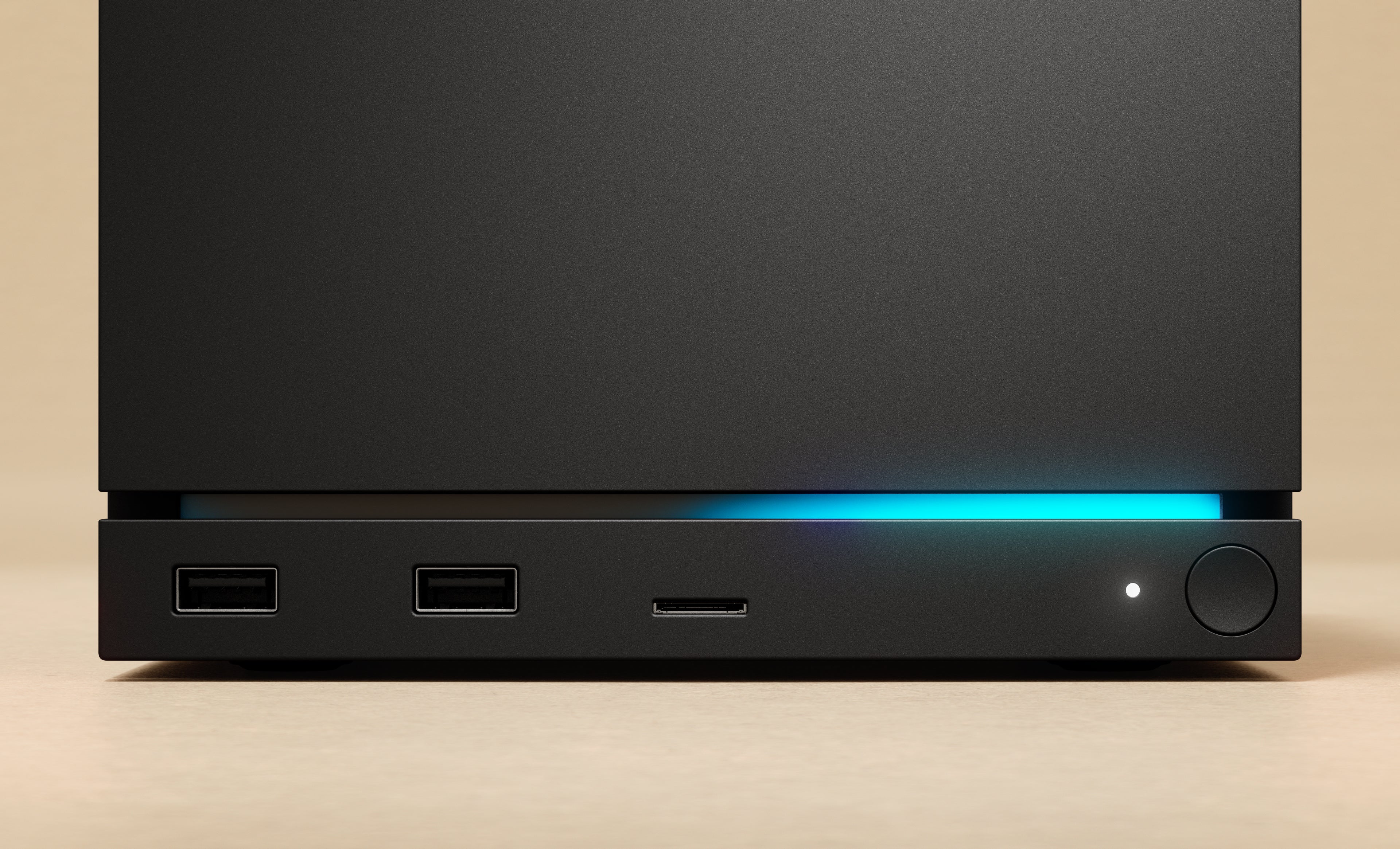
Valve has already been clear that it will rely heavily on AMD FSR upscaling to reach 4K, and the system ships with 8 GB of video memory at a time when many modern games can push beyond that even at 1440p. If any other manufacturer announced a brand new gaming box with that much VRAM, the internet would be dragging them for short term thinking.
That hardware context is what makes the price conversation so delicate. On a recent WAN Show episode, Linus from Linus Tech Tips described a meeting with Valve ahead of the reveal. He says he expressed disappointment that Steam Machine would not follow the classic console style pricing model, where hardware is sold at slim margins or even at a loss and recouped over time through the platform fee on software. Sony, Microsoft and Nintendo all lean on that 30 percent store cut to justify aggressive pricing on PlayStation, Xbox and Switch hardware. Because Valve also takes a 30 percent cut on Steam, plenty of fans quietly assumed it would mirror the same strategy in the living room.
According to Linus, Valve pushed back and asked what he even meant by a console price. His answer was simple: around 500 dollars. Nobody in the room confirmed or denied anything, but the mood, as he tells it, turned awkward. It was the kind of silence that says more than any official quote. Combine that story with Valve engineers repeatedly stressing that Steam Machine will be affordable for a PC and competitively priced as a PC, and it becomes hard to believe a 500 dollar sticker is on the table. Reasonable estimates put the launch figure closer to the 700 to 800 dollar band, and more pessimistic voices in the community think it could creep towards four figures once you factor in the new controller.
That gap between console expectations and PC reality is creating a clear split in the audience. On one side you have console players who look at their existing hardware and shrug. A base PlayStation 5 with a disc drive sits around 550 dollars, the digital only PS5 hovers around 500, and the PS5 Pro climbs to roughly 750. If Steam Machine lands at 700 or higher while being broadly comparable to a base PS5 in raw performance, many console owners will ask a blunt question: why would they pay more for something that cannot convincingly outperform what they already have and does not offer the plug and play simplicity they value. A lot of people just want to power on a box, play for an hour from the sofa, then put it to sleep without worrying about drivers, background apps or desktop clutter.
On the other side are PC users who already live in the Steam ecosystem. Some own a full gaming tower and a Steam Deck, and the Machine feels like a third device that has to justify itself as a convenience purchase. For them, price sensitivity is very real. More than a few have drawn a mental line at 500 or 600 dollars; anything higher pushes them toward a small prebuilt PC they can plug into the TV, or simply sticking an HDMI cable into the rig they own. Others take a more technical view and note that a closest equivalent laptop with similar silicon sells around the 1,000 dollar mark today. Strip out the screen, keyboard, touchpad, Windows licence, battery and retail packaging, build it in higher volumes and you can certainly drive the price down, but the idea that such a machine comfortably drops to 400 or 500 dollars still feels optimistic in the current component market.
There is also a strategic question: who is Steam Machine actually for. Despite the discourse, Valve has never really pitched it as an Xbox or PlayStation killer. The messaging has been closer to a niche, high quality living room PC for people who already love Steam and want a compact, low fuss way to put their library on the big screen. In that sense it is closer to a premium set it and forget it Steam box than a mass market console. If you frame it that way, a 700 dollar price is not shocking; it is just a small form factor gaming PC built by Valve instead of a boutique system integrator. However, that positioning also means the device is unlikely to convert large numbers of console players, especially in an economy where even 500 dollar consoles are becoming rare and every trip to the supermarket feels more expensive.
The risk is that Steam Machine ends up squeezed from both sides. Price it like a PC and it struggles to tempt console owners who see less power for more money and no clear path to upgrades. Try to sell it as a next generation style box and it will invite comparisons to current consoles that have been on the market for years and still run demanding titles comfortably. With only 8 GB of VRAM and a heavy reliance on upscaling, questions about longevity are fair. Games are getting hungrier, engines are targeting higher fidelity, and optimisation is not exactly improving. A premium living room PC that already leans on FSR for 4K at launch may feel increasingly constrained a few years down the line.
Yet there are strong arguments in favour of Valve holding its nerve. Even at 700 dollars, Steam Machine gives you direct access to the largest PC game library in the world, constant deep discounts during Steam sales, mods, early access titles and the flexibility that comes with an open platform. For people embedded in that ecosystem, the ability to drop a single, quiet box under the TV and treat it almost like a console could be worth paying for. If the hardware performs well and Valve supports it over time, we could see other manufacturers riff on the idea with their own SteamOS boxes, just as we saw a wave of handheld PCs after Steam Deck proved there was demand.
The key is to go into Steam Machine with eyes open. This is not the 299 to 399 dollar miracle some imagined, nor is it likely to land at the psychological 500 dollar sweet spot that defines console thinking. Valve has been clear that it will price the device like a PC, and that is exactly how you should judge it: as a compact mid range gaming computer designed to live in your entertainment centre. If Valve surprises everyone with an aggressively low price, great. But based on what we know about the hardware, the market and the way Valve talks about the product, the smart move is to expect something in the 700 to 800 dollar range and decide whether that makes sense for how you actually play games.
2 comments
there is no 500 dollar next gen anything in this economy anymore, prices jump every time you buy groceries let alone gpus
people kept yelling console killer but valve never said that, they always said priced like a pc… the hype train built its own rails 😂