Alienware is giving its flagship Area-51 desktop a serious refresh, and this time the spotlight is firmly on AMD’s Ryzen 9000 X3D gaming chips. 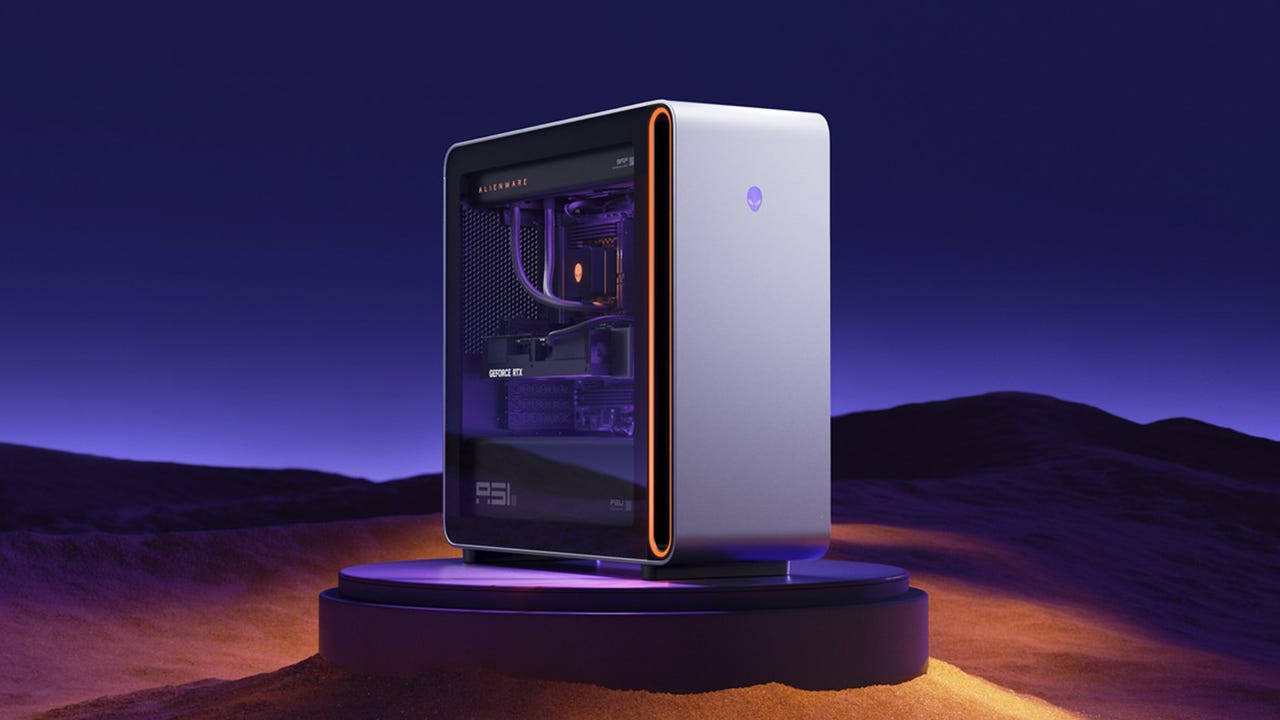
Instead of chasing thin-and-light aesthetics or purely creator workflows, this tower is unapologetically built for high frame rates, ultra settings and people who want a prebuilt monster that can stand toe-to-toe with boutique rigs from MSI, Asus and smaller custom shops.
The headline is simple: North American buyers can now configure an Area-51 with AMD’s Ryzen 7 9800X3D or Ryzen 9 9950X3D, two of the most coveted gaming CPUs on the market. Below them sits the more conventional Ryzen 7 9700X, which lacks the extra cache magic but still offers solid performance for buyers who would rather put more of the budget into the graphics card. It is a clear sign that Alienware is finally treating AMD’s top gaming silicon as a first-class citizen in its most premium desktop, not just as an alternative to Intel.
Ryzen 9000 X3D in the Area-51: what you are actually getting
The 8-core Ryzen 7 9800X3D has already earned a reputation as a frame rate specialist, often outpacing non-X3D chips in gaming thanks to AMD’s 3D V-Cache design. Instead of relying only on fast system memory, the CPU carries a thick slab of extra cache stacked on top of the core chiplet die, giving the processor more on-chip data and cutting latency where games need it most. For titles that are CPU-bound or sensitive to memory performance, that translates into smoother 1 percent lows and less hitching, not just prettier benchmark bars.
Step up to the 16-core Ryzen 9 9950X3D and you are in halo territory. The chip brings the same cache-first gaming philosophy but doubles the core count, which is frankly excessive for most players who just want to drive a high-refresh 1440p monitor. It makes more sense for people who stream, multitask heavily or do production work on the same machine. Independent reviews have repeatedly praised its raw muscle but also called out that in many games you are not buying extra frames as much as you are buying headroom and bragging rights.
3D V-Cache, power draw and cooling reality
The catch with these X3D parts is that they are not gentle on the power supply. In testing, the Ryzen 7 9800X3D can pull around 160 watts under heavy load, while the Ryzen 9 9950X3D can climb close to 200 watts. Add in a high-end graphics card and you have a system that is absolutely capable of chewing through modern games, but it also needs robust cooling and a sensible airflow design. Alienware’s chassis gives you a large front intake and chunky internal cooling, and that big front vent doubles as the unofficial handle every owner grabs when they drag the tower out to reach ports on the rear panel.
In other words, the Area-51 is less about dainty minimalism and more about being a stable, heavy, fast box that will sit under your desk and quietly vaporize power into frame rates. You are paying for a system that has been tuned to keep those demanding X3D chips in check without forcing you to fiddle with undervolting or custom fan curves on day one.
Configurations, GPUs and the missing Radeon option
Outside of the CPU change, Alienware is not reinventing the rest of the spec sheet. You can pair the new Ryzen 9000 X3D chips with Nvidia GeForce RTX 5000 series cards ranging from the RTX 5070 up to the flagship RTX 5090. That gives buyers a pretty straightforward choice between high-refresh 1440p, 4K ultra or overkill multi-monitor setups. What you will not find, however, is AMD’s own Radeon RX 9070 XT, a card that many enthusiasts currently rate highly for its price to performance ratio. If you were hoping to go all-in on an AMD CPU plus AMD GPU combo in this tower, that is a notable omission.
Beyond graphics, the rest of the configuration story is familiar. Memory options scale up to generous capacities that will comfortably handle modern games and creator workloads. Storage choices cover fast NVMe SSDs with room for multiple drives, and the port selection remains broad enough for VR headsets, capture cards and a tangle of USB peripherals. Alienware is not chasing radical modularity or wild layout experiments here; it is relying on a proven internal layout that has already been deployed in earlier versions of the Area-51.
Pricing compared to the Intel build
The move to Ryzen 9000 X3D does come with a very real premium. The AMD-equipped Area-51 configurations start at around 4350 dollars, which is a substantial jump over the roughly 3650 dollars Dell is asking for an Intel Core Ultra 9 285K version of the same desktop. You are paying hundreds more for the X3D gaming edge, even though both machines occupy the same physical chassis and share most of the same components.
For some buyers that price gap will be hard to swallow, especially when you factor in that the Intel build is already extremely fast and better than most people actually need. For others, especially those chasing the highest frame rates in competitive titles or who want a system that aligns with how many modern games are optimized for cache-heavy CPUs, the extra cost will feel like the entry ticket to a different tier of performance.
Buying now vs waiting for the next X3D wave
The timing of Alienware’s launch has sparked some eye rolling in enthusiast circles, because talk has already shifted to what the next generation of X3D chips might look like. It is the classic PC problem: as soon as a brand ships a top-of-the-line configuration, speculation starts about the even faster version around the corner. If you are the kind of person who jokes that X3D2 is practically on the doorstep, you may be inclined to sit on your wallet and wait.
For most players though, the bigger question is less about future product code names and more about how long they want to delay enjoying their games on a high-end rig. The Ryzen 7 9800X3D and Ryzen 9 9950X3D are not theoretical parts; they are already proven in benchmarks and real-world use, and Alienware’s Area-51 gives you a tidy, warrantied home for them with carefully matched power delivery and thermals. If you want absolute bleeding edge and enjoy rebuilding your own system every couple of years, a prebuilt like this will probably never be your first choice anyway. But if you want a powerful turnkey AMD gaming tower that can stand next to custom rigs and not flinch, this Ryzen 9000 X3D Area-51 finally looks like the Alienware box that delivers.
1 comment
9950X3D in a gaming rig is such overkill, feels like paying extra just to flex in Discord screenshots tbh